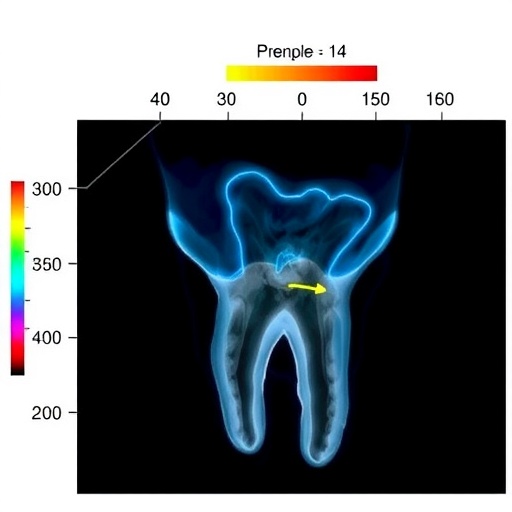
In an innovative stride towards the integration of artificial intelligence in dentistry, a group of researchers led by R.D. Escobar-Torres has made significant advancements in utilizing deep learning to predict tooth extraction decisions. This pioneering study, titled “Deep Learning Prediction of Tooth Extraction Decisions from Limited Intraoral and Extraoral Image Data,” proposes a novel approach that emphasizes the potential of machine learning in enhancing diagnostic accuracy and efficiency. The research highlights the increasingly crucial role of AI technology in the medical field, particularly in dental practices where making informed clinical decisions can vastly improve patient care.
The essence of this research lies in the intricate application of deep learning algorithms that analyze a combination of intraoral and extraoral imaging data. Traditional methods of determining the necessity for tooth extraction often rely heavily on clinician experience and judgment, which can vary significantly among professionals. By leveraging neural networks trained on vast datasets, the researchers aim to reduce inconsistencies and promote a standardized framework for extraction decisions, ultimately benefiting both practitioners and patients alike.
One main thrust of the study is the capability of deep learning models to process and learn from visual data. Using convolutional neural networks (CNNs), the researchers have devised a system that can discriminate between various conditions requiring extraction and those that do not. The training process involves feeding the model a myriad of dental images, both intraoral photographs and extraoral radiographs, effectively allowing the AI to discern patterns correlating to extraction needs. This cutting-edge technique demonstrates not only the power of AI but also emphasizes the importance of image quality and diversity in developing robust deep learning systems.
Despite the promising results presented, the researchers acknowledge a significant challenge in using limited image data. Dental imaging often varies between institutions, and in some cases, might not be readily accessible due to practical constraints. The study overcomes this hurdle by adopting sophisticated data augmentation techniques, which artificially expand the training dataset through transformations such as rotation, scaling, and color adjustments. This innovative approach not only enhances the model’s learning potential but also ensures its generalizability across different populations and imaging environments.
The implications of this research are profound. By providing dental practitioners with a reliable AI-driven decision-making tool, the study stands to greatly enhance patient outcomes. For instance, the improved accuracy in predicting the need for extractions can reduce unnecessary procedures, thereby ensuring that patients receive the most appropriate care based on clinically relevant evidence. Moreover, it can empower dentists with a second opinion that is grounded in extensive data analysis, thereby fostering more confidence in the treatment protocols they choose.
Ethical considerations surrounding AI technology in healthcare are increasingly coming to the forefront. The decision to extract a tooth is multifaceted, and AI should not be viewed as a replacement for dental professionals but rather as an augmentative resource. The researchers emphasize the importance of maintaining human oversight in decision-making processes, ensuring that AI serves as a collaborative tool rather than a solitary dictator of treatments. This perspective is vital to preserving the trust between clinicians and patients, ultimately enhancing the overall patient experience.
As this research gains traction within the dental community, it is crucial to consider potential limitations. The findings are based on a specific dataset, and while the model has shown promise, further validation across broader populations is necessary. The researchers advocate for multi-center studies that can assess the model’s performance in diverse clinical settings, which would bolster its credibility and reliability on a larger scale.
Another pivotal aspect is the ongoing evolution of deep learning technologies. As computational power increases and datasets continue to grow, the potential for enhancing AI-driven predictions becomes even greater. Future iterations of these models could incorporate additional variables, such as patient demographics or historical dental health data, further refining the decision-making process. This continual enhancement is emblematic of the rapid pace of technological advancements that permeate modern healthcare.
Public and institutional acceptance of AI in healthcare is another topic of consideration. While the benefits are evident, there exists a general hesitancy among some practitioners about incorporating AI into standard practice. The researchers highlight the importance of education and training, encouraging dental professionals to familiarize themselves with AI tools to facilitate a smoother transition into data-driven decision-making. Workshops and informational sessions can bolster acceptance, equipping professionals with the knowledge necessary to utilize AI effectively while mitigating apprehension.
Looking ahead, the fusion of AI and dentistry is poised for transformative growth. As studies like this gain recognition, there’s a burgeoning interest in exploring additional applications of machine learning within the dental field. Potential areas of exploration might include predictive analytics for periodontal disease, cavity detection, and even orthodontic assessments, laying the groundwork for a comprehensive AI repertoire in dentistry.
In conclusion, this groundbreaking study signifies a monumental shift as deep learning emerges as a vital player in the dental industry. With its potential to redefine diagnostic and treatment paradigms, the integration of AI tools marks a new chapter in dental practice—one characterized by enhanced accuracy, improved patient care, and the promise of a future where AI stands as a valuable ally in clinical decision-making processes.
As the field progresses, continual research, rigorous validation, and open dialogue among dental professionals will be essential in shaping how artificial intelligence can best serve the needs of patients and practitioners alike. The vision articulated by Escobar-Torres and his colleagues not only underscores the monumental technological advancements ahead but also signals a collaborative future where human expertise and machine efficiency coexist harmoniously in pursuit of optimal dental health.
Subject of Research: Predictive modeling of tooth extraction decisions using deep learning.
Article Title: Deep learning prediction of tooth extraction decisions from limited intraoral and extraoral image data.
Article References:
Escobar-Torres, R.D., Mendez, J., Gardel-Sotomayor, P.E. et al. Deep learning prediction of tooth extraction decisions from limited intraoral and extraoral image data.
Discov Artif Intell (2026). https://doi.org/10.1007/s44163-025-00814-8
Image Credits: AI Generated
DOI: 10.1007/s44163-025-00814-8
Keywords: Deep learning, tooth extraction, intraoral images, extraoral images, dental AI, predictive modeling, machine learning, clinical decision-making, neural networks.
Tags: AI in dentistryconvolutional neural networks in dentistrydeep learning in dental diagnosticsenhancing diagnostic accuracy with AIimproving patient care with technologyinnovative AI research in oral healthintraoral and extraoral imaging data analysismachine learning applications in healthcareneural networks for dental decision-makingreducing clinician variability in treatment decisionsstandardized frameworks in dental practicestooth extraction prediction using AI