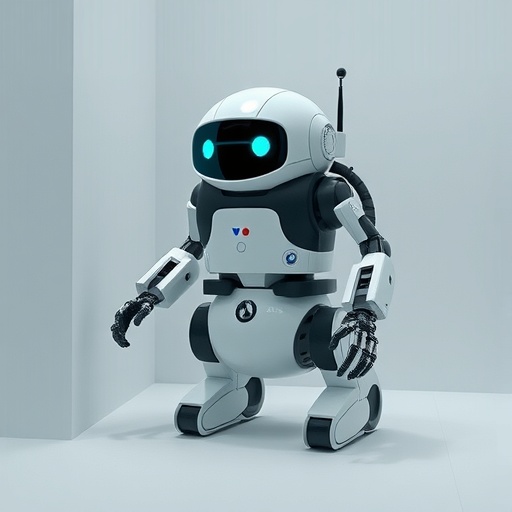
In a groundbreaking development, engineers at the University of Pennsylvania have unveiled a remarkable technology that pushes the boundaries of how robots perceive their environments. Known as HoloRadar, this innovative system allows for non-line-of-sight (NLOS) vision, enabling machines to “see” around corners by harnessing the properties of radio waves. This technology is a game changer for applications ranging from autonomous vehicles navigating busy urban intersections to robots working within industrial settings, where immediate line-of-sight is often obstructed.
The ability to perceive hidden areas has long been a challenge for robotic systems, especially in complex environments. HoloRadar employs radio waves to create a multifaceted view of a scene that exists beyond direct visual contact. Unlike traditional imaging methods that depend on visible light, which can be unreliable in low-light conditions or obstructed views, HoloRadar operates effectively in a diverse array of lighting conditions. This unique capability offers significant potential to enhance safety measures for robots and driverless cars, allowing them to make more informed decisions in real time.
What sets HoloRadar apart is its novel approach to interpreting radio signals, characterized by an astounding observation: the lengthy wavelengths of radio waves, which are often deemed a disadvantage in imaging, can be advantageous in discerning hidden objects. This phenomenon transforms ordinary surfaces, such as walls and ceilings, into reflective mediums. Instead of merely passing through barriers, radio waves can bounce off these surfaces, gathering crucial data about the hidden locations and providing robots with a clearer understanding of their surroundings.
At the heart of HoloRadar’s functioning lies a sophisticated AI system that processes the radio signals reflected back to the sensor. When a single radio pulse is transmitted, it ricochets multiple times off various surfaces before returning, creating a complex pattern of reflections that would normally confound traditional analysis methods. To handle this complexity, the research team devised a two-phase processing approach that combines machine learning with physics-based modeling to unravel these intricate reflections.
During the initial phase, HoloRadar conducts a resolution enhancement of the raw radio signals and discerns multiple returns, enabling the system to identify various paths the signals have taken. Once this information is gathered, the second phase utilizes a physics-guided model to trace these signals back to their origins, effectively reversing the mirror-like effects of the environment. This step is critical as it allows the system to reconstruct the actual three-dimensional layout of the scene and to pinpoint the locations of hidden objects and obstacles.
The researchers have conducted experiments that demonstrate the capabilities of HoloRadar in real-world settings. Tests performed on mobile robots navigating indoor spaces, such as hallways and building corners, have shown promising results. The system successfully achieved the reconstruction of environments, accurately identifying walls, corridors, and even human subjects located outside the robots’ direct lines of sight. This remarkable functionality signifies a substantial advancement in how robots perceive and interact with their environments.
HoloRadar boasts a pioneering design tailored for operational versatility in a wide range of scenarios. This technology is unlike previous attempts to achieve NLOS vision, often constrained by heavy and cumbersome scanning equipment, which limits practical applications. Conversely, HoloRadar’s mobility and real-time processing capabilities make it adaptable to the diverse environments robots encounter daily, including both indoor and outdoor settings.
Moreover, HoloRadar doesn’t aim to replace existing sensor systems but rather to enhance them. Many autonomous vehicles already utilize LiDAR technology for direct object detection. By incorporating HoloRadar into their toolkit, robots can extend their perceptual reach, gaining essential insights about potential hazards that may not be visible through conventional sensors. This multifaceted approach not only augments existing safety measures but also offers robots increased response time against dynamic threats.
The implications of HoloRadar stretch beyond just enhanced safety for autonomous machines. As researchers aim to deploy this technology outdoors in the future, they envision a myriad of use cases, from emergency response robots navigating disaster-stricken areas to delivery drones efficiently avoiding obstacles. Realizing the long-term potential of HoloRadar could revolutionize urban planning, transportation, logistics, and many other industries reliant on robotics.
As the development of HoloRadar progresses, ongoing research will focus on accommodating diverse environments, tackling challenges such as increased distances and variable outdoor conditions. The long-term goal is to facilitate an advanced understanding of surroundings for robots, allowing them to maneuver intelligently through complex environments as humans do. By integrating this technology into robotics, the team aims to contribute significantly to advancements in autonomous navigation and situational awareness.
This constellation of innovations arises from extensive experimentation at the Wireless, Audio, Vision, and Electronics for Sensing (WAVES) Lab at the University of Pennsylvania’s School of Engineering and Applied Science. Funded by the university itself, this research signifies a significant investment in the future of robotics and artificial intelligence, emphasizing the institution’s commitment to pioneering exploration in this rapidly evolving field.
The release of HoloRadar not only signifies an important step in robotics but also raises intriguing questions about the future of machine perception. As researchers continue to push the limits of what is possible, the world is undoubtedly on the cusp of a technological evolution that will change how we interact with machines and, ultimately, each other.
With the introduction of HoloRadar, the vision of robots that perceive their environments with the same acumen as human beings draws closer. By tapping into the untapped potential of radio waves and applying cutting-edge AI technologies, the engineers at Penn are not merely developing tools; they are laying the groundwork for a safer, smarter world powered by interconnected autonomous systems.
Subject of Research:
Article Title: Non-Line-of-Sight 3D Reconstruction with Radar
News Publication Date: 4-Dec-2025
Web References: HoloRadar Project
References: N/A
Image Credits: Credit: Sylvia Zhang, Penn Engineering
Keywords
HoloRadar, Non-Line-of-Sight Vision, Radio Waves, Robotics, AI, Autonomous Vehicles, 3D Reconstruction, Safety Technology, Machine Learning
Tags: AI-powered roboticsautonomous vehicle navigationengineering advancements in roboticsenhancing robot safety measuresHoloRadar technologyindustrial robotics applicationsinnovative robotic systemslow-light environment perceptionnon-line-of-sight visionovercoming visual obstructionsradio wave imagingrobots seeing around corners