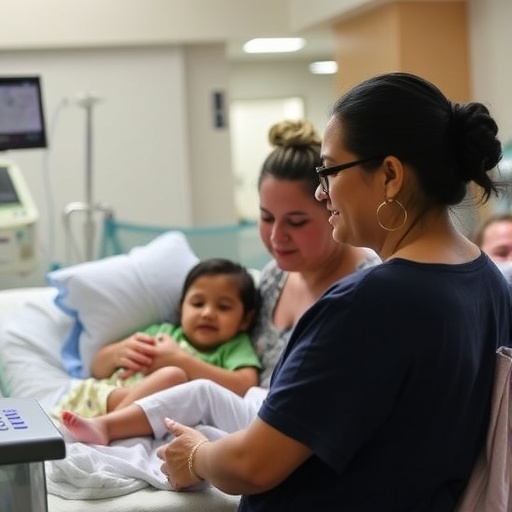
In a groundbreaking development for the identification of Developmental Language Disorder (DLD), researchers have leveraged artificial intelligence (AI) to create a state-of-the-art screening application. This innovative app aims to enhance the accuracy and accessibility of DLD diagnosis, benefiting both practitioners in the field and families navigating the complexities of language disorders. The implications of this work promise not only to streamline diagnostic processes but also to empower stakeholders by providing clear and concise information relating to DLD.
Developmental Language Disorder is a common yet often misunderstood condition affecting children. It encompasses difficulties in acquiring language skills that can impact educational and social outcomes. Traditionally, diagnosing DLD has been a labor-intensive process requiring comprehensive assessments by speech-language pathologists. However, with advances in technology, particularly AI, there is an opportunity to revolutionize this standard practice. The introduction of an explainable screening app could soon change the landscape of DLD identification.
Harnessing both real and synthetic data, the researchers have embarked on a journey to ensure that this app is not only scientifically robust but also user-friendly. Real data sets provide valuable insights into the patterns and nuances of language acquisition difficulties, while synthetic data supplements these insights, ensuring that the app can handle various scenarios and contexts. This dual approach not only strengthens the app’s predictive capabilities but also minimizes biases that traditional models might encounter.
A significant feature of the app is its explainable AI component. As the field continues to evolve, the demand for transparency in AI systems has grown. Users of the app, whether they are clinicians or parents, can expect detailed feedback on why the app has generated its specific recommendations. This feature aims to demystify the AI process, enabling users to understand the rationale behind diagnostic decisions. By fostering this sense of understanding, the researchers hope to increase trust in AI applications within healthcare.
Moreover, the app is designed to be scalable and adaptable. The team recognizes that no two language disorders present identically; thus, versatility is essential. The application’s framework allows for continuous updates and learning based on new data. This ensures that the screening tool remains relevant and effective over time, responding not just to evolving language theories but also to an increasing understanding of DLD as it is experienced in a diverse population.
As the development of the app progresses, the researchers are emphasizing the importance of collaboration with clinical practitioners. They recognize the invaluable insights that professionals in the field can provide, particularly regarding the practical aspects of DLD screening. By engaging with experts, the team is ensuring that the app meets real-world needs and can be seamlessly integrated into existing clinical workflows.
Early pilot tests of the screening tool have shown promising results regarding its accuracy and reliability. By comparing the app’s diagnoses to those established through traditional assessments, researchers are investing considerable resources in validating the outcomes. The goal is not merely to produce a tool that works, but one that significantly enhances existing diagnostic procedures through its innovative approaches.
Parents and caregivers are also central to this initiative. The team seeks to design an app that is not only effective for clinicians but easily navigable by caregivers. These individuals often play a pivotal role in early identification, and empowering them with a tool that provides clear insights into their child’s language development can lead to better-informed decisions and earlier interventions.
In addition to direct screening capabilities, the app aims to serve as an educational platform. It will compile resources, information, and tips regarding DLD for users, creating a valuable repository of knowledge that can support families and practitioners alike. An informed user is an empowered user, and this philosophy underpins the app’s holistic approach to screening and support.
As AI continues to play a transformative role in healthcare, initiatives like this one reflect the growing intersection of technology and human-centered care. The researchers believe that the app could serve as a template for similar efforts across various domains of medicine, where early identification and intervention are critical for improving patient outcomes. This cross-disciplinary potential signifies a future where AI is not just a tool but an active partner in clinical decision-making.
Safety and ethical considerations are also at the forefront of this research. The team is fully aware of the implications of using AI in sensitive areas such as mental and developmental health. Extensive measures are being taken to ensure that the app adheres to the highest standards of data privacy and security, even while using synthetic data to enhance its functions. By prioritizing ethical standards, the researchers aim to set a precedent for future AI applications in healthcare.
The anticipated release of the app is expected to bring not only relief but also hope to families grappling with DLD. By providing quicker identification and clearer insights, the app promises to bridge the gap between diagnosis and intervention, leading to a more supportive environment for children and their families.
In sum, the introduction of an AI-powered screening application for Developmental Language Disorder is a remarkable sign of progress in the field of child speech and language development. Through a combination of real-world data, synthetic methodologies, and user-centric design, researchers are paving the way for a more effective approach to diagnosis that could have significant implications for intervention strategies and resources available to families and professionals alike.
As this project unfolds, the scientific community eagerly anticipates the outcomes of the app’s deployment, hopeful that it will herald a new wave of technological advancement in healthcare—a future where AI assists not just clinicians but contributes significantly to the welfare of children facing language disorders.
Subject of Research: Developmental Language Disorder Identification with Artificial Intelligence
Article Title: Enhancing Developmental Language Disorder Identification with Artificial Intelligence: Development of an Explainable Screening App Using Real and Synthetic Data
Article References: Georgiou, G.P. Enhancing Developmental Language Disorder Identification with Artificial Intelligence: Development of an Explainable Screening App Using Real and Synthetic Data. J Autism Dev Disord (2025). https://doi.org/10.1007/s10803-025-07176-1
Image Credits: AI Generated
DOI: https://doi.org/10.1007/s10803-025-07176-1
Keywords: Artificial Intelligence, Developmental Language Disorder, Screening Application, Explainable AI, Child Speech Development, Healthcare Technology, Data Privacy.
Tags: accessibility in DLD diagnosisAI language disorder detectionartificial intelligence in healthcareDevelopmental Language Disorder screening appDLD identification technologyempowering families with language disorder informationenhancing educational outcomes for childrenimproving language acquisition diagnosisinnovative solutions for language disordersspeech-language pathology advancementssynthetic data in language disordersuser-friendly diagnostic tools for DLD