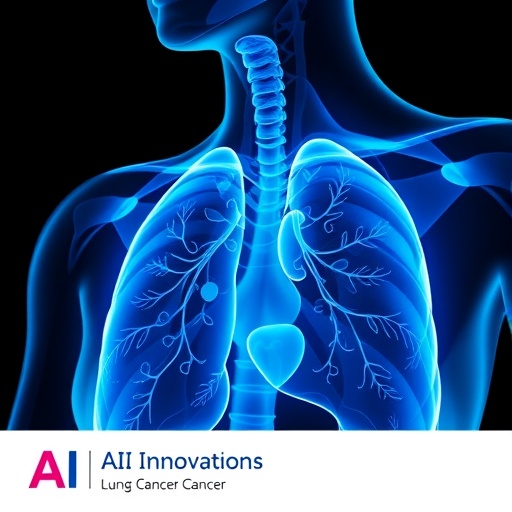
In recent years, the medical community has seen a significant surge in the application of artificial intelligence (AI) technologies within various domains of healthcare. This burgeoning interest is particularly evident in the field of oncology, especially concerning non-small cell lung cancer (NSCLC). The groundbreaking research by Chang, Li, Wu, and their colleagues highlights the transformative potential of AI in enhancing not only the diagnostic accuracy but also personalizing therapeutic strategies for patients suffering from this aggressive form of cancer.
The study explores a multifaceted approach to leveraging AI, encompassing sophisticated algorithms capable of analyzing vast datasets sourced from different demographics and clinical histories. By doing so, the researchers aim to elevate the standards of precision medicine, enabling clinicians to make informed decisions based on predictive analytics derived from specialized AI models. These models analyze histopathological images and genomic data, facilitating early detection and improving treatment outcomes.
Moreover, one key aspect addressed is the role of AI in biomarker discovery. Traditional methods of identifying cancer biomarkers can be time-consuming and labor-intensive. However, AI employs machine learning (ML) techniques to sift through extensive biological datasets, identifying patterns and anomalies that may indicate the presence of NSCLC. Such advancements not only hasten the diagnostic process but also enhance the likelihood of early intervention, which is crucial for improving patient prognosis.
The potential of AI extends beyond diagnosis into the realm of personalized treatment protocols. This study delineates various algorithms that analyze patient responses to different therapies, enabling the customization of treatment regimens based on individual genetic and phenotypic profiles. Furthermore, through real-time data monitoring and analysis, AI can predict potential treatment responses or adverse effects, allowing healthcare providers to adjust therapies proactively, which underscores a significant shift towards patient-centered care.
An emerging trend outlined in the research is the incorporation of AI in managing radiological images. Deep learning algorithms have proven particularly effective in interpreting images from CT scans and MRIs, providing unparalleled accuracy and specificity. This advancement reduces the possibility of human error in interpretations and assists radiologists by highlighting critical areas that require further examination. The researchers underscore that such integrations can drastically reduce patient anxiety due to quicker turnaround times in diagnosis.
The ethical implications of utilizing AI in medicine are also critically analyzed. While the advantages are noteworthy, there remain concerns regarding data privacy and algorithmic bias. The researchers emphasize the necessity for healthcare institutions to adopt rigorous governance frameworks aimed at protecting patient data while ensuring that the algorithms used are transparent and equitable. This vigilance is paramount in maintaining trust between patients and healthcare systems, especially as AI continues to evolve.
Moreover, the study indicates that the integration of AI in oncology necessitates a multidisciplinary approach, involving collaboration between IT specialists, oncologists, and bioinformaticians. This collaboration is vital not only for maintaining the integrity of the AI systems but also for bridging the gap between technology and clinical practice. Such partnerships enable the fine-tuning of algorithms based on clinical feedback, ensuring that AI applications are both relevant and effective.
Another pivotal role of AI highlighted in this research is its capacity for facilitating clinical trials. AI can streamline the process of patient recruitment by analyzing eligibility criteria and matching candidates with appropriate trials. By doing so, it enhances the efficiency of clinical research, accelerates drug development, and potentially leads to more rapid access to innovative therapies for patients.
Furthermore, the research includes discussions about the use of AI in predicting outcomes and survival rates for individuals diagnosed with NSCLC. The ability of AI to analyze complex datasets allows for the development of robust prognostic models that can guide clinicians in discussing expectations with patients and their families. By providing clearer insights into potential outcomes, such models foster informed decision-making and help manage patient expectations more effectively.
The researchers also advocate for continued investment in AI training for healthcare professionals. As AI technology evolves, it becomes increasingly important for medical professionals to be adept in utilizing these tools. Continued education can ensure that clinicians employ AI effectively, maximizing its benefits in clinical settings. The magnitude of these investments may coincide with reduced healthcare costs in the long term, owing to improved efficiency and outcomes.
Moreover, the research emphasizes that AI’s impact does not halt at diagnosis and treatment; it extends into post-treatment monitoring as well. AI tools can facilitate the tracking of long-term health data of NSCLC survivors, allowing for ongoing assessment of treatment effectiveness and identification of recurrence. This holistic approach to patient care is pivotal for fostering continuity in treatment and providing support during recovery.
In summary, the research conducted by Chang, Li, Wu, and their colleagues lays a foundation for the evolving role of artificial intelligence in managing non-small cell lung cancer. The applications discussed hold the promise of revolutionizing the landscape of oncology, enabling precision diagnostics, personalizing treatment plans, and facilitating improved healthcare outcomes. As we look toward the future, the convergence of AI and medicine not only exemplifies technological advancement but also signifies a critical evolution in our approach to combating cancer.
As these developments unfold, ongoing dialogue among stakeholders—including researchers, clinicians, ethicists, and patients—will be essential in shaping the future of AI in oncology. The collective efforts can help ensure that the integration of artificial intelligence not only enhances clinical capabilities but also upholds the ethical standards of patient care. Ensuring that humanity remains at the forefront of these technological advancements is crucial as we navigate the complexities of AI’s role in healthcare.
Ultimately, this research serves as a crucial reminder of the potential that lies ahead. The application of artificial intelligence in non-small cell lung cancer represents a beacon of hope, ushering in an era where cancer care is more personalized, efficient, and effective than ever before. The potential implications of these innovations reach far beyond NSCLC, potentially setting a precedent for the integration of AI across various medical specialties in the fight against cancer and other formidable health challenges.
Additionally, as technology continues to advance, we can expect further innovations in AI that will transform the medical field. This research serves as both an inspiration and a call to action for medical professionals, researchers, and policy makers alike to embrace these changes and ensure that the potential of artificial intelligence is fully realized in improving patient outcomes.
Subject of Research: Applications of artificial intelligence in non-small cell lung cancer.
Article Title: Applications of artificial intelligence in non–small cell lung cancer: from precision diagnosis to personalized prognosis and therapy.
Article References: Chang, L., Li, H., Wu, W. et al. Applications of artificial intelligence in non–small cell lung cancer: from precision diagnosis to personalized prognosis and therapy. J Transl Med (2025). https://doi.org/10.1186/s12967-025-07591-z
Image Credits: AI Generated
DOI: 10.1186/s12967-025-07591-z
Keywords: artificial intelligence, non-small cell lung cancer, precision medicine, personalized therapy, machine learning
Tags: AI for biomarker discoveryAI in Oncologyearly detection of lung cancerenhancing treatment outcomes with AIgenomic data in cancer treatmenthistopathological image analysismachine learning in cancer carenon-small cell lung cancer diagnosispersonalized therapeutic strategiesprecision medicine innovationspredictive analytics in healthcaretransformative AI technologies in medicine