In an era where artificial intelligence is revolutionizing healthcare, a groundbreaking study published in BMC Geriatrics promises to redefine how frailty is predicted and managed in elderly patients suffering from chronic kidney disease (CKD). This pioneering work, led by Chang, Hu, Cao, and their colleagues, unveils a protocol for an AI-driven framework tailored to individual patients, combining advanced causal feature learning with knowledge-distillation-based modeling. The implications are far-reaching, offering new hope for improved patient outcomes in a population profoundly susceptible to the complex interplay of aging and chronic illness.
Frailty—a multidimensional syndrome characterized by diminished strength, endurance, and physiological function—is notoriously challenging to predict accurately. Its presence significantly elevates the risk of adverse health events such as falls, hospitalization, and mortality, particularly among elderly individuals with CKD. Traditional predictive models often rely on cross-sectional data and superficial correlations, which while informative, fail to fully capture the nuanced causal relationships that drive frailty progression. The study under discussion addresses this critical limitation by harnessing causal feature learning, a method that goes beyond association to identify features with direct influence on patient outcomes.
What sets this research apart is its commitment to individualized prediction. Recognizing that frailty manifests differently across patients due to genetic, environmental, and comorbid condition variabilities, the AI framework is designed to personalize risk profiles. Embedded causal feature extraction allows the model to discern which factors hold genuine predictive power for a given individual, such as specific biomarkers, clinical history elements, or lifestyle parameters. This granularity is essential for developing interventions that are not only effective but also patient-centric and ethically sound.
The methodology integrates advanced machine learning architectures that perform knowledge distillation—a process where a complex, highly accurate model (the “teacher”) transfers its learned knowledge to a simpler, more interpretable model (the “student”). This approach ensures that the final predictive framework is both powerful and usable in real-world clinical environments. Clinicians can thus benefit from transparent decision-support tools without sacrificing predictive precision, bridging the notorious “black box” gap that often hampers AI’s clinical adoption.
Furthermore, the causal learning backbone enhances the model’s robustness against confounding variables and biases commonly encountered in medical datasets. By identifying true causal relationships rather than merely correlational patterns, the AI-driven framework promises resilience when applied to diverse patient populations and external validation cohorts. This addresses a critical bottleneck in medical AI—generalizability—which is paramount for any tool aiming for widespread clinical implementation.
The frailty prediction initiative detailed in this protocol also features a dynamic intervention component. Leveraging the rich causal insights, the system not only forecasts frailty risk but actively informs tailored therapeutic strategies. These interventions might include optimized pharmacological regimens, personalized nutrition plans, or specific physical rehabilitation protocols that align directly with each patient’s unique frailty determinants. This adaptive feedback loop exemplifies the shift toward precision medicine, wherein AI systems do not merely assess risk but empower proactive, individualized care planning.
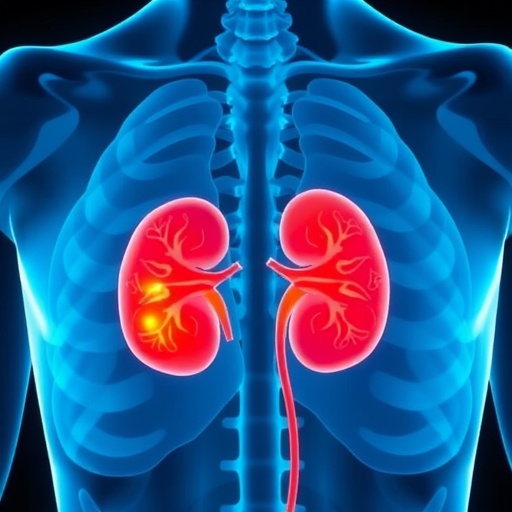
Mounting evidence underscores the heavy toll of chronic kidney disease on elderly populations, where frailty accelerates morbidity and complicates management. By embedding AI at the intersection of nephrology and geriatric care, this research ventures into uncharted territory. It aims to capture the multifactorial etiology of frailty with unprecedented clarity, enabling healthcare providers to anticipate and mitigate decline before clinical deterioration occurs. This proactive stance could substantially reduce healthcare costs while improving quality of life for some of the most vulnerable patients.
Clinical datasets feeding the AI framework are meticulously curated, integrating longitudinal data from electronic health records, laboratory results, imaging, and patient-reported outcomes. The large-scale, multi-center nature of these datasets enriches the AI’s learning capacity and supports the extraction of reliable causal signals amidst noise and variability. This extensive data fusion epitomizes modern health informatics, where synergy between diverse data types fuels next-generation predictive analytics.
Importantly, the research team has planned rigorous validation phases, encompassing retrospective analyses and prospective clinical trials. Such stringent testing is vital to ensure the system’s efficacy and safety before deployment. Ethical considerations also accompany this innovation, with explicit attention to patient consent, data privacy, and algorithmic transparency. These safeguards promote trust among both patients and practitioners, a key factor for successful AI integration in sensitive areas like frailty assessment.
The potential impact of this AI-powered prediction and intervention framework extends beyond nephrology and geriatrics. By demonstrating how causal inference and knowledge distillation can coalesce in personalized medicine, the study sets a precedent for analogous applications in other chronic conditions where frailty and functional decline are prevalent, such as chronic obstructive pulmonary disease, heart failure, and neurodegenerative diseases.
As AI continues to reshape healthcare landscapes, this protocol highlights the critical symbiosis between cutting-edge data science and clinical insight. The collaborative effort between computer scientists, nephrologists, geriatricians, and bioinformaticians has produced a model that respects the complexity of human biology while offering scalable solutions to pressing clinical challenges. Such multidisciplinary synergy is a hallmark of future-proof innovations destined to thrive in the 21st-century healthcare ecosystem.
In summary, the advent of an AI-driven individualized frailty prediction and intervention framework represents a transformative advancement for elderly patients grappling with chronic kidney disease. Through causal feature learning and knowledge-distillation, the framework achieves a nuanced understanding of frailty drivers, empowering personalized preventative strategies and precision care. Beyond its immediate clinical promise, this research exemplifies how sophisticated AI methodologies can be responsibly harnessed to tackle multifaceted medical problems, fostering healthier aging populations worldwide.
Subject of Research: Development of an AI-driven individualized frailty prediction and intervention framework for elderly patients with chronic kidney disease using causal feature learning and knowledge-distillation-based modeling.
Article Title: Protocol for development of an AI-driven individualized frailty prediction and intervention framework for elderly patients with chronic kidney disease: causal feature learning and knowledge-distillation-based modeling study.
Article References:
Chang, J., Hu, J., Cao, Y. et al. Protocol for development of an AI-driven individualized frailty prediction and intervention framework for elderly patients with chronic kidney disease: causal feature learning and knowledge-distillation-based modeling study. BMC Geriatr (2026). https://doi.org/10.1186/s12877-026-07143-0
Image Credits: AI Generated
Tags: advanced modeling techniques in geriatricsAI in healthcarecausal feature learning in medicinechallenges of frailty predictionchronic kidney disease managementhealthcare technology innovationsimpact of aging on healthindividualized patient outcomesmortality risk factors in elderlymultidisciplinary approaches to geriatric carepersonalized medicine in chronic illnesspredicting frailty in elderly patients