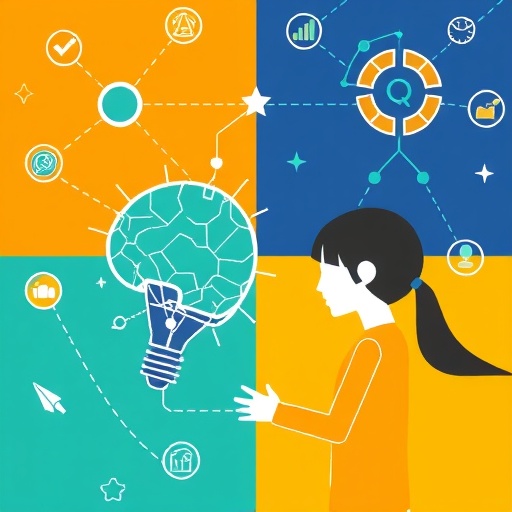
In the ever-evolving landscape of education, the integration of technology continues to reshape the way students learn and educators teach. A groundbreaking systematic literature review conducted by researchers, including Farhood, Nyden, and Beheshti, has illuminated the transformative possibilities of artificial intelligence in personalizing learning experiences. Their comprehensive analysis, set to be published in the journal “Discover Artificial Intelligence,” explores how AI can tailor educational content to meet the diverse needs of students, ultimately enhancing learning outcomes and engagement.
As classrooms become increasingly digitized, the demand for personalized learning has surged. The conventional one-size-fits-all approach to education has proven inadequate in addressing the unique strengths, weaknesses, and interests of individual learners. The systematic review highlights an array of studies demonstrating how AI algorithms can assess students’ performance in real time and adapt instructional methods accordingly. Through intelligent data analysis, AI can identify learning gaps, predict future performance, and reallocate resources to maximize student potential.
One significant aspect of this research emphasizes the role of adaptive learning technologies. These innovative tools harness AI to adjust learning pathways for each student based on their interactions with the educational material. For example, a student struggling with mathematical concepts may be provided with additional exercises specifically targeting those areas, while a student excelling in the same subject could receive advanced challenges to further stimulate their intellectual growth. Such personalization fosters an environment where students can progress at their own pace, leading to improved confidence and reduced frustration.
Moreover, the review details the incorporation of predictive analytics in educational settings. By analyzing large datasets related to student engagement, attendance, and examination outcomes, AI can forecast which students may be at risk of underperforming. This foresight allows educators to intervene in a timely manner, providing targeted support before students fall too far behind. The implications for academic achievement are profound, as early interventions can significantly alter a student’s educational trajectory.
Additionally, the systematic literature review delves into the ethical considerations surrounding AI in education. Concerns about data privacy, algorithmic bias, and the transparency of AI-driven decisions are paramount. The researchers advocate for a balanced approach whereby the benefits of personalized learning through AI are harnessed while also ensuring that ethical standards are upheld. Responsible implementation of AI technologies is essential to maintain trust between educators, students, and parents, ultimately safeguarding the integrity of the educational process.
Another intriguing dimension explored in the review is the role of AI in enhancing student engagement. Traditional methods of instruction often fail to captivate the modern learner, whose attention span may be more fragmented due to the influence of technology. AI-powered educational platforms can create interactive and immersive experiences that respond dynamically to student input. These engaging formats not only retain interest but also promote deeper understanding through active participation.
The review also acknowledges the significant impact of AI on teacher roles within the classroom. While some may fear that AI could replace educators, the findings suggest otherwise. Rather than supplanting teachers, AI has the potential to redefine their responsibilities. By automating administrative tasks, AI allows educators to focus more on teaching and mentorship. This shift empowers teachers to become facilitators of knowledge, guiding students through personalized learning journeys rather than merely delivering content.
Furthermore, the systematic review presents a wealth of case studies illustrating successful AI implementations in educational contexts across the globe. From primary schools to tertiary institutions, innovative uses of AI are emerging, showcasing the versatility of these technologies. For instance, some institutions have adopted AI-driven tutoring systems that provide real-time feedback to students, enhancing their learning experiences and enabling immediate corrections of misunderstandings.
As the research emphasizes, the transition to AI-based personalized learning is not without challenges. Issues of accessibility and digital equity must be addressed to ensure that all students benefit from these advancements. The digital divide remains a critical concern, as unequal access to technology can exacerbate educational disparities. Therefore, policymakers and educational leaders must advocate for equitable resource distribution to ensure that AI tools can reach all learners, regardless of their socioeconomic background.
The findings from this systematic literature review are poised to serve as a pivotal resource for stakeholders in the education sector. Educators, administrators, and policymakers can leverage this research to inform their approaches to integrating AI into curricula and practices. By understanding the nuances of AI-assisted learning, stakeholders can develop strategies that maximize the benefits while addressing potential pitfalls.
As the educational landscape continues to transform, the potential for AI to personalize learning demonstrates an exciting frontier. The insights gleaned from this systematic review provide a roadmap for future research and implementation in AI-driven educational practices. The convergence of technology and pedagogy presents a unique opportunity to revolutionize how we educate, ensuring that all learners can thrive in a rapidly changing world.
By championing innovation while remaining vigilant about ethical concerns and equity, the education sector can harness the power of AI to influence meaningful change. The potential to create a more personalized, engaging, and effective learning experience is within reach, paving the way for a future where education is tailored to individual needs and aspirations. As we stand on the cusp of this educational revolution, the implications of AI for personal learning will undeniably shape the next generation of scholars and leaders.
In conclusion, the systematic review highlights the promising role of artificial intelligence in transforming personalized learning, underscoring its potential benefits, challenges, and ethical considerations. As educators, researchers, and policymakers collectively navigate this new territory, the ongoing discourse surrounding AI in education will be crucial in shaping a future where learning is not only personalized but also equitable and inclusive. The journey towards a more intelligent educational landscape is just beginning, and the stakes have never been higher.
Subject of Research: Artificial Intelligence-based Personalized Learning
Article Title: Artificial intelligence-based personalised learning in education: a systematic literature review
Article References:
Farhood, H., Nyden, M., Beheshti, A. et al. Artificial intelligence-based personalised learning in education: a systematic literature review. Discov Artif Intell 5, 331 (2025). https://doi.org/10.1007/s44163-025-00598-x
Image Credits: AI Generated
DOI: https://doi.org/10.1007/s44163-025-00598-x
Keywords: AI, personalized learning, education technology, adaptive learning, digital equity, student engagement, ethical considerations.
Tags: adaptive learning technologiesaddressing diverse learning needs with AIAI algorithms in educationAI in educationenhancing student engagement with technologyinnovative tools for personalized learningmaximizing student potential through technologypersonalized learning experiencesreal-time assessment of student performancesystematic literature review on AItailoring educational content with AItransformation of traditional education methods