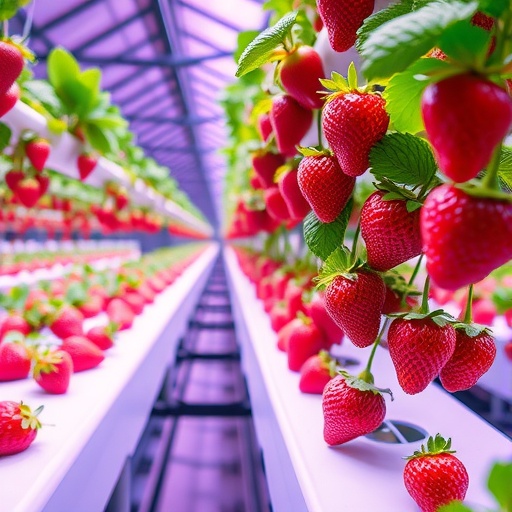
In an era where technological advances have permeated various sectors, the integration of artificial intelligence (AI) into agriculture is revolutionizing traditional farming practices. The recent collaborative research led by M. Hassan, N.H. El-Amary, and D. Alberoni presents a pioneering foray into the world of hydroponics with an innovative artificial intelligence-based expert system. Set against the backdrop of strawberry cultivation, this groundbreaking study offers a glimpse into the future of farming, leveraging intelligent monitoring and predictive methodologies to optimize production and resource utilization.
At its core, the research highlights the critical need for advanced agricultural techniques in response to the increasing global demand for food. With the world population projected to reach 9.7 billion by 2050, there is an urgent requirement for sustainable farming solutions that utilize technology to improve efficiency. Hydroponics, a method of growing plants without soil, provides a viable alternative to traditional farming, allowing for increased food production in urban environments and settings where arable land is scarce. The development of an AI-based expert system promises to significantly enhance these practices by providing real-time analysis and decision-making capabilities.
The expert system designed in this study encompasses a comprehensive sensor network for continuous monitoring of crucial parameters such as pH levels, nutrient concentration, and water usage. By integrating IoT (Internet of Things) devices, the researchers created an interconnected monitoring system that feeds data into an AI platform. This not only allows for precise control of growing conditions but also facilitates the collection of vast amounts of historical data, which can be analyzed to identify trends and predict future outcomes. Such a data-driven approach marks a significant shift from conventional agronomy, where decisions are often based on anecdotal evidence rather than quantitative analysis.
One of the remarkable features of the AI system is its predictive analytics capability. By utilizing machine learning algorithms, the system can forecast optimal growth conditions for strawberry plants, such as the ideal nutrient mix or adjustments needed in response to environmental changes. These predictions are based on both real-time and historical data, enabling growers to anticipate problems before they arise and adapt their strategies accordingly. This proactive approach represents a crucial advancement in agricultural management practices, allowing for greater yield and reduced waste.
In addition to enhancing productivity, the study emphasizes sustainability as a central theme. The AI-driven expert system assists in minimizing resource use, particularly water and fertilizers, which are often overused in traditional farming methods. By ensuring that plants receive precisely what they need, the system not only lowers costs for growers but also contributes to environmental conservation efforts. This aspect of the research underscores the importance of resource-efficient practices in agriculture, particularly as global concerns about water scarcity and soil degradation continue to mount.
Another significant aspect of the research is the user-friendly interface of the AI-based system. Understanding that technology can often be a barrier rather than an aid, the researchers placed a strong emphasis on creating a solution that would be accessible to all growers, regardless of their technical expertise. By developing an intuitive platform that provides clear insights and recommendations, they enable farmers to engage with advanced technologies without feeling overwhelmed. This democratization of technology is essential for widespread adoption, particularly in regions where small-scale farming predominates.
Moreover, the collaborative aspect of this research deserves acknowledgment. The joint efforts of multiple researchers harness various domains of expertise, ranging from artificial intelligence and data analytics to agriculture and sustainability. This multidisciplinary approach encourages innovative solutions that are not only scientifically sound but also practical for everyday use. The successful integration of these diverse perspectives fosters an environment where groundbreaking ideas can flourish, paving the way for future advancements in agricultural technology.
The results of the study advocate for a paradigm shift in how farming is perceived and practiced. As evidence mounts that intelligent systems can significantly enhance agricultural outputs while addressing sustainability concerns, the perception of farming as a low-tech, labor-intensive industry is rapidly evolving. The benefits of AI integration in agriculture extend beyond mere productivity; they encompass a holistic view of farming that prioritizes the health of ecosystems and responsible resource management.
As the research prepares for publication, the implications of these findings resonate beyond the realm of strawberry cultivation. The methodologies and technologies developed in this study have the potential to be adapted to various crops, demonstrating the versatility and scalability of AI-driven agricultural solutions. This adaptability positions the research as a critical step in creating resilient food systems that can withstand the challenges posed by climate change and shifting market demands.
In conclusion, the research conducted by Hassan and colleagues signifies a monumental leap forward in agricultural technology, particularly in the realm of hydroponics and artificial intelligence. By creating a robust expert system for monitoring and predicting growth conditions, the study not only enhances strawberry farming but also establishes a framework that others can emulate. This innovative approach brings together the best practices of technology and agriculture, underscoring the vital role that intelligent systems will play in shaping the future of food production.
As we look toward the future, the findings of this research can be a beacon for innovators, policymakers, and farmers alike. The intersection of AI and agriculture holds the promise of more efficient, sustainable, and productive farming practices that can ensure food security for generations to come. As such, continued investment in research and development within this field remains essential, promising a new era of agricultural excellence driven by intelligence and sustainability.
In summary, the strides made in integrating AI into hydroponics present a compelling case for the future of farming—one where technology and nature coalesce to yield abundant, healthy crops. This is not merely about enhancing production; it reflects an evolving understanding of how we can work in harmony with our environment to create a sustainable future. The journey of applying artificial intelligence in agriculture has just begun, and the potential is boundless.
Subject of Research: Artificial intelligence-based expert systems in hydroponics
Article Title: Integrated monitoring and prediction artificial intelligent based expert system: a case study on hydroponics strawberry cultivation.
Article References:
Hassan, M., El-Amary, N.H., Alberoni, D. et al. Integrated monitoring and prediction artificial intelligent based expert system: a case study on hydroponics strawberry cultivation.
Discov Artif Intell (2025). https://doi.org/10.1007/s44163-025-00717-8
Image Credits: AI Generated
DOI: 10.1007/s44163-025-00717-8
Keywords: Artificial Intelligence, Hydroponics, Strawberry Cultivation, Sustainable Agriculture, Predictive Analytics, IoT, Expert Systems
Tags: advanced agricultural techniquesAI in agricultureartificial intelligence expert systemfood production efficiencyfuture of farming technologyhydroponic strawberry cultivationpredictive methodologies in farmingresource optimization in hydroponicssensor network for agriculturesmart farming technologysustainable farming solutionsurban agriculture innovations