In an era where artificial intelligence continues to permeate diverse facets of daily life, its integration into mental health services presents revolutionary possibilities and profound challenges. A groundbreaking study recently published in the International Journal of Mental Health and Addiction explores the complex dynamics surrounding individuals’ attitudes toward seeking professional psychological help, the pervasive issue of self-stigma, and the intriguing preferences between AI-driven mental health chatbots and human counselors. This mixed methods research unravels the intricate psychological and social factors influencing help-seeking behaviors and offers novel insights into the evolving landscape of mental health care.
The pervasive stigma attached to mental health issues has long been a formidable barrier that deters many from seeking professional support. Self-stigma, in particular, manifests when individuals internalize negative societal stereotypes, resulting in diminished self-esteem and reluctance to pursue treatment. This study delves deep into how self-stigma intersects with attitudes toward psychological help, revealing that even as awareness about mental health improves globally, internal hurdles persist robustly. These psychological impediments do not merely deter initial help-seeking but critically impact engagement and adherence to therapeutic interventions.
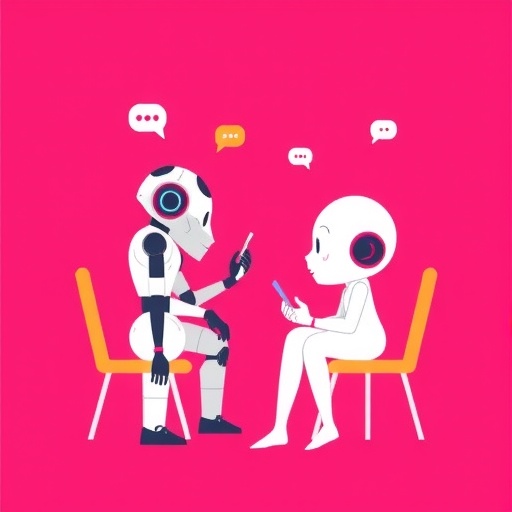
One of the most fascinating aspects uncovered by the research is the dichotomy in preferences between AI mental health chatbots and traditional human counselors. While technology has enabled the deployment of AI-driven chatbots designed to provide immediate, scalable psychological support, questions remain regarding their efficacy, user trust, and emotional resonance. The study meticulously investigates user perceptions, identifying varied acceptance levels influenced by factors such as prior experience with therapy, severity of mental health concerns, and concerns about confidentiality and empathy.
Technically speaking, AI chatbots operate through advanced natural language processing algorithms, often leveraging machine learning models trained on vast datasets of therapeutic dialogues to mimic human-like conversations. These systems are designed to recognize linguistic cues indicative of emotional distress and provide appropriate responses or interventions. However, their deterministic nature and the absence of genuinely human empathy raise critical considerations about their role as standalone mental health providers versus adjunct tools.
The researchers employed a mixed methods approach combining quantitative surveys with qualitative interviews, allowing for a nuanced understanding of complex human attitudes and behaviors. Quantitative data provided statistically significant correlations between variables such as self-stigma and help-seeking willingness, while qualitative narratives illuminated the personal and contextual intricacies behind these numbers. This dual approach strengthens the validity of the findings and broadens their applicability to diverse populations.
Intriguingly, the study reveals that a substantial proportion of individuals express cautious optimism toward AI chatbots, valuing their anonymity, accessibility, and immediacy. For many, the opportunity to discuss sensitive topics without fear of judgment represents a critical advantage that traditional counseling might not afford. Nonetheless, concerns about the depth of understanding, emotional connection, and the ability to handle crises remain prevalent, underscoring the limitations of current AI technology.
The paper emphasizes the critical influence of cultural and demographic factors on attitudes toward psychological help and technology usage. Variables such as age, gender, educational background, and cultural norms were found to shape individuals’ openness to AI versus human counseling. For instance, younger participants demonstrated greater receptivity to AI chatbots, perhaps reflecting digital nativity, whereas older individuals tended to favor human interaction, highlighting a generational divide with significant implications for mental health service delivery models.
Another technical dimension explored involves data privacy and ethical concerns inherent in AI-assisted mental health services. The study highlights participants’ apprehensions about data security and the potential misuse of sensitive personal information. These issues are paramount, given the intimate nature of mental health dialogues, and demand stringent regulatory frameworks and transparent AI design principles to ensure trustworthiness and user safety.
From a clinical perspective, the research underscores the potential for AI chatbots to serve as early intervention tools or complementary resources within stepped care models. By providing immediate support and psychoeducation, chatbots can alleviate pressure on overburdened healthcare systems and help bridge gaps in service access, particularly in underserved or remote areas. However, the authors caution against overreliance on AI and call for rigorous evaluation of therapeutic outcomes to validate chatbot efficacy continuously.
Delving deeper into therapeutic alliance, a cornerstone of effective psychotherapy, the study examines how this element translates into AI-mediated interactions. While human counselors naturally develop rapport through empathy, nonverbal cues, and adaptive responses, chatbots strive to replicate these elements algorithmically. The research highlights ongoing challenges and innovations in affective computing aimed at enhancing AI’s capacity to recognize and respond to nuanced emotional states, thereby enriching user experience.
The study also identifies significant individual differences in coping styles and technological literacy that modulate help-seeking preferences. For example, individuals with avoidant coping mechanisms may gravitate toward AI chatbots as a less intimidating means of psychological support, whereas others may derive greater benefit from the nuanced understanding afforded by human therapists. This variability suggests the importance of personalized approaches in mental health service offerings.
Importantly, the research contributes to the broader discourse on the democratization of mental health care. By elucidating public perceptions and identifying psychological barriers, it informs policymakers, clinicians, and technology developers seeking to optimize the implementation of AI tools. Bridging the divide between innovative technological solutions and user-centered care demands ongoing collaboration and responsiveness to empirical findings such as those presented here.
The study also addresses potential future developments in AI mental health support, including integration with wearable biosensors and real-time mood tracking. These advancements hold promise for highly tailored interventions that adapt dynamically to users’ emotional and physiological states. However, they also raise new ethical questions about surveillance, consent, and the boundaries of automated care.
As mental health disorders continue to represent a global health challenge exacerbated by factors such as pandemics, social isolation, and economic strain, expanding access to effective psychological interventions is critical. This research underscores that while AI-driven tools offer exciting pathways forward, addressing the human aspects of trust, empathy, and stigma remains essential to successful mental health care.
In conclusion, this pioneering study situates itself at the intersection of technology, psychology, and social behavior, offering a comprehensive examination of the evolving preferences and barriers in mental health help-seeking. Its findings pave the way for more nuanced, adaptive, and inclusive mental health service models that integrate AI thoughtfully alongside human expertise, thereby harnessing technological innovation while honoring the fundamentally human nature of healing.
Subject of Research: Attitudes toward seeking professional psychological help, self-stigma of seeking help, and preferences for AI mental health chatbots versus human counselors.
Article Title: Attitudes Toward Seeking Professional Psychological Help, Self-Stigma of seeking help, and Preferences for AI Mental Health Chatbots vs. Human Counsellors: A Mixed Methods Study.
Article References:
Miqdadi, A.I., Alhalabi, M.N., Alhadidi, M. et al. Attitudes Toward Seeking Professional Psychological Help, Self-Stigma of seeking help, and Preferences for AI Mental Health Chatbots vs. Human Counsellors: A Mixed Methods Study. Int J Ment Health Addiction (2025). https://doi.org/10.1007/s11469-025-01595-y
Image Credits: AI Generated
DOI: https://doi.org/10.1007/s11469-025-01595-y
Tags: AI mental health chatbotsattitudes toward psychological helpbarriers to seeking mental health supportchallenges in AI and mental health.engagement in therapeutic interventionsevolving landscape of mental health serviceshuman counselors in mental healthimpact of self-stigma on help-seekingmixed-methods research in psychologypreferences in mental health treatmentpsychological factors in mental health caresocial stigma and mental health