Recent advancements in artificial intelligence are taking a bold leap into the realm of nursing education, as highlighted by a pioneering study conducted by Ibrahim, Shahrour, and Dukhaykh. This trailblazing research investigates the effects of experiential learning through AI-generated aging video simulations, delving deep into their impact on nursing students’ knowledge, attitudes, and gerontophobia. The integration of technology into educational frameworks has long been a topic of interest; however, few studies have explored how simulated experiences can bridge the gap between theoretical understanding and empathetic practice in nursing.
As the healthcare landscape evolves at a rapid pace, it becomes crucial for nursing students to grasp the complexities of geriatric care. Enter AI-generated simulations, which provide a safe and immersive environment for learners to engage with the challenges and realities of aging. By utilizing such innovative educational tools, nursing students can confront their biases and improve their comfort levels in dealing with elder patients. This fresh perspective is particularly vital in combating gerontophobia, a term that describes the fear or prejudice against elderly individuals, which can hinder optimal care delivery.
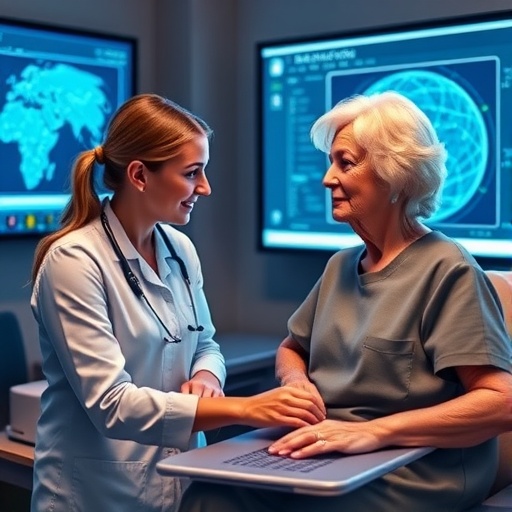
The implications of this research extend beyond the classroom. By shaping the future of nursing education, such studies offer a glimpse into how technology can enhance empathy and understanding in future healthcare providers. The AI-generated video simulations featured in the study allow students not just to witness aging but to experience it vicariously, offering a nuanced understanding of physical, mental, and emotional changes that come with age. This firsthand exposure is invaluable in preparing nursing students to provide compassionate, informed care to their patients.
In the study, students engaged with various lifelike scenarios that mirrored the challenges faced by elderly individuals, including cognitive decline, mobility issues, and the emotional impacts of age-related life changes. By interacting with these simulations, students were able to better appreciate the intricacies of geriatric care, cultivating a more profound respect for their future patients. The educational framework employed by Ibrahim, Shahrour, and Dukhaykh also incorporated reflective practices, allowing students to ponder their experiences and feelings evoked during the simulations.
With geriatric care becoming increasingly critical due to demographic changes, the need for well-prepared healthcare professionals cannot be overstated. The incorporation of AI technologies within nursing programs paves the way for a new paradigm in educational methodologies. It not only enhances students’ knowledge base but also cultivates the ability to approach elder care with sensitivity and competence. As the study points out, experiential learning significantly shifts attitudes toward aging, fostering a generation of caregivers who are prepared to address the diverse needs of older adults.
As students began to dismantle their preconceived notions and biases regarding the elderly, the study observed a notable decline in feelings of gerontophobia. By engaging with the realistic scenarios presented in the simulations, participants reported feeling more equipped to face the challenges associated with geriatric care. This transformation is indicative of the profound effect experiential learning can have on an individual’s perspective, highlighting the necessity of integrating innovative educational practices into nursing curricula.
A significant finding of the research is the alignment between increased knowledge levels and improved attitudes toward aging. By effectively simulating the aging process through AI technologies, nursing students not only enriched their understanding but also revised their emotional responses to aging. This change in perspective showcases the potential of experiential learning to reframe attitudes within the healthcare sector, ultimately benefiting both providers and recipients of care.
Furthermore, the study underscores the potential for AI-generated educational tools to address broader issues within healthcare education. By leveraging immersive technology, educators can more effectively prepare students for the multifaceted challenges they will face in practice. With growing demands for holistic caregiving models, incorporating technology in education could serve as a catalyst for meaningful change in how future nurses approach their roles.
As discussions around the implications of an aging population continue to gain urgency, the findings from Ibrahim, Shahrour, and Dukhaykh’s research cannot be overlooked. The integration of AI in nursing education represents a proactive step toward equipping students with the necessary skills and attitudes for effective geriatric care. By fostering empathy and understanding, educators can nurture a generation of healthcare professionals who are not just clinically proficient but also deeply compassionate.
In conclusion, the study showcases the transformative power of experiential learning through AI-generated like simulations in nursing education. By bridging the theoretical and practical realms of geriatric care, such innovative practices can shape not only the attitudes of nursing students but the future landscape of elder care. As the field of nursing continues to evolve, embracing technological advancements will be essential in preparing students to meet the complexities of healthcare in a rapidly aging society.
The exploration of technological influences on education emphasizes the need for continual adaptation within nursing curricula. As this study proves, harnessing the potential of AI not only enhances knowledge acquisition but also fosters a culture of empathy—the cornerstone of effective caregiving. Thus, the research sets a vital precedent for future studies aimed at understanding how innovative educational interventions can impact patient care holistically.
Ultimately, as we reflect on the potential impact of AI on nursing education, the importance of integrating experiential learning tools cannot be overstated. Research like that of Ibrahim, Shahrour, and Dukhaykh affirms a key principle: technology, when applied thoughtfully, has the power to transform education, enhance professional preparedness, and improve patient care in the long run.
Subject of Research: The effects of experiential learning through AI-generated aging video simulations on nursing students’ knowledge, attitudes, and gerontophobia.
Article Title: Effect of experiential learning based AI‑generated aging video simulation on knowledge, attitude and gerontophobia in nursing students.
Article References:
Ibrahim, F.M., Shahrour, G. & Dukhaykh, S. Effect of experiential learning based AI‑generated aging video simulation on knowledge, attitude and gerontophobia in nursing students.
BMC Nurs (2025). https://doi.org/10.1186/s12912-025-04145-y
Image Credits: AI Generated
DOI: 10.1186/s12912-025-04145-y
Keywords: experiential learning, AI-generated simulations, aging, nursing education, gerontophobia, empathy, geriatric care.
Tags: addressing biases in healthcare deliveryAI in nursing educationcombating gerontophobia in healthcareenhancing geriatric care educationethical implications of AI in healthcareexperiential learning through AI simulationsgerontology learning for nursing studentsimmersive aging video simulationsimproving empathy in nursing practicenursing students’ attitudes towards elderly caretechnology in nursing curriculumvirtual reality in nursing training