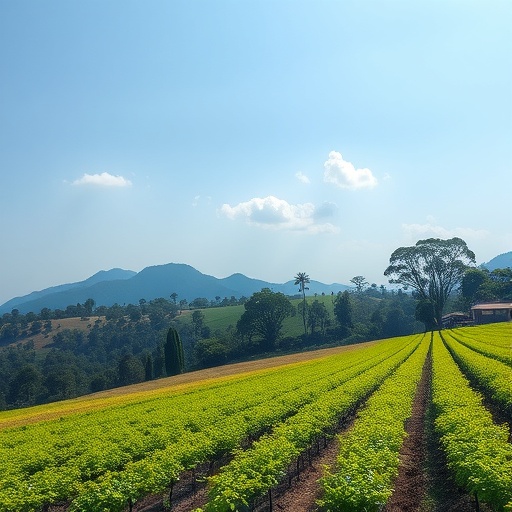
In a world increasingly defined by climate change and environmental degradation, the imperative for sustainable agricultural practices has never been clearer. Recent research conducted by Kugedera, Trivedi, and Nandeha, published in Discover Agriculture, examines the potential of agroforestry and integrated nutrient management as vital components of climate-smart agriculture. The article provides a comprehensive overview of these methods, particularly in regions of Africa and Asia, where the impacts of climate change are felt acutely. This review not only sheds light on the potential benefits of these practices but also delineates the challenges and opportunities they present for soil health and climate change mitigation.
Agroforestry, the integration of trees and shrubs into agricultural landscapes, has been recognized as a transformative approach to farming. This method enhances biodiversity, improves soil structure, and fosters healthier ecosystems. The presence of trees within agricultural systems can significantly contribute to carbon sequestration, thereby combating climate change effectively. From providing shade for crops to acting as windbreaks, trees within agroforestry systems offer multiple ecological services that enhance the resilience of farming systems. Furthermore, trees can play a critical role in maintaining soil moisture levels, which is increasingly essential during periods of drought aggravated by changing climate patterns.
Moreover, the research highlights integrated nutrient management, which combines organic and inorganic fertilizers with biofertilizers to optimize nutrient availability in the soil. This holistic approach not only replenishes soil fertility but also minimizes the adverse effects associated with excessive fertilizer use, such as soil acidification and water pollution. The synergy between organic inputs, such as compost and manure, and chemical fertilizers leads to more sustainable nutrient cycling. By fostering a balanced nutrient supply, integrated nutrient management contributes to increased crop productivity and soil health—a dual outcome that is critical in the fight against food insecurity exacerbated by climate challenges.
The authors of the review emphasize that these agro-technologies are particularly relevant in African and Asian contexts, where agricultural practices have traditionally been more susceptible to the shocks of climate change. The multifaceted benefits of agroforestry and integrated nutrient management not only address the immediate challenges of food production but also align with broader environmental objectives. This alignment with sustainable development goals underscores the necessity for policymakers and agricultural practitioners to adopt these methodologies.
Despite the promising nature of agroforestry and integrated nutrient management, the researchers acknowledge the challenges that hinder their widespread adoption. These challenges include limited access to technical knowledge, insufficient financial resources, and the socio-cultural barriers that may deter farmers from changing traditional practices. Therefore, there is an urgent need for targeted capacity-building initiatives that equip farmers with the knowledge and tools necessary to implement these practices effectively. Collaboration between governments, non-governmental organizations, and the agricultural community is essential to create an enabling environment for successful implementation.
The review also calls attention to the need for more extensive research on the effectiveness of these practices in various climatic and ecological contexts. One-size-fits-all solutions are rarely effective in agriculture due to the complexity of local environments. Therefore, understanding the agroecological nuances and farmer preferences is crucial in tailoring interventions that resonate on the ground. This adaptability can significantly enhance the impact of agroforestry and integrated nutrient management strategies.
Another critical aspect discussed is the role of technology in enhancing the outcomes of these agro-technologies. Advances in precision agriculture and remote sensing can provide farmers with actionable insights into soil health and crop conditions. By leveraging technology, farmers can make informed decisions about which practices to adopt, optimize their input usage, and ultimately increase their productivity sustainably. The integration of traditional knowledge with modern technologies presents an exciting frontier for agricultural innovation and resilience.
Furthermore, the economic viability of agroforestry and integrated nutrient management is a recurring theme in the review. Sustainable farming practices often require upfront investment, and the financial return on these investments may not be immediately evident. Consequently, there is a need for financial mechanisms that support farmers transitioning to these practices, such as subsidies, grants, and low-interest loans. By creating more favorable economic conditions, stakeholders can encourage the adoption of practices that contribute to long-term environmental sustainability.
The impact of climate-smart agriculture extends beyond environmental benefits; it also has significant social implications. By improving soil health and increasing agricultural productivity, these practices can help reduce poverty among rural communities. Empowering farmers to engage in sustainable practices fosters a sense of ownership and responsibility towards the land and its resources. Additionally, when farmers are able to produce more food sustainably, this can contribute to enhancing food security in vulnerable regions.
As the consequences of climate change continue to unfold, the urgency for implementing adaptive agricultural strategies has become more pronounced. Agroforestry and integrated nutrient management are not merely theoretical concepts; they represent practical, actionable solutions that can lead to significant environmental and social progress. The optimism expressed by the authors of this research is grounded in empirical evidence and the successful case studies that demonstrate the efficacy of these agro-technologies in real-world applications.
Lastly, as cities and urban populations grow, the link between urban agriculture and these innovative practices becomes increasingly vital. Urban centers that integrate green spaces and urban agroforestry can significantly mitigate heat effects and contribute to local food production, thereby supporting community resilience in the face of climate challenges. Integrating these practices into urban planning can help create sustainable cities that enhance both ecosystem services and quality of life for residents.
In conclusion, the research conducted by Kugedera and colleagues offers hopeful insights into the future of agriculture in the face of climate change. By emphasizing the interconnectedness of agroforestry and integrated nutrient management, the study points to a path forward that enhances soil health, mitigates climate risks, and supports food security in some of the world’s most vulnerable regions. This paradigm shift toward sustainable agro-technologies not only promises a healthier environment but also fosters socio-economic resilience, laying a foundation for a more sustainable and equitable agricultural future.
Subject of Research: Agroforestry and Integrated Nutrient Management as Climate-Smart Agro-Technologies
Article Title: Agroforestry and integrated nutrient management as climate-smart agro-technologies for soil health and climate change mitigation: a review on African and Asian regions.
Article References:
Kugedera, A.T., Trivedi, A., Nandeha, N. et al. Agroforestry and integrated nutrient management as climate-smart agro-technologies for soil health and climate change mitigation: a review on African and Asian regions.
Discov Agric 3, 272 (2025). https://doi.org/10.1007/s44279-025-00463-6
Image Credits: AI Generated
DOI: https://doi.org/10.1007/s44279-025-00463-6
Keywords: Agroforestry, Integrated Nutrient Management, Climate-Smart Agriculture, Soil Health, Climate Change Mitigation, Sustainable Agriculture, Food Security, Economic Viability, Technology in Agriculture, Urban Agriculture, Africa, Asia.
Tags: agroforestry in climate-smart agriculturebenefits of agroforestry for soil healthbiodiversity enhancement through agroforestrycarbon sequestration in agricultural systemschallenges of implementing agroforestryclimate change mitigation strategiesecological services provided by trees in agricultureintegrated nutrient management techniquesnutrient management in agroforestry systemsopportunities for sustainable agricultureresilience of farming systems to climate changesustainable farming practices in Africa and Asia