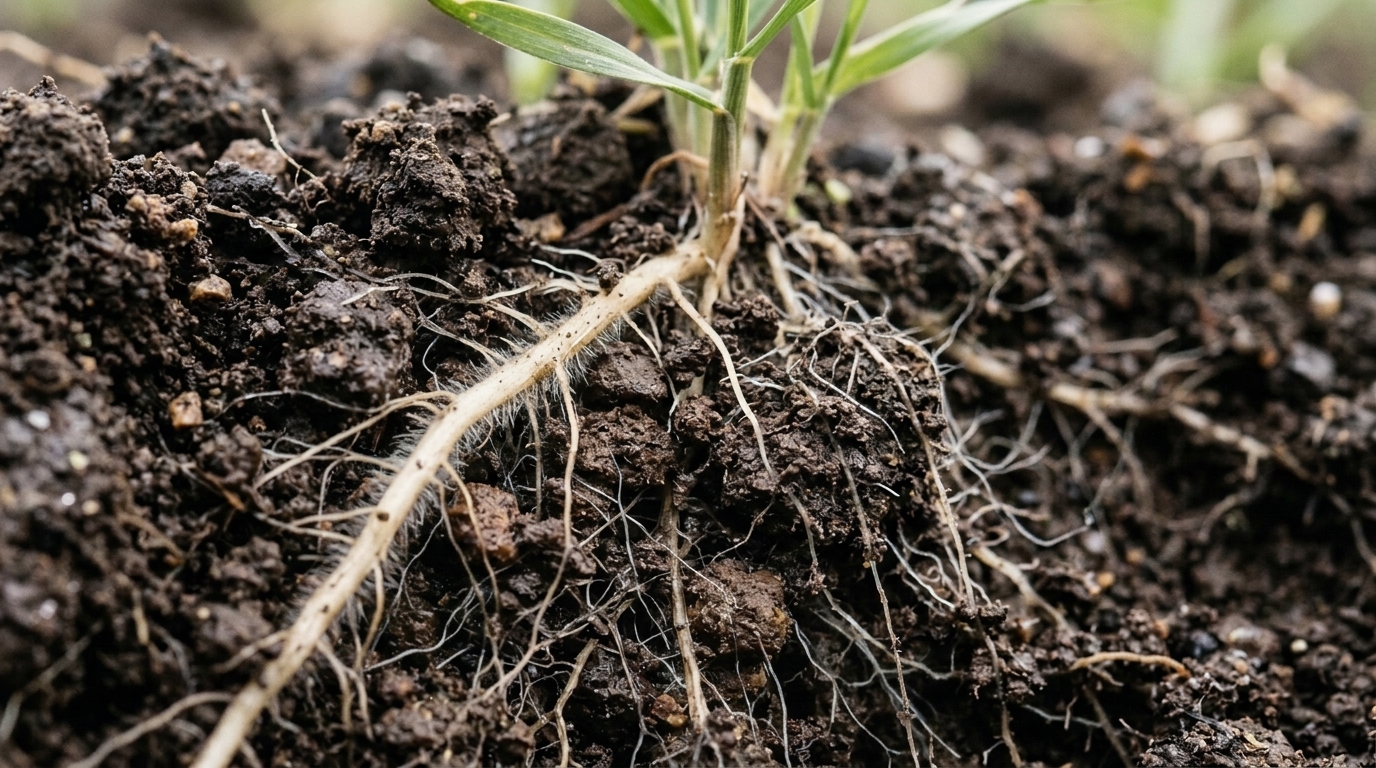
The synthesis by researchers Faisal Zaman, Farhat Ullah Khan, and Hafeez Noor in Frontiers in Microbiology demonstrates that individual microbiome methods cannot simultaneously characterize microbial identity, genetic potential, realized activity, spatial organization, and direct host outcomes in agricultural soils. While high-throughput sequencing and multi-omics profiling have expanded datasets across plant-soil research, profiling community composition or identifying specific genes does not verify active gene expression or prove that microbes directly cause measurable changes in crop productivity. The authors introduce an evidence-to-inference framework to resolve persistent inferential gaps in soil ecology, distinguishing descriptive taxonomic catalogs from validated biological mechanisms. Their evaluation synthesizes decades of methodological progress, demonstrating why genomic potential must be combined with transcriptomic, proteomic, metabolomic, and spatially resolved measurements. This structured approach directly tackles scientific challenges where statistical co-occurrence is conflated with ecological causation, establishing clear testing criteria before microbial discoveries are applied to crop management, nutrient acquisition, or pathogen suppression strategies in sustainable farming systems.
The historical trajectory of soil microbiology reveals a shift across three overlapping methodological phases, each possessing distinct capabilities and technical constraints. Prior to the nineteen-seventies, research depended on laboratory isolation and cultivation, enabling direct physiological characterization but remaining constrained to organisms capable of growing under specific laboratory conditions. Beginning in the nineteen-eighties, culture-independent molecular fingerprinting techniques allowed researchers to examine environmental communities without culturing, though these tools offered restricted taxonomic and functional resolution. The introduction of Sanger chain-termination sequencing in nineteen-seventy-seven provided high accuracy for microbial DNA and marker genes, yet low throughput and high costs limited large-scale surveys. The conceptual emergence of the metagenome in nineteen-ninety-eight expanded environmental genetics by treating collective community DNA as an integrated analytical target, exemplified by subsequent discoveries of ammonia-oxidizing archaea in soils. Since the mid-two-thousands, rapid advances in high-throughput sequencing, mass spectrometry, and bioinformatics pipelines have enabled broader multi-omics investigations across complex agricultural environments.
Advances in sequencing technologies have altered microbial community profiling, progressing from massive parallel synthesis to single-molecule long-read architectures. Second-generation sequencing enabled parallel analysis of millions of DNA sequences, providing cost-effective and high-throughput community profiling across soils and agricultural fields. However, these platforms generate short read lengths and remain susceptible to polymerase chain reaction amplification biases and library preparation artifacts that skew taxonomic representation and complicate downstream genomic assembly. Third-generation single-molecule sequencing technologies, including Pacific Biosciences single-molecule real-time sequencing and Oxford Nanopore platforms, generate significantly longer DNA reads that bypass amplification steps and facilitate the reconstruction of complex environmental genomes. Despite these structural advantages, long-read platforms exhibit variable raw-read accuracy depending on sequencing chemistries, while demanding substantial computational resources and higher financial investments. Consequently, while sequencing identifies which microbial taxa and genes reside within agricultural soils, these genomic inventories only document functional potential rather than demonstrating that specific biological pathways are active at the time of sampling.
To move beyond genetic inventories, researchers increasingly employ mass spectrometry platforms that directly evaluate translated proteins and chemical metabolites within plant-soil systems. Metaproteomics and metabolomics address the classical grey box of microbial ecology by identifying molecular machinery and metabolic intermediates that reflect active cellular processes. Traditional protein separation using two-dimensional gel electrophoresis, introduced in the nineteen-seventies, faced severe limitations when resolving low-abundance proteins, molecules with extreme isoelectric points, or hydrophobic membrane structures. Modern shotgun proteomics coupled with chromatography overcomes these constraints by enabling simultaneous high-throughput identification and quantification of thousands of cellular and membrane proteins. In parallel, metabolomic investigations rely on complementary platforms, pairing gas chromatography–mass spectrometry for volatile and derivatized primary metabolites with liquid chromatography–mass spectrometry for polar, non-volatile compounds, while nuclear magnetic resonance spectroscopy provides valuable structural elucidations. Crucially, because soil metabolites form shared chemical pools originating simultaneously from plant exudates, microbial transformations, and abiotic chemical reactions, establishing microbial origin requires rigorous controls, time-resolved sampling, or isotopic labeling.
Spatial resolution and single-cell metabolic activity represent another critical analytical frontier evaluated in the review, particularly through nanoscale secondary ion mass spectrometry. While bulk community omics homogenize heterogeneous microenvironments, single-cell imaging methods visualize microbial distribution, cellular abundance, and functional behaviors in undisturbed microhabitats. Nanoscale secondary ion mass spectrometry, known as NanoSIMS, couples ultra-high-resolution microscopic imaging with stable isotope tracing, achieving the spatial sensitivity required to examine individual, low-abundance microbial cells that perform vital biogeochemical transformations. Researchers have utilized this approach to track microbial cycling of carbon, nitrogen, and sulfur, as well as physical interactions occurring at root-soil interfaces. However, high spatial resolution inherently restricts analytical coverage to microscopic areas, meaning that physical co-localization between a microbe and a plant root cannot independently prove active metabolic exchange or biological causation without targeted perturbation experiments and isotope controls. Multi-scale investigations must therefore consciously link single-cell microscopic observations with community-scale omics measurements to confirm that localized activities influence broader ecosystem functions.
The interpretation of massive microbiome datasets relies on bioinformatics pipelines, software algorithms, and curated reference databases that have matured over recent decades. The review documents foundational bioinformatic milestones, including the release of Mothur in two-thousand-nine for operational taxonomic unit clustering, the launch of QIIME in twenty-ten offering customized analysis scripts, and the subsequent development of QIIME 2 in twenty-sixteen using Python three to provide reproducible, modular analysis workflows. Sequence quality control advanced with denoising algorithms such as DADA2 and UNOISE3, which resolve biological amplicon sequence variants at single-nucleotide resolution rather than relying on arbitrary ninety-seven percent similarity clustering thresholds. To infer ecological functions from amplicon profiles without expensive shotgun sequencing, computational tools including PICRUSt, FAPROTAX, and BugBase predict functional capabilities and phenotypes based on reference genomes. Nevertheless, the review stresses that such bioinformatic predictions remain indirect models requiring independent confirmation, particularly because between seven and sixty percent of environmental metagenomic sequences cannot be accurately annotated due to incomplete reference databases.
Practical implementation of microbiome technologies encounters severe physical bottlenecks during sample collection, chemical extraction, and laboratory processing. Agricultural soils represent exceptionally heterogeneous substrates packed with enzyme inhibitors, heavy metals, and humic substances that interfere with nucleic acid extraction and enzymatic amplification. For soils with elevated humic acid concentrations, specialized protocols such as washing silica beads with guanidine thiocyanate during DNA extraction are necessary to preserve nucleic acid purity. Similarly, extracting soil proteins for metaproteomic characterization requires tailored chemical fractionation, such as using zero-point-one molar sodium hydroxide solutions to co-extract proteins, microbial biomass, and humic fractions prior to secondary phenol extraction. Beyond extraction challenges, standard marker-gene amplification suffers from preferential polymerase amplification and sequencing errors that distort community richness estimates. While two-step polymerase chain reaction protocols have been developed to capture previously overlooked microbial groups, standard sequencing yields only relative compositional proportions rather than absolute microbial abundance, and synthetic internal standards such as eighteen-S amplicon references can introduce substantial misestimations of soil fungal populations.
The review illustrates the power and limitations of multi-omics approaches through specific case studies in plant pathology, rhizosphere chemistry, and environmental biogeochemistry. In investigations of potato common scab disease, amplicon sequencing revealed that disease-suppressive soils maintained lower pathogen loads, higher bacterial diversity, and more intricate co-occurrence networks. Follow-up metagenomic sequencing demonstrated that suppressive soils exhibited enrichment of microbial genes associated with ABC transporters, bacterial secretion systems, quorum sensing, nitrogen metabolism, and cytochrome P450 pathways, whereas soils from mildly diseased plants showed elevated antibiotic biosynthesis pathways. In rhizosphere metabolomics, arbuscular mycorrhizal colonization in Senecio jacobaea plants grown in Xinjiang altered pyrrolidine alkaloid profiles, offering clues regarding mycorrhiza-induced chemical defenses. Environmental transcriptomic surveys further demonstrate how RNA profiling uncovers functional dynamics, identifying one hundred twenty-nine distinct metabolic pathways regulating nitrogen, phosphate, sugar metabolism, and organic degradation in European beech and Norway spruce forest soils. Yet, the authors reiterate that these molecular patterns represent functional correlations requiring targeted plant-growth validations before claiming proven agricultural mechanisms.
To prevent scientific misinterpretations, the authors formalize an evidence-to-inference matrix highlighting three persistent inferential fallacies in agricultural microbiome research. First, researchers frequently confuse relative sequence proportions with absolute microbial population sizes, failing to recognize that a taxon’s relative share can shift simply because unrelated community members expand or contract. Second, investigations frequently equate predicted or detected functional genes with realized biological activity, ignoring that metabolic genes may remain unexpressed, untranslated, or constrained by abiotic soil conditions. Third, correlation is routinely conflated with causal biological mechanisms, overlooking how external variables like soil pH, crop genetics, climate, or tillage regimes simultaneously drive microbial composition and crop phenotypes. Overcoming these pitfalls requires rigorous study designs that combine complementary omics layers, integrate time-resolved controls, and execute targeted functional perturbation experiments. The authors emphasize that combining multiple high-throughput technologies without focused hypotheses simply inflates analytical complexity and financial cost without improving scientific validity, urging researchers to justify how each omics measurement resolves a specific, predefined experimental uncertainty.
Looking toward future applications, the synthesis outlines an interdisciplinary roadmap that couples emerging technologies with data science platforms and iterative microbiome engineering. The authors propose five core research priorities: defining primary endpoints in advance, demonstrating causality through physical perturbations and microbial inoculations, standardizing reporting metadata and extraction protocols, evaluating microbial interventions across multi-season agronomic field environments, and transparently reporting negative findings. Large-scale public platforms, such as the gcMeta database in China containing over one hundred twenty thousand integrated samples from international initiatives like the Human Microbiome Project and Tara Oceans, provide the infrastructure required to harmonize multi-omics data across institutions. Furthermore, applying iterative design-build-test-learn engineering cycles enables researchers to formulate synthetic consortia and biofertilizers capable of alleviating continuous cropping obstacles and reducing chemical fertilizer inputs. By combining macroscopic ecological frameworks, microbial culturomics, and rigorous validation standards, agricultural microbiome science can transition from descriptive sequence catalogs to dependable, reproducible biological interventions for sustainable agriculture.
Subject of Research: Methodological frameworks and multi-omics integration for plant-soil microbiome research in agriculture
Article Title: Advances in microbiome methods for plant-soil interactions in agricultural systems
Article References: Zaman, F., Khan, F. U., & Noor, H. (2026). Advances in microbiome methods for plant-soil interactions in agricultural systems. Frontiers in Microbiology, 17, Article 1957908. https://doi.org/10.3389/fmicb.2026.1957908
Image Credits: AI Generated
DOI: 10.3389/fmicb.2026.1957908
Keywords: plant-soil microbiomes, agricultural systems, high-throughput sequencing, metagenomics, metatranscriptomics, metaproteomics, metabolomics, single-cell imaging, NanoSIMS, amplicon sequencing, DADA2, bioinformatics pipelines, reference databases, absolute abundance, ecological inference, rhizosphere interactions, culturomics, biogeochemical cycling
News Source: Morgan Morrow. (November 17, 2026). Agricultural Soil Microbiome Research Requires Multi-Omics Framework to Establish Ecological Causation. Scienmag.