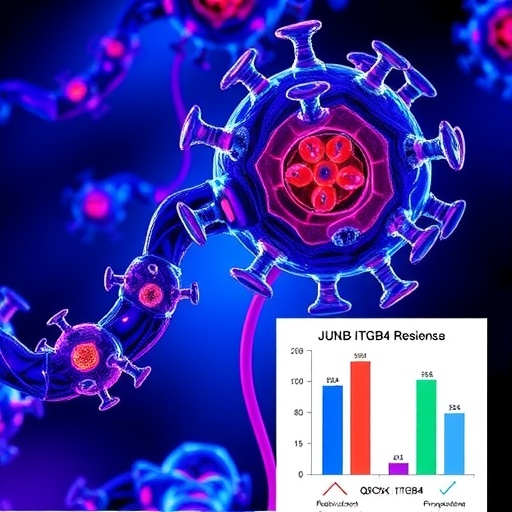
In an extraordinary breakthrough at the intersection of immunology and oncology, a team of researchers led by Xu, Feng, and colleagues has unveiled a complex role of neutrophil subpopulations modulated by agonist signaling in the context of colorectal cancer liver metastasis. Published in Nature Communications in 2025, this study provides a detailed mechanistic insight into how diverse neutrophil dynamics can both promote and inhibit the progression of liver metastases originating from colorectal cancer, marking a pivotal advance in understanding tumor microenvironment interactions.
Colorectal cancer (CRC) remains a leading cause of cancer mortality globally, with liver metastasis representing the primary driver of poor prognosis in affected patients. While the immune system has traditionally been viewed as a tumor suppressor, accumulating evidence reveals a paradoxical function where immune cells, especially neutrophils, can adopt phenotypes that either impair or facilitate tumor growth and spread. This dualistic role has challenged researchers for years, but the team’s latest findings elucidate how specific signaling pathways govern neutrophil heterogeneity in metastatic niches.
Central to the study is the concept of agonist signaling pathways acting as molecular switches that deterministically guide neutrophil subpopulations to distinct functional fates. Neutrophils, once considered a homogeneous population of frontline defenders against infections, exhibit remarkable plasticity in the tumor microenvironment. Armed with single-cell transcriptomics and proteomic analyses, the researchers delineated two major neutrophil subtypes with contrasting influences on the metastatic cascade: one subset driving pro-metastatic inflammation and angiogenesis, and the other adopting tumor-inhibitory capacities through cytotoxicity and immunomodulation.
The investigative team employed sophisticated in vivo models of colorectal cancer liver metastasis, incorporating genetic manipulation of agonist receptors expressed on neutrophils. By selectively activating or inhibiting these receptors, the study dissected the causal pathways leading to neutrophil polarization. The identified agonists engage canonical signaling cascades involving MAPK and NF-κB pathways, which orchestrate gene expression profiles defining neutrophil behavior. This intricate signaling interplay reveals how the tumor microenvironment co-opts innate immune responses to its advantage or susceptibility.
One of the seminal discoveries uncovered is the role of neutrophil-mediated extracellular traps (NETs) in establishing a pro-metastatic niche. NET formation, enhanced by agonist signaling, potentiates cancer cell adhesion and transmigration within the hepatic vasculature. Conversely, the alternate neutrophil subset suppresses NETosis and actively recruits cytotoxic T lymphocytes, thereby creating an inhospitable landscape for metastatic colonization. This dichotomy underscores a finely tuned balance orchestrated by signaling gradients that could be therapeutically exploited.
Beyond identification, the study demonstrates that pharmacological targeting of specific agonist receptors recalibrates neutrophil responses, tipping the balance towards tumor inhibition. Small molecule inhibitors and monoclonal antibodies designed to modulate these receptors effectively reduce liver metastatic burden in preclinical models. These promising interventions hold significant translational potential, offering a new avenue for combination immunotherapies in colorectal cancer, particularly for patients with advanced metastatic disease.
The implications extend into personalized medicine, as the researchers also profiled patient-derived samples and correlated neutrophil subpopulation signatures with clinical outcomes. High expression levels of pro-metastatic agonist-responsive neutrophils associate with worse prognosis and therapeutic resistance. This biomarker potential could inform stratification strategies, guiding clinicians in tailoring treatments that harness or suppress specific immune components according to individual tumor biology.
Moreover, this work opens up inquiry into the temporal dynamics of neutrophil subpopulations throughout the metastatic progression. Whether agonist signaling fluctuates during initial tumor cell seeding versus established metastatic outgrowth has profound consequences for intervention timing. Longitudinal studies combining advanced imaging with molecular profiling will be essential in charting these trajectories, thereby optimizing therapeutic windows for maximal efficacy.
From a broader perspective, the elucidation of agonist-driven immune modulation enhances our understanding of host-pathogen parallels. Neutrophils orchestrate responses to infections via similar receptor-ligand interactions, yet in cancer, these pathways are subverted to promote disease advancement. Investigating how pathogens and tumors differently manipulate common immune signaling nodes might uncover universal principles of immune regulation and tolerance.
The innovative methodologies employed, integrating multi-omics with functional perturbation and in vivo validations, set a new standard for studying cellular plasticity in complex physiological systems. This multifaceted approach provides robust evidence for causality beyond correlative observations, a critical advancement in the field of tumor immunology. Such rigor ensures that therapeutic strategies derived from this work have a solid mechanistic foundation.
It’s worth noting that the study enhances our fundamental knowledge of neutrophil biology, once overshadowed by lymphocytes in cancer research. The nuanced understanding of these granulocytes as both warriors and traitors within the tumor microenvironment challenges dogma and opens new frontiers for research. Neutrophils, traditionally relegated to short-lived responders, are now recognized as pivotal modulators capable of long-lasting influence on cancer outcomes.
Looking forward, questions remain about the interplay between neutrophils and other immune populations, such as macrophages and dendritic cells, within metastatic niches. How agonist signaling integrates with paracrine factors from these cells to generate a cohesive immune ecosystem warrants comprehensive investigation. Unraveling these complex cellular crosstalk networks is crucial for designing multi-targeted therapies that can synergistically dismantle tumor-promoting environments.
In conclusion, the groundbreaking revelations by Xu, Feng, and colleagues redefine our comprehension of immune regulation in colorectal cancer metastasis. By illuminating how agonist signaling dictating neutrophil subpopulations orchestrates a fine balance between tumor promotion and inhibition, this research paves the way for innovative immunotherapies. The clinical translation of these findings promises to transform the management of metastatic colorectal cancer, offering new hope to patients battling this formidable disease.
Subject of Research: Neutrophil subpopulations and their roles in colorectal cancer liver metastasis influenced by agonist signaling pathways.
Article Title: Agonist signaling drives neutrophil subpopulations to promote/inhibit colorectal cancer liver metastasis.
Article References:
Xu, Z., Feng, H., Feng, W. et al. Agonist signaling drives neutrophil subpopulations to promote/inhibit colorectal cancer liver metastasis. Nat Commun (2025). https://doi.org/10.1038/s41467-025-67579-7
Image Credits: AI Generated
Tags: agonist signaling in neutrophilscancer immunology breakthroughscolorectal cancer liver metastasiscolorectal cancer mortality factorsdual role of neutrophils in cancerimmune cells and tumor growthmechanistic insights into cancer spreadneutrophil dynamics in metastasisneutrophil heterogeneity in cancerresearch on cancer and immune system interactionssignaling pathways in immune responsetumor microenvironment interactions