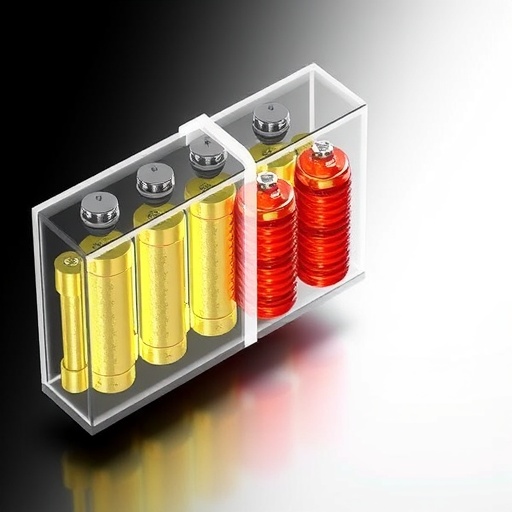
As the global community intensifies its pursuit of sustainable energy solutions, the evolution of next-generation battery technology emerges as a pivotal frontier. Among the various contenders reshaping this landscape, lithium-ion batteries (LIBs) have long dominated the market due to their superior energy density and performance. However, the scarcity of lithium resources, along with its complex extraction and escalating costs, poses significant challenges to the widespread adoption and scalability of LIBs. This has catalyzed focused research into alternative battery technologies, among which sodium-ion batteries (NIBs) and potassium-ion batteries (KIBs) have garnered particular attention for their abundant raw materials, cost efficiency, and potential sustainability.
Despite their promising attributes, NIBs and KIBs confront critical hurdles associated with electrode-electrolyte interfacial instability. This instability manifests through unpredictable electrochemical reactions at the interphase, detrimentally impacting battery longevity and overall performance. Historically, understanding of these interfacial phenomena has been fragmented, impeding the full optimization of these battery systems for demanding applications, such as grid-scale energy storage and electric mobility. Until recently, the nuanced behaviors of the solid-electrolyte interphase (SEI) and cathode-electrolyte interphase (CEI) in NIBs and KIBs remained inadequately defined, necessitating a comprehensive reevaluation.
In a landmark systematic review published in Advanced Energy Materials, Dr. Changhee Lee and Professor Shinichi Komaba from Tokyo University of Science meticulously deconstruct and reinterpret the fundamental chemistry governing these interfacial layers in alkali metal-ion batteries. Their rigorous comparative analysis bridges insights across LIBs, NIBs, and KIBs, challenging the prevailing notion of static, solid interphases and recasting them as dynamic, semi-solid entities. This reframing is instrumental in unlocking previously obscured interfacial mechanisms, elucidating pathways to engineer more robust and efficient batteries.
Dr. Lee emphasizes that the distinct physicochemical environments inherent to sodium and potassium electrolytes necessitate tailored approaches to interphase design. Unlike lithium, sodium and potassium ions engage differently with electrolyte components, influencing SEI/CEI composition, solubility, and ionic conductivity. These disparities result in dynamic interphase behavior that cannot be adequately described by lithium-centric models. By reexamining factors such as electrolyte stability and ionic transport kinetics, the team establishes a new conceptual paradigm that foregrounds the interphases’ semi-solid, mutable properties as targets for material innovation and optimization.
This reconceptualization carries profound implications for enhancing interface stability—a cornerstone for battery safety and durability. The researchers highlight that minor modifications in interphase chemistry or morphology can markedly extend cycle life, underpinning the performance ceiling of NIBs and KIBs. Additionally, they underscore the hitherto underappreciated role of binders within the electrode matrix, which interact intricately with the interphase and actively influence electrochemical dynamics. Consequently, the selection and engineering of binders emerge as strategic parameters in future battery design frameworks.
Through a unified lens examining SEI and CEI phenomena, the researchers uncover overlooked mechanisms contributing to capacity fade and safety concerns. Notably, the higher solubility of SEI components and reduced density of CEI layers in sodium and potassium systems exacerbate electrolyte decomposition and active material loss over time. These attributes amplify self-discharge tendencies, a critical but often neglected factor undermining commercial viability. Addressing these challenges demands a sophisticated understanding of the subtle chemical pathways governing interphase evolution during cycling and storage.
Prof. Komaba articulates the strategic advantage of this comprehensive understanding: “By optimizing the interphase architecture specifically for sodium and potassium ions, we can significantly improve battery resilience and operational stability, thereby hastening their transition from laboratory prototypes to market-ready technologies.” This vision aligns with societal imperatives for scalable, safe, and sustainable energy storage solutions capable of supporting renewable energy integration and electrification of transport.
From an application standpoint, robust NIBs and KIBs could revolutionize grid-scale storage by providing cost-effective, resource-rich alternatives that alleviate lithium supply constraints. Their deployment in electric vehicles and portable electronics promises expanded accessibility while reinforcing global efforts towards carbon neutrality. The findings from Lee and Komaba’s team unlock design principles to realize these ambitions, highlighting how careful tuning of electrolyte formulations, interphase composition, and electrode architecture synergistically enhance battery lifespan and efficiency.
Looking forward, the study calls for advanced analytical methodologies to overcome current limitations in probing interphase structures under realistic electrochemical environments. Multimodal characterization techniques that integrate in situ spectroscopy, microscopy, and computational modeling are pivotal to unraveling transient interphase behaviors and their impact on macroscopic battery properties. These insights would bridge fundamental science with pragmatic engineering, forging pathways to next-generation alkali metal-ion batteries tailored for diverse energy needs.
In conclusion, this research represents a paradigm shift in understanding alkali metal-ion battery interfaces, redefining the SEI and CEI from rigid boundaries to dynamic, functional interphases. This shift empowers researchers and engineers to innovate at the molecular level, crafting safer, longer-lasting batteries poised to transform energy landscapes worldwide. As the quest for sustainable energy storage intensifies, such foundational insights illuminate the roadmap toward a resilient, electrified future fueled by sodium and potassium technologies.
Subject of Research: Not applicable
Article Title: Comparative Insights and Overlooked Factors of Interphase Chemistry in Alkali Metal-Ion Batteries
News Publication Date: 30-Jan-2026
References: DOI: 10.1002/aenm.202506154
Image Credits: Dr. Changhee Lee and Professor Shinichi Komaba from Tokyo University of Science, Japan
Keywords
Energy storage, Batteries, Electrochemistry, Materials science, Renewable energy, Electric vehicles, Nanomaterials, Energy, Sustainability
Tags: alternatives to lithium-ion batteriesbattery performance optimizationcathode-electrolyte interphase characterizationcomprehensive battery research reviewelectric mobility advancementselectrode-electrolyte interfacial instabilitygrid-scale energy storage solutionsnext-generation battery technologypotassium-ion batteriessodium ion batteriessolid-electrolyte interphase behaviorsustainable energy solutions