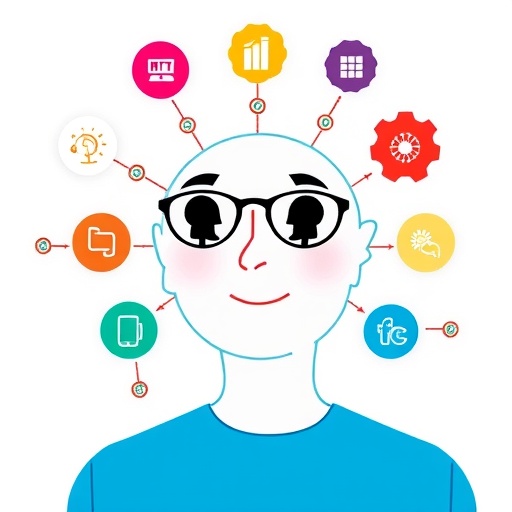
In an era where artificial intelligence is increasingly integrated into daily life, the need for sophisticated language processing tools has never been more pronounced. With the advent of multilayered interactivity occurring between humans and machines, the research spearheaded by Gao presents a pioneering methodology aimed at measuring English language expressions through the lens of multimodal interactive features. This innovative study lays bare the complexities of human communication and social interaction, offering insights into how AI can more effectively traverse these intricate landscapes.
The research posits that traditional evaluations of language expression often overlook contextual nuances that stem from multimodal interactions. Gao’s work suggests a comprehensive evaluation framework that incorporates not only textual data but also voice modulation, facial expressions, and even contextual background data derived from user interactions. This approach far exceeds conventional methods, which tend to focus predominantly on text analysis and cannot account for the subtleties carried through non-verbal cues.
The methodology employed in this investigation includes advanced machine learning algorithms capable of processing and integrating various data inputs. For instance, natural language processing (NLP) techniques are used to dissect linguistic structures, while facial recognition technology assesses emotional responses to different forms of expression. By merging these modalities, Gao aims to create a more holistic understanding of communication dynamics. This comprehensive perspective in evaluating language expressions could potentially aid various sectors, from education to customer service, in refining their interactivity frameworks substantially.
Furthermore, the implications of this research extend beyond mere evaluation of English language expressions. As AI systems become more entrenched in educational environments, understanding how these systems interpret human language and emotion becomes increasingly vital. For educators and curriculum creators, insights drawn from Gao’s findings could foster the development of tailored educational tools designed for diverse learning styles, addressing gaps in comprehension that traditional teaching techniques might miss. The prospect of enhancing language learning through tailored, interactive AI systems marks a significant step forward in educational technology.
Moreover, within the realm of content creation, this research offers novel pathways for developing AI-driven writing assistants that better understand the nuances of human expression. The ability for these systems to comprehend sentiment through multimodal inputs can lead to more engaging and contextually aware content generation, benefiting marketers, authors, and communicators alike. It bridges an important gap where machines can potentially replicate or even enhance human creativity, thus transforming the landscape of content production.
The innovative evaluation framework proposed by Gao also has invaluable implications for social robotics. As robots become more prevalent in daily life, their ability to engage in meaningful dialogue and interactions with humans is paramount. This study indicates that incorporating multimodal features may not only refine a robot’s communicative capabilities but could greatly enhance user satisfaction and perceived intelligence of robotic systems. As such technologies evolve, they could markedly impact sectors such as healthcare, where empathetic interactions can greatly improve patient experiences.
In addition, Gao’s examination into multimodal interactions unveils a deeper understanding of contextual language use in multilingual environments. The ability to analyze expressions through various lenses could better equip AI systems in handling vernacular differences, idiomatic expressions, and cultural nuances unique to different linguistic demographics. This becomes particularly relevant in an increasingly globalized world where communication across cultures is paramount.
In tandem with social diversity, this new research could invoke considerations about accessibility within language technologies. By developing systems that adapt to various forms of communication and comprehension styles, the technological divide could be narrowed—empowering individuals with differing linguistic capabilities or disabilities. Multimodal evaluation techniques could indeed revolutionize access to language resources for those who have historically been underserved by conventional grammar and language-proofing tools.
Furthermore, the findings presented in Gao’s research could foster an increased focus on ethics in AI applications in language processing. As the integration of machine learning continues to deepen, so too must the conversation around fairness, bias, and ethical use of technology. By acknowledging and addressing the ways in which different modes of communication influence the interpretation and understanding of language, developers may find ways to create systems that prioritize diversity and inclusion.
Equally, the ramifications of this study could bolster advancements in automated customer service mechanisms. Businesses, large and small, are constantly seeking optimal methods to engage customers. The ability to evaluate and respond to customer inquiries with higher emotional intelligence through an understanding of multimodal features could vastly improve operational efficiencies and customer satisfaction rates alike. By recognizing and adapting to customer feedback that stems from various modes of expression, organizations can build stronger relationships with their clients.
As artificial intelligence continues to advance, Gao’s exploration into evaluating intelligent expression rooted in multimodal interactive features signifies an important stride towards more human-centric AI systems. This research not only tackles the technical challenge of decoding language but also emphasizes the importance of understanding the human experience that accompanies it. In weaving together the threads of language, emotion, and technology, it sets a precedent for future research in the realm of AI and its role in human communication.
The path laid by this study encourages both scholars and industry professionals to rethink their approach to language technology. In a future shaped significantly by AI-driven interactions, understanding nuances in communication becomes a key capability that could propel enterprises, educational initiatives, and robotic interactions into spheres of effectiveness currently unexplored. As the integration of AI into everyday human activities expands, Gao’s revelations stand as a beacon guiding the way to more intuitive, empathetic, and communicatively rich artificial hosts.
Indeed, as artificial intelligence continues to reshape the fabric of our interactions, the insights derived from this research promise to illuminate the relevance of multimodal features in evaluating English language expression. This approach can potentially redefine how both humans and machines engage in meaningful dialogue—advancing the ongoing conversation about the future of language, technology, and interaction at large.
Subject of Research: Evaluation of English language expressions using multimodal interactive features
Article Title: English language intelligent expression evaluation based on multimodal interactive features
Article References:
Gao, S. English language intelligent expression evaluation based on multimodal interactive features.
Discov Artif Intell 5, 253 (2025). https://doi.org/10.1007/s44163-025-00515-2
Image Credits: AI Generated
DOI: 10.1007/s44163-025-00515-2
Keywords: multimodal evaluation, language processing, AI interaction, natural language processing, educational technology, social robotics, customer service automation, ethical AI.
Tags: advanced machine learning for language evaluationartificial intelligence in communicationcomplexities of human communication and AIcontextual analysis in AI language toolsemotional response analysis in communicationhuman-machine interaction researchinnovative methodologies in language assessmentintegration of voice and facial recognition in AImultimodal interaction in language processingnatural language processing advancementsnuanced evaluation of language expressionssophisticated tools for language understanding