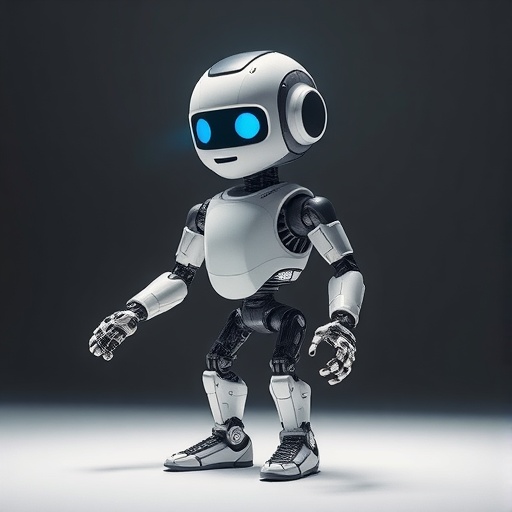
In a significant advance for robotics and artificial intelligence, researchers have unveiled the human-aware ergoCub robot, a humanoid platform designed to pioneer shared embodied intelligence. This groundbreaking work marks a pivotal step towards robots that can optimize their interactions, development, and performance taking direct inspiration from human bodily cognition and social awareness.
The ergoCub robot leverages an intricate blend of optimization techniques and embodiment principles to bridge the gap between artificial and human intelligence. Unlike traditional robots that follow pre-set programming, ergoCub actively adapts its behavior through continuous learning and environmental feedback. This enables it to perform tasks in a way that considers not just efficiency but also the context of human presence and actions.
At the heart of the project lies the concept of “shared embodied intelligence,” a computational paradigm emphasizing the co-development of robot actions and knowledge through physical and social interaction. The researchers implemented sophisticated sensorimotor loops that allow ergoCub to interpret and anticipate human movements, fostering an intuitive collaboration. This embodied cognition framework equips the robot with the ability to integrate visual, proprioceptive, and tactile inputs into a coherent model of self and others in shared environments.
Optimization procedures were crucial in refining ergoCub’s mechanical design and control algorithms. Through iterative cycles of simulation and real-world trials, the robot’s architecture was fine-tuned to enhance stability, dexterity, and responsiveness. This optimization not only improves performance in manipulation tasks but also ensures safety and comfort when operating near humans—essential for practical deployment in collaborative settings.
Testing involved multiple scenarios aligned with daily human interactions, ranging from object handling to shared workspace navigation. The robot demonstrated robust adaptive capabilities, adjusting its movements and grip strength dynamically in response to subtle human cues. These behaviors showcase a new level of human awareness rarely realized in humanoid robotics.
The project’s multidisciplinary approach integrates robotics, AI, cognitive science, and biomechanics, embodying the future of intelligent machines designed for seamless integration with human partners. By fostering a robot that “understands” human ergonomics and social dynamics, this research paves the way for enhanced cooperation in manufacturing, healthcare, and service industries.
This breakthrough offers exciting possibilities beyond robotics, including the development of assistive technologies that can intuitively support human tasks and rehabilitation. Through modeling the intricacies of the human body and mind in a machine form, ergoCub exemplifies the next generation of robots that are not only functional but socially attuned.
Ultimately, the human-aware ergoCub represents a paradigm shift from isolated robotic automation to interconnected, embodied intelligence systems. As this technology matures, it promises a future where robots and humans work shoulder to shoulder, sharing intelligence and physical space more naturally than ever before.
Subject of Research: Shared embodied intelligence and human-aware humanoid robotics.
Article Title: Towards shared embodied intelligence in humanoid robots through optimization, development and testing of the human-aware ergoCub robot.
Article References:
Sartore, C., Elobaid, M., Rapetti, L. et al. Towards shared embodied intelligence in humanoid robots through optimization, development and testing of the human-aware ergoCub robot. Nat Mach Intell (2026). https://doi.org/10.1038/s42256-026-01272-2
Image Credits: AI Generated
DOI: https://doi.org/10.1038/s42256-026-01272-2
Tags: advancing robot performance with environmental feedbackdevelopment of intelligent humanoid platformsembodied cognition in artificial intelligencehuman-aware humanoid robotshuman-robot collaborationoptimization techniques for robot controlphysical and social interaction in roboticsrobot adaptation through continuous learningsensorimotor loops in humanoid robotsshared embodied intelligence in roboticssocial awareness in humanoid robotstactile and proprioceptive sensing in robots