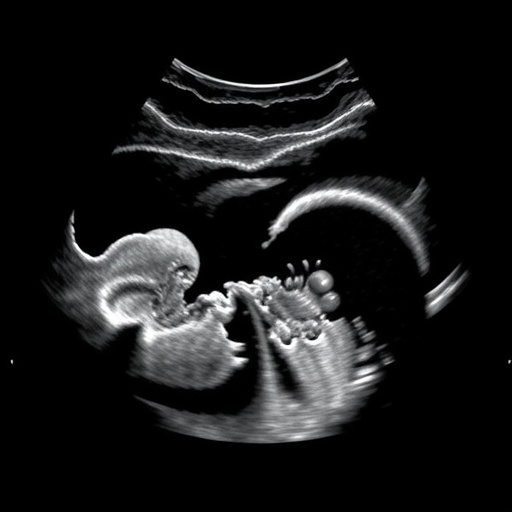
In a groundbreaking study published in Nature Biomedical Engineering, researchers have unveiled an innovative approach to interpreting fetal ultrasound images through the application of a visually grounded language model. This state-of-the-art technology aims to revolutionize the way medical professionals understand complex ultrasound data, enhancing both diagnostic accuracy and patient care.
The study, led by a team of experts including Guo, Alsharid, and Zhao, presents a sophisticated algorithm designed to analyze visual input from ultrasound scans and contextualize it within a linguistic framework. This model effectively bridges the gap between linguistic representations and visual data, enabling a deeper understanding of fetal development and health indicators.
With the rise of artificial intelligence across multiple sectors, the integration of such technology into medical imaging marks a pivotal moment in healthcare. The team harnessed deep learning techniques to train their model, utilizing a rich dataset of annotated ultrasound images. This training enables the model to not only recognize patterns within the images but also to generate descriptive narratives about what the images represent.
One of the primary challenges in interpreting ultrasound images lies in the vast amount of information conveyed through subtle visual nuances. The model’s ability to translate these visual cues into coherent narrative descriptions is an essential advancement, paving the way for improved clinical decision-making. The researchers demonstrated that their model could provide accurate descriptions of fetal anatomy, positioning, and even potential anomalies, all of which are critical for timely medical interventions.
The research team meticulously curated their dataset, encompassing a diverse range of fetal ultrasound images to ensure the model could generalize well across different scenarios and conditions. This attention to detail resulted in a robust training phase that contributed significantly to the performance of the final model. Notably, the model’s proficiency has shown promise in diverse healthcare settings, potentially extending its utility beyond academic research and into real-world clinical applications.
Furthermore, the implementation of this technology holds the potential for significant time savings in ultrasound analysis. Traditional methods often require specialists to spend considerable time examining images and making interpretations. In contrast, adopting the visually grounded language model could streamline this process, allowing healthcare providers to focus on patient interaction while placing increased trust in machine-generated insights.
The model’s versatility extends to various facets of prenatal care, including routine check-ups and high-risk pregnancy assessments. With the evolving landscape of medical diagnostics, this technology can assist in risk stratification, enabling healthcare professionals to prioritize care for those patients who may require closer monitoring.
As the study progresses into clinical trials, the authors are optimistic about the implications this technology could have on prenatal healthcare worldwide. By marrying image analysis with language processing, they are positioning their research at the forefront of innovative medical technologies capable of transforming policy approaches to prenatal care.
Importantly, ethical considerations regarding the use of AI in medical diagnostics have been a focal point of the research. The team has emphasized the importance of transparency in AI decision-making processes to ensure that healthcare professionals remain actively involved in the diagnosis and treatment planning. By treating the model as a supportive tool rather than a replacement for human expertise, the study champions a collaborative approach to medical technology integration.
Another significant aspect of this research is its contribution to the field of personalized medicine. By accurately interpreting ultrasound data through an individualized lens, healthcare providers can tailor their approach to suit the specific needs of their patients. This personalized approach could vastly improve outcomes, particularly in complex cases where fetal health is at risk.
The implications of this advancement extend beyond obstetrics alone. The methodologies developed in this research could pave the way for broader applications in medical imaging, potentially allowing similar models to be applied across various imaging modalities. As the research community continues to explore these possibilities, the future of AI in healthcare appears brighter than ever.
As the algorithm gestates in the academic sphere, sparks of collaboration are igniting between tech innovators and medical professionals. Such partnerships could accelerate the development of real-world applications, ensuring that this technology transitions smoothly from theory to practice. The researchers are keenly aware of the transformative potential held within the confluence of AI and healthcare, emphasizing that the marriage of these disciplines could lead to unforeseen advancements.
In conclusion, the research presented in Nature Biomedical Engineering heralds a new era in fetal ultrasound interpretation, with its visually grounded language model poised to redefine diagnostic paradigms. By enabling a clearer understanding of fetal health through advanced data interpretation, this model has the potential to enhance prenatal care significantly, paving the way for the next generation of medical diagnostics.
The stage is set for a revolutionary shift in how ultrasound images are perceived and acted upon, marking an exciting chapter in the intersection of artificial intelligence and human healthcare.
Subject of Research: Visually grounded language model for interpreting fetal ultrasound images.
Article Title: A visually grounded language model for fetal ultrasound understanding.
Article References:
Guo, X., Alsharid, M., Zhao, H. et al. A visually grounded language model for fetal ultrasound understanding.
Nat. Biomed. Eng (2026). https://doi.org/10.1038/s41551-025-01578-3
Image Credits: AI Generated
DOI: https://doi.org/10.1038/s41551-025-01578-3
Keywords: AI in healthcare, fetal ultrasound, language model, medical imaging, personalized medicine.
Tags: AI in medical imagingbridging visual and linguistic data in medicinechallenges in ultrasound image interpretationdeep learning for ultrasound analysisenhancing diagnostic accuracy in healthcarefetal ultrasound interpretationinnovative approaches to fetal health assessmentnature biomedical engineering study on ultrasoundpatient care advancements through AIultrasound image analysis technologyunderstanding fetal development through imagingvisual language models in medicine