In a groundbreaking study from Arizona State University, researchers have unveiled a fundamental scientific principle that explains how the surface coatings of engineered nanoparticles influence their behavior within biological systems. This discovery shines a new light on the intricate dance between nanoparticles and water molecules, a relationship that is pivotal in determining the therapeutic efficacy and safety profiles of nanomedicines. Published in the prestigious journal Proceedings of the National Academy of Sciences, this work provides the first direct measurements of water adsorption energetics on biomolecule-coated magnetite nanoparticles, laying a critical foundation for the future of nanomedicine design.
Water, the indispensable molecule of life, plays a central role when nanoparticles enter biological environments such as blood, the gut, or brain fluids. Upon administration, nanoparticles diegetically encounter water molecules that immediately envelop their surfaces, forming what scientists describe as a ‘nanocomplex stew.’ This interfacial layer critically governs nanoparticle stability, their circulation time in blood vessels, immune recognition, and ultimately the delivery of therapeutics to target cells. Until now, the precise thermodynamic nature of these hydration interactions remained elusive, limiting researchers’ ability to predict or control nanoparticle behavior in vivo.
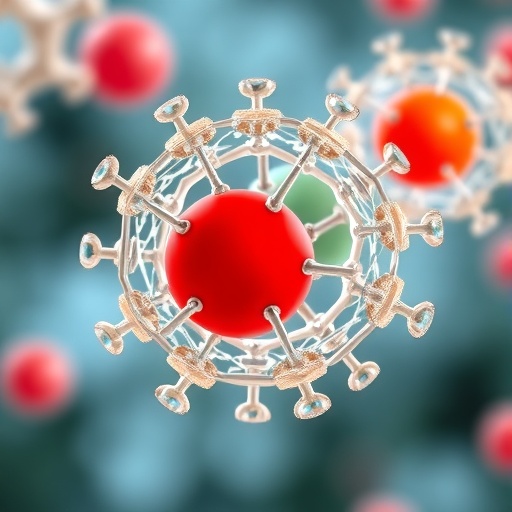
Led by Regents Professor Alexandra Navrotsky, a pioneer in thermodynamics and director of the Center for Materials of the Universe at ASU, the scientific team sought to demystify these water-nanoparticle interactions by directly quantifying the energetics of water adsorption. They focused on core–shell nanocomplexes consisting of magnetite (iron oxide) cores coated with three representative biomolecules: bovine serum albumin (a protein), potato starch (a polysaccharide), and lauric acid (a fatty acid). Each coating represented a distinct class of biomolecules frequently utilized in nanoparticle functionalization for medical applications.
By employing a highly sensitive calorimetry-gas adsorption system, the researchers meticulously measured the enthalpy changes and adsorption behavior of water molecules on the dry, coated nanoparticles. These precise measurements provided novel insights into key parameters such as hydrophilic surface area, interaction potential, and heterogeneity of the nanoparticle surfaces — critical determinants of biological performance. Comparisons to uncoated magnetite and the free biomolecules revealed profound modifications in hydration landscapes introduced by the coatings.
The protein-coated nanoparticles, guised in bovine serum albumin (BSA), displayed the most vigorous initial water interactions, indicative of strong binding sites prominently exposed at the surface. However, the total water uptake was lower compared to free BSA molecules, suggesting incomplete surface coverage and heterogeneous exposure of underlying magnetite regions. This so-called “patchiness” has substantial biological implications, as exposed magnetite patches can foster protein corona formation — a process where blood proteins adsorb onto nanoparticles and mark them for immune clearance. Such tagging by opsonins shortens circulation lifetimes and can hinder therapeutic efficiency.
In contrast, the starch shell coating created a vastly different hydration profile. The starch-coated magnetite demonstrated a substantially larger hydrophilic surface area but a noticeably weaker interaction potential compared to free starch. Detailed microscopic imaging revealed a dense encapsulating polysaccharide layer that limited access to underlying water molecules. The weaker water interaction and dynamic, reversible binding of starch chains result in better biocompatibility, enabling enhanced mobility along cellular membranes and reduced cytotoxicity. These properties are valuable in drug delivery, as they may facilitate more effective payload release while minimizing adverse immune responses.
Perhaps the most surprising findings emerged from the lauric acid-coated nanoparticles. Lauric acid in its free form is hydrophobic and typically does not adsorb water. However, when organized as a coating on magnetite nanoparticles, lauric acid molecules self-assembled into a partial bilayer structure with enhanced hydrophilicity. This unexpected interfacial architecture generates a stable hydrated layer with robust water interactions, which could confer greater nanoparticle stability and reduce immune activation compared to purely hydrophobic surfaces. The bilayer formation may also prolong the circulation time of nanomedicines, enhancing their clinical efficacy.
Across all coatings studied, the research establishes the primacy of hydration energetics — quantifiable as hydration enthalpy — as a thermodynamic metric revealing surface hydrophilicity, compositional heterogeneity, and biological interaction potential. This deeper understanding of nano-bio interfacial thermodynamics equips researchers with a “Goldilocks” framework to engineer nanoparticle surfaces that possess optimal properties: not too hydrophilic or hydrophobic, not too patchy or uniform, but just right to evade immune clearance while delivering drugs precisely and efficiently.
Professor Navrotsky emphasized the transformative implications of these findings, noting that nanoparticle surface functionalization does far more than alter chemical composition: it reshapes the entire thermodynamic landscape at the interface between nanomaterials and biological environments. By mastering hydration energetics, scientists can rationally design nanocarriers with customized stability, tailored immune interactions, and predictable drug delivery behaviors. This marks a crucial step toward fulfilling the long-standing promise of nanomedicine — safe, effective, and targeted therapies for cancer, infectious diseases, and beyond.
The implications extend well beyond drug delivery. Precision-engineered hydration layers could revolutionize diagnostic imaging agents, biosensors, and therapeutic nanoparticles that penetrate challenging biological barriers like the blood-brain barrier. Understanding and manipulating primary hydration energetics can enable the development of longer-circulating, less cytotoxic, and highly selective nanomedicines that synergize with the body’s native chemistry rather than provoke it.
Looking forward, this pioneering work opens avenues for further exploration into how diverse biomolecular coatings stabilize nanocomplexes and govern their fate in complex biological milieus. The quantitative thermodynamic approach championed by the ASU team will likely become a central pillar of nanomedicine research, guiding the design of next-generation nanoparticles capable of saving lives. By uniting materials science, thermodynamics, and biology, this breakthrough brings us significantly closer to truly rational nanomedicine — a future where nanoscale engineering transcends trial and error to unlock safer and more effective treatments for patients worldwide.
Subject of Research: Not applicable
Article Title: Primary biomolecular adsorption energetics of core–shell nanocomplexes: Implications for biological interactions
News Publication Date: 2-Mar-2026
Web References: 10.1073/pnas.2535339123
References: Proceedings of the National Academy of Sciences
Keywords: Nanomedicine, Hydration Energetics, Nanoparticles, Magnetite, Surface Coatings, Drug Delivery, Immune Interaction, Thermodynamics, Protein Corona, Biomolecular Adsorption
Tags: adsorption energetics of nanoparticlesbiomolecule-coated magnetite nanoparticlesimmune system recognition of nanoparticlesnanomedicine design principlesnanomedicine safety and efficacynanoparticle circulation time in bloodnanoparticle stability in biological fluidsnanoparticle surface coatings in drug deliverytargeted drug delivery with nanoparticlestherapeutic nanoparticle behavior in vivothermodynamics of nanoparticle hydrationwater molecule interaction with nanoparticles