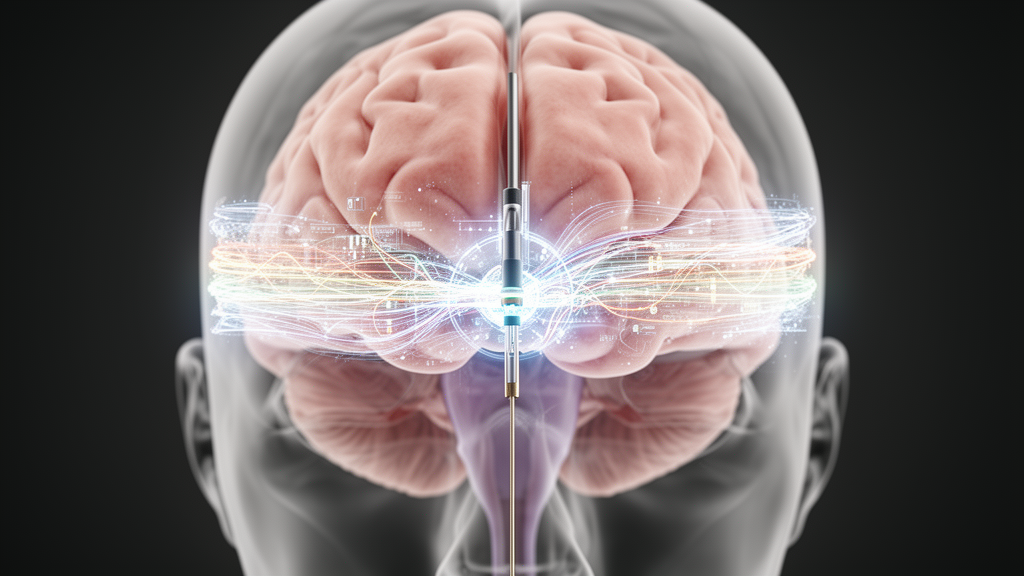
A systematic review and meta-analysis evaluating adaptive neurostimulation for advanced Parkinson’s disease indicates that biomarker-guided stimulation produces a statistically significant improvement in motor symptom scores compared with conventional continuous stimulation, according to findings published in Frontiers in Neurology. Conventional deep brain stimulation targeting the subthalamic nucleus delivers continuous, unvarying electrical pulses that fail to accommodate natural fluctuations in patient symptoms, which routinely shift across medication cycles, voluntary movements, and daily circadian rhythms. Adaptive deep brain stimulation alters this open-loop paradigm by monitoring physiological biomarkers in real time, most notably local field potential oscillations within the beta band across thirteen to thirty hertz, adjusting pulse delivery on demand. Synthesizing data across eligible comparative investigations, the international research team examined whether this closed-loop strategy translates into measurable clinical advantages, reduced energy expenditure, and favorable safety profiles for adult surgical candidates managed for idiopathic Parkinson’s disease across hospital and chronic home settings.
To rigorously assess the emerging technology against established surgical standards, the authors prospectively registered their review protocol with the PROSPERO international database under identifier CRD420261388549 and structured their methodology in accordance with the Preferred Reporting Items for Systematic Reviews and Meta-analyses guidelines. Medical literature databases comprising PubMed, Embase, Scopus, and the Cochrane Central Register of Controlled Trials were comprehensively searched for English-language human studies published from January 2013 through May 2026. The search strategy incorporated controlled vocabulary terms and free-text entries covering closed-loop deep brain stimulation, beta-band oscillations, subthalamic stimulation, and Parkinson’s disease. Initial database queries returned a total of 2,458 candidate records, which were subsequently reduced to 2,387 unique citations following the computational removal of duplicate entries across platforms. Two independent reviewers conducted systematic title and abstract screenings, excluding 2,370 records that failed to satisfy the predefined eligibility criteria, before completing detailed evaluations of seventeen full-text articles.
Following full-text assessment, the investigators excluded ten studies that lacked direct comparative evaluations, contained duplicate patient populations, omitted extractable numerical endpoints, or relied on brief experimental procedures that lacked clinically relevant outcome measures. Ultimately, seven primary human investigations met all qualitative inclusion criteria, with five datasets providing compatible motor assessment figures that permitted quantitative pooling through a random-effects generic inverse variance model. Across the included trials, the primary clinical endpoint was motor efficacy quantified using raw motor scores from the Unified Parkinson’s Disease Rating Scale Part III or the Movement Disorder Society revision. To preserve analytical validity, the investigators analyzed crossover trials using paired treatment effects and their corresponding variances, applying an assumed within-participant correlation coefficient of r = 0.5 when paired standard deviations were not reported directly, while ensuring that normalized motor ratios were evaluated separately rather than combined with raw point totals.
In the primary meta-analysis pooling five eligible study datasets, adaptive deep brain stimulation demonstrated a statistically significant pooled reduction in motor impairment scores relative to conventional stimulation, exhibiting a mean difference of −2.74 points with a 95% confidence interval spanning −5.20 to −0.29 points and a test statistic of Z = 2.19, corresponding to a p-value of 0.03. However, this pooled estimate was accompanied by substantial statistical heterogeneity across studies, evidenced by an I-squared statistic of 63%, a tau-squared of 4.71, and a chi-squared value of 10.68 with four degrees of freedom. This marked variability highlights meaningful disparities in experimental designs, stimulation paradigms, patient cohorts, and assessment intervals across the contributing study centers. Consequently, while the aggregated point estimate statistically favors the adaptive approach, the underlying diversity of individual dataset outcomes necessitates a cautious interpretation regarding the universal magnitude and daily clinical impact of the observed motor score divergence.
The uncertainty surrounding this primary motor outcome was further underscored when the investigators conducted a planned sensitivity analysis restricted exclusively to the four core randomized crossover trials in the literature. Within this crossover-only subset, the pooled mean difference between adaptive and conventional stimulation was −3.07 points with a 95% confidence interval ranging from −6.27 to 0.13 points, yielding a test statistic of Z = 1.88 and a p-value of 0.06. Although the direction of effect remained consistent with the primary meta-analysis, the exclusion of non-randomized data caused the confidence interval to cross the null line, thereby eliminating formal statistical significance. Furthermore, statistical heterogeneity among these crossover trials remained high, with an I-squared value of 70%, a tau-squared of 7.18, and a chi-squared value of 10.10 across three degrees of freedom. Methodologists emphasized that while this loss of significance does not prove the absence of an effect, it reflects substantial imprecision and lingering uncertainty within the core experimental trials.
Beyond general motor rating scores, the systematic review narratively evaluated technical measures of stimulation delivery and power consumption across individual investigations. In an acute crossover trial of eight patients conducted by Little and colleagues, adaptive stimulation reduced mean electrical power consumption to 36.1 ± 12.4 microwatts compared with 175.2 ± 40.1 microwatts under conventional continuous stimulation, representing a statistically significant reduction of approximately 79 percent. Similarly, Bocci and associates observed lower energy metrics during adaptive stimulation, recording mean values of 16.47 ± 3.33 compared with 28.75 ± 3.36 under continuous stimulation across six participants, though the specific measurement units require verification. In an experimental motor assessment by He and coworkers involving thirteen participants, adaptive pulses were triggered for only 15.4% ± 4.2% of total movement time during reaching tasks, contrasted with constant continuous delivery. While these studies indicate that closed-loop modulation can reduce electrical delivery during periods of low symptom severity, differing measurement methodologies precluded pooled energy estimates.
The narrative synthesis also examined medication adjustments and symptom-specific motor subscores, uncovering preliminary but fragmented therapeutic trends. Regarding pharmacological requirements, a single retrospective cohort study by Li and colleagues followed sixty-two patients over one year, documenting an average levodopa equivalent daily dose reduction of 215.4 ± 45.0 milligrams per day in thirty-two adaptive recipients compared with 185.2 ± 52.0 milligrams per day among thirty conventional controls. Although numerically favoring adaptive stimulation, this observational finding cannot demonstrate causality due to potential baseline confounding and institutional medication management differences. For specific physical symptoms, Bocci and coworkers reported a statistically significant 26 percent reduction in rigidity scores under adaptive stimulation, averaging 2.14 ± 0.50 points versus 2.91 ± 0.66 points under continuous delivery among eight patients. Little and colleagues noted improvements in finger-tapping agility and bradykinesia, whereas He and colleagues reported no significant divergence between stimulation modalities regarding reaching tremor control.
Objective biomechanical metrics and electrophysiological biomarkers similarly displayed preliminary findings that were constrained by small sample sizes and distinct laboratory measurement tools. Evaluating mobility in seven participants using a beta-burst-driven adaptive system, Wilkins and colleagues recorded preliminary stride velocity averages of 1.05 ± 0.12 meters per second during adaptive stimulation compared with 0.92 ± 0.15 meters per second under continuous delivery, although these figures require further verification against complete source records. In reaching trials assessed by He and coworkers, movement velocity reached 0.48 ± 0.05 meters per second under adaptive stimulation versus 0.47 ± 0.04 meters per second with continuous stimulation, reflecting an unverified numerical difference of only 0.01 meters per second. In neurophysiological evaluations of beta suppression, Velisar and associates documented a 42.0% ± 8.5% beta-power decrease with adaptive stimulation versus 38.0% ± 10.2% under conventional stimulation across thirteen individuals, a non-significant four percent gap, whereas Bocci recorded lower peak beta power under adaptive settings.
Safety and tolerability endpoints revealed low event frequencies and inconsistent documentation across the synthesized literature, preventing the establishment of an overall safety advantage for either stimulation modality. Little and colleagues recorded zero dyskinesia events during adaptive testing compared with three events during conventional stimulation in eight patients, alongside one speech-impairment event under adaptive versus four under conventional stimulation across ten participants. However, small cohort sizes and ambiguous reporting regarding whether counts reflected total events or affected individuals prevent definitive clinical conclusions. Other included trials reported no stimulation-specific adverse events, but reviewers emphasized that zero-event observations in small, brief cohorts cannot establish equivalence or exclude rare complications.
Using the GRADE framework, researchers rated the certainty of evidence for motor efficacy, stimulation power consumption, symptom subscores, and safety outcomes as low, while designating evidence for medication changes and objective gait metrics as very low. The authors concluded that while adaptive deep brain stimulation represents an important technological evolution capable of modulating stimulation in response to subthalamic beta activity, the present literature remains dominated by short-duration experimental sessions and small cohorts. Adequately powered, multicenter randomized trials with standardized longitudinal assessments are essential to confirm whether adaptive stimulation provides durable, clinically meaningful improvements over standard continuous care.
Subject of Research: Comparative clinical efficacy, energy metrics, and safety of adaptive versus conventional subthalamic deep brain stimulation in Parkinson's disease
Article Title: Precision neurostimulation in Parkinson's disease: a systematic review and meta-analysis of adaptive (aDBS) vs. conventional (cDBS) subthalamic stimulation on clinical efficacy and neural efficiency
Article References: Hassan, M. A., Ahmad, M. N., Mouazen, S. M., Makki, F., Nadeem, A., Soroush, A. R., Affan, M., & Badahdah, A. A. (2026). Precision neurostimulation in Parkinson's disease: a systematic review and meta-analysis of adaptive (aDBS) vs. conventional (cDBS) subthalamic stimulation on clinical efficacy and neural efficiency. Frontiers in Neurology, 17, Article 1901108. https://doi.org/10.3389/fneur.2026.1901108
Image Credits: AI Generated
DOI: 10.3389/fneur.2026.1901108
Keywords: adaptive deep brain stimulation, conventional deep brain stimulation, Parkinson's disease, subthalamic nucleus, UPDRS-III, beta-band oscillations, local field potentials, closed-loop neuromodulation, systematic review, meta-analysis, motor scores, stimulation power, levodopa equivalent daily dose, rigidity, bradykinesia, GRADE certainty, crossover trials
News Source: Cassandra Pierce. (November 18, 2026). Adaptive Brain Stimulation Shows Motor Improvement in Parkinson’s Review Amid Heterogeneity. Scienmag.