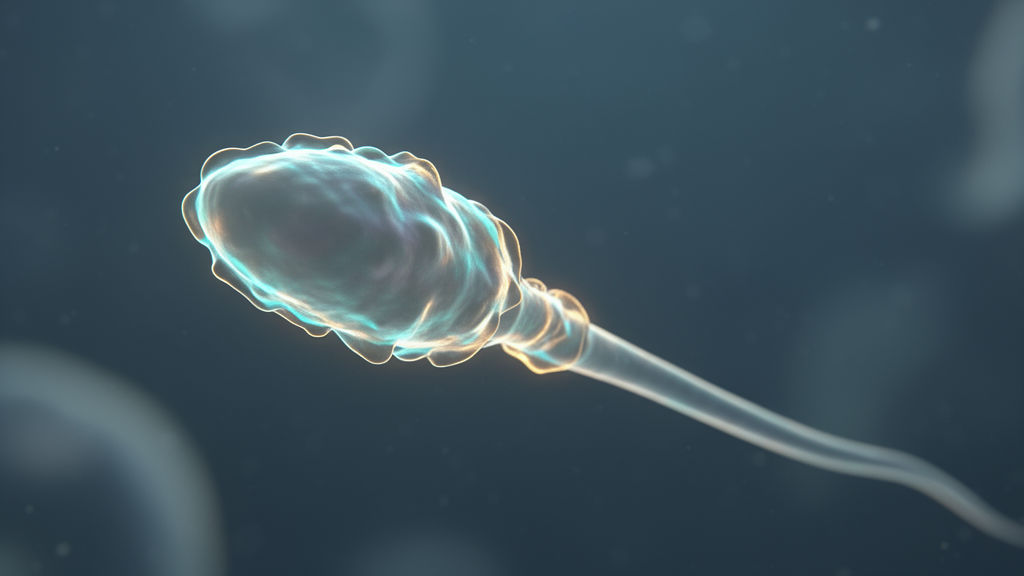
A research study published in Cell Communication and Signaling has uncovered mutations in the ACTRT3 gene as a novel cause of sperm-derived fertilization failure in humans and mice. Investigating the molecular and genetic underpinnings of unexplained male infertility, researchers identified bi-allelic pathogenic variants in three unrelated infertile men that alter the ultrastructural integrity of the sperm head. The findings reveal that deficiency of ACTRT3 leads to a severe structural anomaly termed acrosomal ruffling, which cannot be detected using standard optical microscopy techniques.
Fertilization failure represents a profound challenge in assisted reproductive technology and reproductive clinical management, with relatively few causal genetic mechanisms definitively characterized. In their search for pathogenic factors contributing to unresolved fertilization deficits, the research team recruited three unrelated infertile male probands diagnosed with unexplained fertilization failure. Through the application of whole-exome sequencing, investigators screened patient genomes to detect potential disease-causing variants affecting gamete function and embryonic initiation.
Genetic analysis of the affected individuals identified novel homozygous and compound heterozygous mutations in ACTRT3, comprising c.712 C > T (p.Gln238*), c.813dupT (p.Asp272*), and c.892G > C (p.Gly298Arg). To validate the pathogenicity of these identified variants and investigate their downstream mechanistic consequences, the scientists examined affected patient spermatozoa and generated Actrt3-knockout mouse models designed to recapitulate the clinical phenotypes observed in the probands.
Detailed structural examination utilizing transmission electron microscopy demonstrated an ultrastructural defect in ACTRT3-deficient spermatozoa from both affected patients and knockout mice. The analysis uncovered acrosomal ruffling directly resulting from a disrupted acroplaxome architecture. Because conventional optical microscopes lack the resolution needed to visualize this structural abnormality, the defect had previously evaded standard semen assessments in patients presenting with failed fertilization.
To explore the broader macromolecular framework disrupted by ACTRT3 deficiency, the research team conducted co-immunoprecipitation, liquid chromatography-tandem mass spectrometry, western blotting, and immunofluorescence assays. These biochemical evaluations revealed that ACTRT3 directly interacts with other related proteins, specifically ACTRT1, ACTRT2, ACTL7A, and ACTL9. Together, these proteins assemble into a specialized sperm-specific actin-related protein complex that plays a critical role in anchoring the acrosome securely to the sperm nucleus.
Beyond disrupting the physical anchoring of the acrosome and perturbing acroplaxome integrity, ACTRT3 deficiency also compromised functional signaling mechanisms essential for egg activation. The investigators documented a failure of pronucleus formation alongside a marked reduction in the expression of PLCZ1 in spermatozoa from both the affected human probands and Actrt3-knockout mice. This reduction in PLCZ1 expression leads directly to oocyte activation deficiency, thereby causing complete fertilization failure during reproductive cycles.
To overcome this oocyte activation deficit and explore potential clinical interventions, the team applied artificial oocyte activation treatment. The therapeutic application of artificial oocyte activation effectively bypassed the functional activation block imposed by ACTRT3 loss. This targeted intervention successfully reversed the fertilization failure phenotype, enabling the reliable development of embryos and the subsequent birth of healthy offspring in both the human probands and the knockout mouse models.
Collectively, the study establishes bi-allelic pathogenic ACTRT3 variants as a novel genetic determinant of male infertility that operates through acroplaxome disruption and down-regulated PLCZ1 expression. By demonstrating that artificial oocyte activation fully rescues the fertilization phenotype in both human cases and experimental models, the findings define a viable therapeutic strategy for overcoming infertility driven by ACTRT3 mutations.
Subject of Research: Genetic and structural mechanisms of ACTRT3 deficiency in male fertilization failure
Article Title: ACTRT3 deficiency causes ruffled acrosomes in human and mouse spermatozoa as a novel sperm-derived factor inducing fertilization failure
Article References: Fan, Y., Du, S., Chen, J., Yan, Z., Zhou, Y., Liao, X., Li, W., Ma, M., Yan, X., Lei, M., Kuang, Y., Huang, C., Lyu, Q., & Li, B. (2026). ACTRT3 deficiency causes ruffled acrosomes in human and mouse spermatozoa as a novel sperm-derived factor inducing fertilization failure. Cell Communication and Signaling. https://doi.org/10.1186/s12964-026-03361-6
Image Credits: AI Generated
DOI: 10.1186/s12964-026-03361-6
Keywords: ACTRT3, Fertilization Failure, Male Infertility, Acrosome, Acroplaxome, Transmission Electron Microscopy, Whole-Exome Sequencing, PLCZ1, Artificial Oocyte Activation, Actin-Related Protein Complex, ACTRT1, ACTRT2, ACTL7A, ACTL9, Sperm Ultrastructure, Gene Mutation, Oocyte Activation Deficiency
News Source: Juliet Wilcox. (November 12, 2026). ACTRT3 Gene Mutations Induce Sperm Acrosome Ruffling and Infertility. Scienmag.