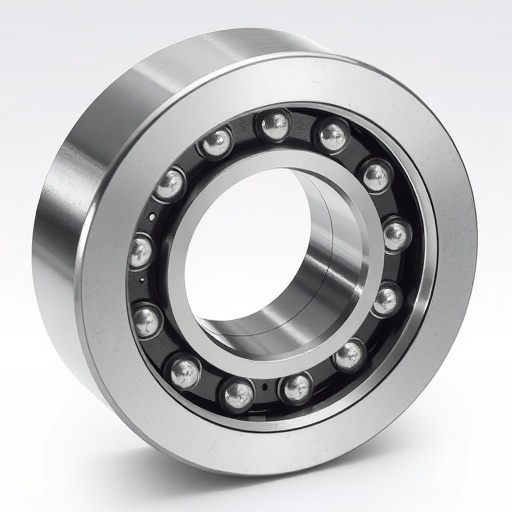
In the evolving landscape of industrial maintenance and machinery diagnostics, the utilization of advanced acoustic monitoring systems offers substantial potential for groundbreaking advancements. Recent research conducted by Chandrakala et al. unveils a machine learning-based approach tailored to detect faults in ball bearings through acoustic signals, proving that such an innovative methodology could revolutionize predictive maintenance strategies. This research highlights the integration of artificial intelligence in industrial applications, showcasing how sound waves, typically overlooked, can provide critical data for the proactive management of mechanical systems.
Ball bearings play a pivotal role in the functionality of various mechanical systems, serving as essential components that reduce friction and allow for smooth rotational movement. However, bearing failure remains one of the leading causes of machinery downtime, leading to costly reparations and production losses. The challenge lies in the early detection of faults before they escalate into significant failures or operational hiccups. Traditional monitoring approaches often rely on vibrational analysis, which, while effective, can be cumbersome and not always capable of capturing the nuanced signals indicative of incipient faults.
Chandrakala’s team turns the spotlight on acoustic signals, utilizing sound waves generated from the ball bearings under operation. This pioneering research posits that subtle changes in sound can serve as harbingers of mechanical failure. By employing an array of sensors strategically placed to capture acoustic emissions, the researchers could collect a rich dataset of sounds from ball bearings under various operational states—ranging from healthy functioning to incipient failure and catastrophic failure scenarios. Each captured sound provides a unique fingerprint, indicative of the bearing’s condition at any given moment.
The cornerstone of the research is the implementation of machine learning algorithms designed to process and analyze the vast amounts of acoustic data. By training these algorithms on a comprehensive dataset that encompasses various failure modes, the authors enable the system to accurately classify the condition of the bearings with remarkable precision. The machine learning model learns to identify patterns and anomalies within the acoustic signatures, facilitating real-time monitoring that is both efficient and effective in detecting early signs of failure.
One notable advantage of this acoustic approach is its non-invasive nature. Unlike traditional methods that may require equipment disassembly or complex instrumentation, acoustic monitoring can be seamlessly integrated into existing systems. Moreover, it holds the promise of operation in real-time, continuously analyzing the sounds produced by the ball bearings while they function within their operational settings. This dynamic listening capability grants feedback to operators who can act promptly before a minor issue develops into an expensive machinery breakdown.
From a technical standpoint, the machine learning model employed in the study relied on several advanced techniques, including feature extraction from time-domain and frequency-domain signals. The research underscores the importance of extracting relevant features from acoustic signals—such as spectral characteristics, modulation patterns, and time-related features—to enhance classification accuracy. This meticulous feature engineering process translates the raw audio recordings into actionable insights, allowing for a deep understanding of the status of the bearings.
Furthermore, the research delves into the comparative effectiveness of different machine learning algorithms, presenting insights into the efficacy of methods ranging from support vector machines to deep learning approaches. Notably, ensemble methods, which combine the predictions from multiple models, demonstrated superior performance in distinguishing between healthy and faulty bearings. This nuanced analysis reinforces the notion that while individual algorithms hold merit, a composite approach could yield more robust and reliable output.
The implications of this research extend far beyond merely detecting faults in ball bearings. The acoustic-based machine learning methodology could serve as a template for assessing various other components across different sectors of machinery. Industries that rely heavily on precision engineering stand to benefit significantly from such innovations, bolstering their maintenance protocols while minimizing unexpected downtime.
As industries continue to embrace the Fourth Industrial Revolution, integrating machine learning and AI technologies will be essential for driving efficiency and sustainability. The application of acoustic monitoring for fault detection is not merely an academic exercise but a practical solution that meets the industry’s urgent demand for smarter maintenance strategies. As the field evolves, ongoing research and innovative applications will undoubtedly contribute to more intelligent, data-driven decision-making paradigms, reducing costs and enhancing operational reliability.
Moreover, this research could open avenues for further exploration into the realm of predictive maintenance. The insights gleaned from this study pave the way for the development of sophisticated algorithms capable of predicting the lifespan of components through acoustic profiling, allowing industries to prepare for maintenance activities rather than reacting post-failure. This shift would represent a monumental change in how machinery is maintained, transforming a reactive culture into a proactive, data-informed operation.
In conclusion, the groundbreaking work done by Chandrakala et al. reflects the promise of integrating machine learning with acoustic signal processing for fault detection in industrial applications. By harnessing the potential of sound waves, industries can pave the way towards smarter, more efficient maintenance strategies that dramatically reduce downtime and enhance operational efficiency. Future research will undoubtedly compound on these findings, leading to improved methodologies that further refine the predictive capabilities of machinery diagnostics.
Ultimately, as organizations strive to stay competitive in an increasingly complex technological landscape, methodologies like the acoustic-based approach outlined in this research provide the tools necessary for sustainable growth, operational excellence, and optimized resource management in the ever-evolving field of machinery maintenance.
Subject of Research: Acoustic-based machine learning approach for ball bearing fault detection
Article Title: Ball bearing fault detection using an acoustic based machine learning approach
Article References:
Chandrakala, C.B., Karumanchi, S.S., Raghudathesh, G.p. et al. Ball bearing fault detection using an acoustic based machine learning approach.
Sci Rep (2025). https://doi.org/10.1038/s41598-025-33978-5
Image Credits: AI Generated
DOI: 10.1038/s41598-025-33978-5
Keywords: Acoustic monitoring, machine learning, predictive maintenance, ball bearings, fault detection, industrial applications, sound analysis, feature extraction, ensemble methods.
Tags: acoustic machine learningacoustic monitoring systemsadvanced diagnostics for ball bearingsartificial intelligence in machineryball bearing fault detectionearly detection of machinery faultsindustrial maintenance innovationsmachine learning applications in industryPredictive maintenance strategiesproactive mechanical system managementreducing machinery downtimesound wave analysis in diagnostics