

• HOME
  • NEWS
  • EXPLORE
    • CAREER
      • Companies
      • Jobs
    • EVENTS
    • iGEM
      • News
      • Team
    • PHOTOS
    • VIDEO
    • WIKI
  • BLOG
  • COMMUNITY
    • FACEBOOK
    • INSTAGRAM
    • TWITTER
Wednesday, April 1, 2026
BIOENGINEER.ORG
No Result
View All Result
  • Login
  • HOME
  • NEWS
  • EXPLORE
    • CAREER
      • Companies
      • Jobs
        • Lecturer
        • PhD Studentship
        • Postdoc
        • Research Assistant
    • EVENTS
    • iGEM
      • News
      • Team
    • PHOTOS
    • VIDEO
    • WIKI
  • BLOG
  • COMMUNITY
    • FACEBOOK
    • INSTAGRAM
    • TWITTER
  • HOME
  • NEWS
  • EXPLORE
    • CAREER
      • Companies
      • Jobs
        • Lecturer
        • PhD Studentship
        • Postdoc
        • Research Assistant
    • EVENTS
    • iGEM
      • News
      • Team
    • PHOTOS
    • VIDEO
    • WIKI
  • BLOG
  • COMMUNITY
    • FACEBOOK
    • INSTAGRAM
    • TWITTER
No Result
View All Result
Bioengineer.org
No Result
View All Result
Home NEWS Science News Biology

A promising new tool to measure antibodies against malaria

Bioengineer by Bioengineer
July 3, 2018
in Biology
Reading Time: 2 mins read
0
Share on FacebookShare on TwitterShare on LinkedinShare on RedditShare on Telegram
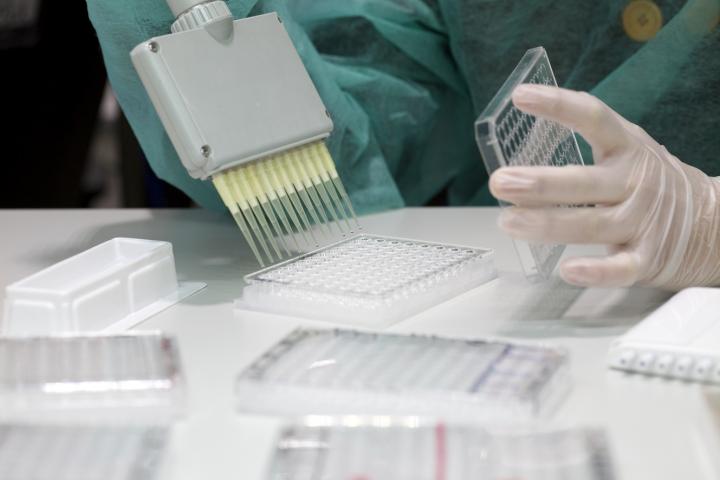
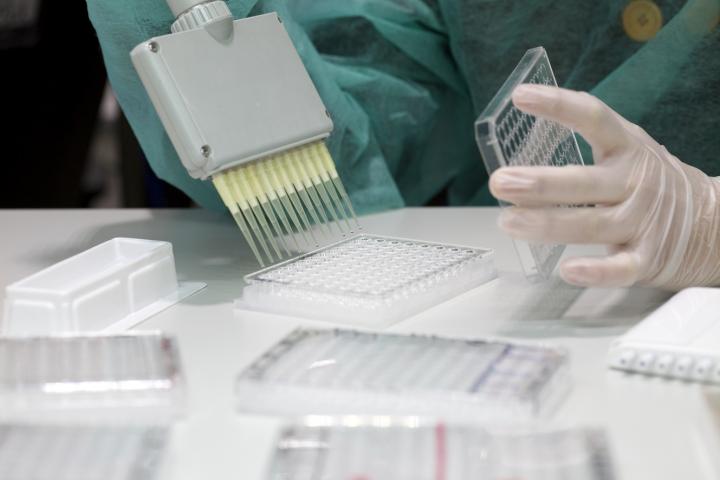
IMAGE

Credit: Pau Fabregat

Antibodies against multiple Plasmodium falciparum proteins (or antigens) can be measured using a simple, accurate and reproducible assay that requires very small amounts of blood. In a series of recently published articles, a team led by ISGlobal – an institution supported by "la Caixa" Foundation – reports the development and optimisation of several 'quantitative suspension array' assays (qSAT) that could help assess natural and vaccine-induced responses to malaria and other parasites.

Antibody responses against P. falciparum parasites are critical in controlling – or even preventing- the disease. However, relatively little is known about the type and specificity of these protective antibodies, or how they work. This is further complicated by the fact that the parasite expresses more than 5000 proteins.

ISGlobal researcher Carlota Dobaño and her group have developed new laboratory protocols to measure antibodies to multiple P. falciparum antigens in one single reaction and from small amounts of circulating blood. The qSAT used here consists in coupling small microspheres or beads to different parasite antigens and then testing if they are recognized by plasma samples of individuals exposed (or not) to malaria. The authors first adapted the assay to detect different types and classes of antibodies against multiple P. falciparum antigens, in a sensitive and specific manner. Second, they showed that this simple multiplex assay is highly reproducible not only between experiments but also between operators and laboratories. Third, they identified which are the key factors that need to be optimised to reduce variability of the assay. Finally, they used this test to better characterise the antibody profile of the anti-malaria human plasma pool provided by the WHO as reference reagent. They showed that it contains low levels of antibodies to CSP (the antigen contained in the RTS,S vaccine), suggesting that customized reference pools may be needed for studying responses to certain antigens.

These simple and reproducible multiplex protocols will allow us to analyse in detail natural and vaccine-induced antibody responses to large panels of P. falciparum antigens, and elucidate correlates of malaria protection," explains Dobaño. "Furthermore, the assay is highly versatile and can be adapted to study responses to antigens from other microbes or vaccines. We are currently collaborating with several groups outside the malaria field," she adds.

###

Media Contact

Adelaida Sarukhan
[email protected]
0034-932-271-816

http://www.isglobal.org/en/

Original Source

https://www.isglobal.org/en/new/-/asset_publisher/JZ9fGljXnWpI/content/una-herramienta-prometedora-para-medir-anticuerpos-contra-la-malaria http://dx.doi.org/10.1371/journal.pone.0199278


Share12Tweet8Share2ShareShareShare2

Related Posts

Do Your Genes Influence How Lifestyle Choices Affect Aging?

Do Your Genes Influence How Lifestyle Choices Affect Aging?

April 1, 2026
Combining Single-Cell Multiomics Unlocks Precise Identification of Rare Cell Types and States

Combining Single-Cell Multiomics Unlocks Precise Identification of Rare Cell Types and States

March 31, 2026

Genetically Engineered Marmosets Pave the Way for Advancements in Human Deafness Research

March 31, 2026

How Great Hammerhead Sharks Outsmart Ocean Temperature Swings: Insights from FIU Researchers

March 31, 2026
Please login to join discussion

POPULAR NEWS

  • blank

    Revolutionary AI Model Enhances Precision in Detecting Food Contamination

    96 shares
    Share 38 Tweet 24
  • Imagine a Social Media Feed That Challenges Your Views Instead of Reinforcing Them

    1006 shares
    Share 398 Tweet 249
  • Promising Outcomes from First Clinical Trials of Gene Regulation in Epilepsy

    51 shares
    Share 20 Tweet 13
  • Popular Anti-Aging Compound Linked to Damage in Corpus Callosum, Study Finds

    43 shares
    Share 17 Tweet 11

About

We bring you the latest biotechnology news from best research centers and universities around the world. Check our website.

Follow us

Recent News

Tracking Research on Adult Outcomes After Complex Perinatal History

Unveiling the Biological Pathways Linking Pesticides to Cancer Risk: New Study Sheds Light on Environmental Health Impacts

Inequities in Family Engagement Within the NICU

Subscribe to Blog via Email

Success! An email was just sent to confirm your subscription. Please find the email now and click 'Confirm' to start subscribing.

Join 78 other subscribers
  • Contact Us

Bioengineer.org © Copyright 2023 All Rights Reserved.

Welcome Back!

Login to your account below

Forgotten Password?

Retrieve your password

Please enter your username or email address to reset your password.

Log In
No Result
View All Result
  • Homepages
    • Home Page 1
    • Home Page 2
  • News
  • National
  • Business
  • Health
  • Lifestyle
  • Science

Bioengineer.org © Copyright 2023 All Rights Reserved.
