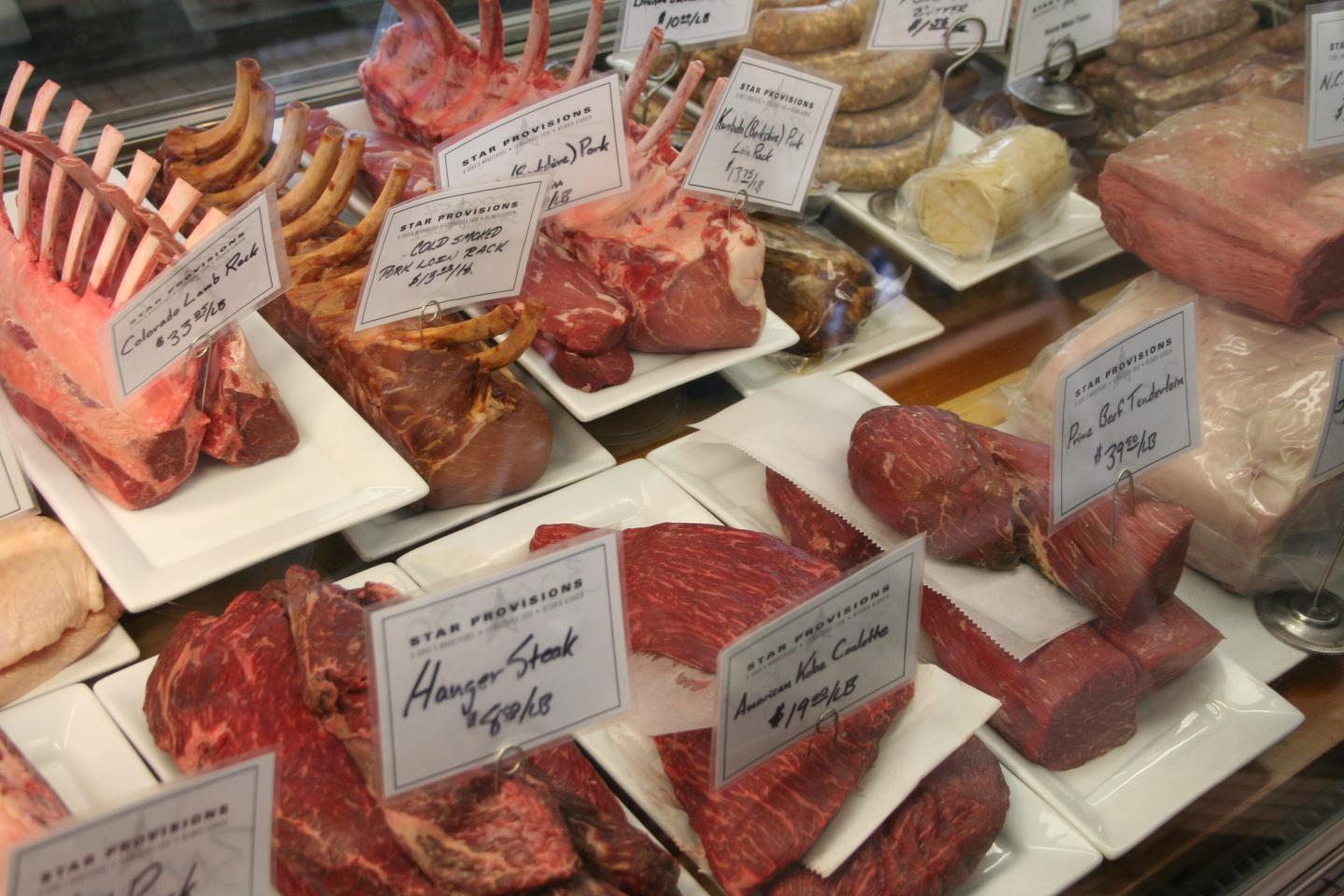
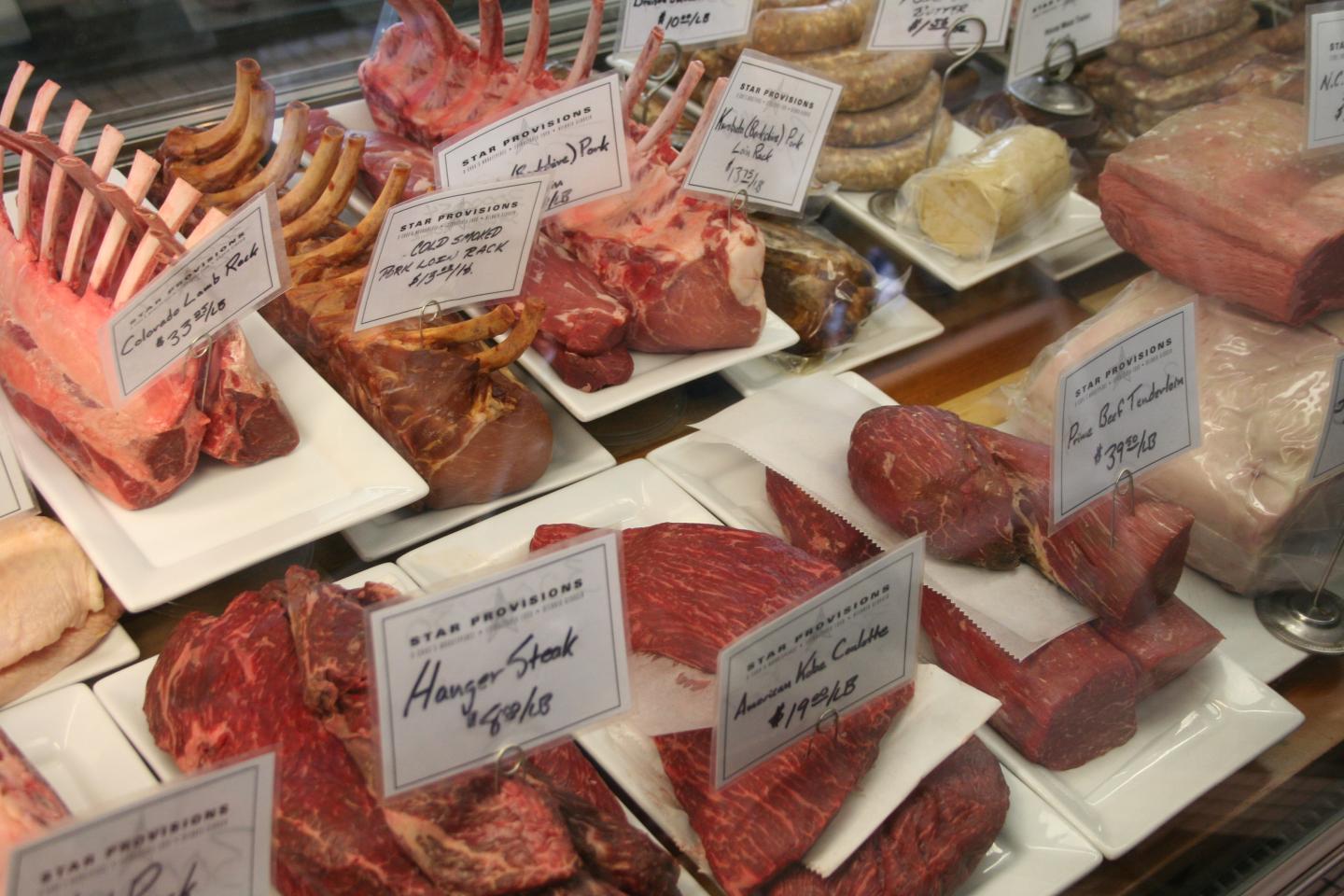
Credit: Nate Stelner.
The identification of horse meat adulterating others as beef meat is possible thanks to an electrochemical biosensor developed by the Complutense University of Madrid which is able to recognize a DNA fragment virtually unchanged in the more than 4,500 mitochondrial genomes of horses sequenced and absent in the rest of species of mammals.
"Thus, it is possible to identify selectively and without false positives any type of horse meat, regardless of race," says F. Javier Gallego, researcher of the department of Genetics of the UCM.
This biosensor is capable of discriminating in only one hour and with statistically significant differences between beef meat unadulterated and adulterated with only 0.5% (w/w) of horse meat – level required by European legislation -.
Until now, the assays and strategies to detect these meat adulterations were based on immunological, spectroscopic or molecular biology techniques.
These methods "are often not sufficiently selective to differentiate close animal species, due to the possibility of cross-reactions, or sufficiently reliable in processed products due to the denaturation and degradation of the biomolecules (proteins and nuclear DNA) that are produced by these thermal treatments ", explains Susana Campuzano, a researcher in the department of Analytical Chemistry of the UCM and co-author of the study published in Analytical Chemistry.
Better mitochondrial than nuclear
The multidisciplinary team found that better results were obtained in mitochondrial DNA fragments than in nuclear DNA because the former is more protected and better resistant to possible heat treatments.
These results are the result of collaboration between the Faculties of Chemistry and Biology of the UCM. While the team of Dr. Gallego has identified the specific fragment to be detected, designed the appropriate probe for it and contributed with his knowledge and experience in techniques of mitochondrial DNA extraction and preparation of mitochondrial lysates, the Department of Analytical Chemistry, led by Prof. Pingarrón, has designed an adequate electrochemical biosensor capable of satisfying the requirements of sensitivity and selectivity necessary to comply with current legislation for the detection of this type of adulteration. Most of the experimental work that has led to this development has been carried out by the PhD student Víctor Ruiz-Valdepeñas Montiel (with a Predoctoral contract funded by UCM) and the Master Student María Luisa Gutiérrez.
"In addition to moving to the identification of other mammalian DNAs, this methodology could be applied for both the detection of adulterations involving other animal meats and for screening purposes to identify all animal species present in a meat," points out José M. Pingarrón.
###
Bibliographic Reference: Víctor Ruiz-Valdepeñas Montiel, María Luisa Gutiérrez, Rebeca M. Torrente-Rodríguez, Eloy Povedano, Eva Vargas, A. Julio Reviejo, Rosario Linacero, Francisco J. Gallego, Susana Campuzano y José M. Pingarrón. "Disposable amperometric PCR-free biosensor for direct detection of adulteration with horsemeat in raw lysates targeting mitochondrial DNA". Analytical Chemistry. 89 (2017) 9474?9482.
DOI: 10.1021/acs.analchem.7b02412.
National Patent Requested: P201700642.
Media Contact
María Milán
[email protected]
34-913-946-510
http://www.ucm.es
Related Journal Article
http://dx.doi.org/10.1021/acs.analchem.7b02412