• HOME
  • NEWS
  • EXPLORE
    • CAREER
      • Companies
      • Jobs
    • EVENTS
    • iGEM
      • News
      • Team
    • PHOTOS
    • VIDEO
    • WIKI
  • BLOG
  • COMMUNITY
    • FACEBOOK
    • INSTAGRAM
    • TWITTER
Sunday, May 10, 2026
BIOENGINEER.ORG
No Result
View All Result
  • Login
  • HOME
  • NEWS
  • EXPLORE
    • CAREER
      • Companies
      • Jobs
        • Lecturer
        • PhD Studentship
        • Postdoc
        • Research Assistant
    • EVENTS
    • iGEM
      • News
      • Team
    • PHOTOS
    • VIDEO
    • WIKI
  • BLOG
  • COMMUNITY
    • FACEBOOK
    • INSTAGRAM
    • TWITTER
  • HOME
  • NEWS
  • EXPLORE
    • CAREER
      • Companies
      • Jobs
        • Lecturer
        • PhD Studentship
        • Postdoc
        • Research Assistant
    • EVENTS
    • iGEM
      • News
      • Team
    • PHOTOS
    • VIDEO
    • WIKI
  • BLOG
  • COMMUNITY
    • FACEBOOK
    • INSTAGRAM
    • TWITTER
No Result
View All Result
Bioengineer.org
No Result
View All Result
Home NEWS Science News Biology

Plants don't like touch: Green thumb myth dispelled

Bioengineer by Bioengineer
December 17, 2018
in Biology
Reading Time: 3 mins read
0
IMAGE
Share on FacebookShare on TwitterShare on LinkedinShare on RedditShare on Telegram

IMAGE

Credit: La Trobe University

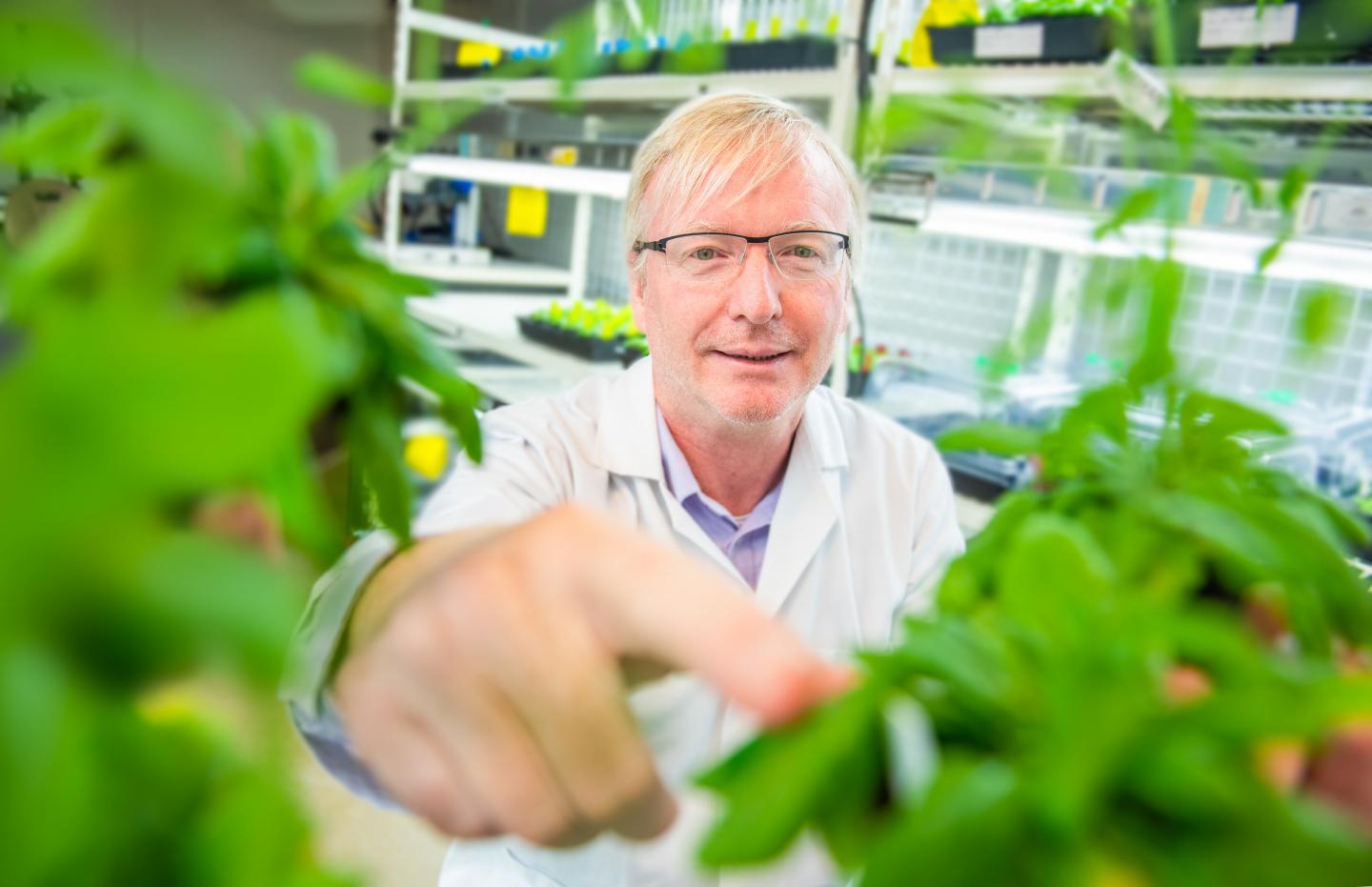
La Trobe University-led research has found that plants are extremely sensitive to touch and that repeated touching can significantly retard growth.

The findings, just published in The Plant Journal, could lead to new approaches to optimising plant growth and productivity – from field-based farming to intensive horticulture production.

Research Director of the La Trobe Institute for Agriculture and Food at AgriBio, Professor Jim Whelan, who led the research, said that even the slightest touch activates a major genetic defense response which, if repeated, slows down plant growth.

“The lightest touch from a human, animal, insect, or even plants touching each other in the wind, triggers a huge gene response in the plant,” Professor Whelan said.

“Within 30 minutes of being touched, 10 per cent of the plant’s genome is altered.

“This involves a huge expenditure of energy which is taken away from plant growth. If the touching is repeated, then plant growth is reduced by up to 30 per cent.”

Co-author from La Trobe Dr Yan Wang said that while we don’t yet know why plants react so strongly to touch, the new research findings have led to a deeper understanding of the genetic defence mechanisms involved – opening up new approaches to reducing sensitivity and optimising growth.

“We know that when an insect lands on a plant, genes are activated preparing the plant to defend itself against being eaten,” Dr Yang said. “However, insects are also beneficial, so how do plants distinguish between friend and foe?

“Likewise, when plants grow so close together that they touch one another, the retarded growth defence response may optimise access to sunlight.

“So, for optimal growth, the density of planting can be matched with resource input.”

Professor Whelan said with this deeper understanding of the genetic mechanisms involved, it may be possible to identify and breed plant varieties which are less touch sensitive while retaining their sensitivity to other factors such as cold and heat.

The research was carried out using Thale Cress – Arabidopsis thaliana – though it is likely to be applicable to most plants and crops.

Next steps in the research will be to test touch response in crop species and to look at the potential consequences of breeding plants which are less touch sensitive.

“As we don’t understand why plants display such a strong defence response to touch, if we are to breed less touch-sensitive varieties, we need to first understand what some of the consequences might be,” Professor Whelan said.

“For example, could touch-resistant plants be more susceptible to disease because a crucial defence mechanism has been removed?”

###

Mitochondrial Function Modulates Touch Signalling in Arabidopsis thaliana was published in The Plant Journal. doi: 10.1111/tpj.14183

Media Contact
Claire Bowers
[email protected]
61-437-279-903

Original Source

https://www.latrobe.edu.au/news/articles/2018/release/plants-dont-like-touch,-new-study-finds

Related Journal Article

http://dx.doi.org/10.1111/tpj.14183

Tags: Agricultural Production/EconomicsAgricultureGeneticsPlant Sciences
Share12Tweet8Share2ShareShareShare2

Related Posts

Ancient Plant Populations Reveal Fresh Insights into Climate Resilience — Biology

Ancient Plant Populations Reveal Fresh Insights into Climate Resilience

May 8, 2026
Rare Brain Disorders in Children Linked to Mutations in Lesser-Known Protein Complex — Biology

Rare Brain Disorders in Children Linked to Mutations in Lesser-Known Protein Complex

May 8, 2026

From Odd Insect to Underwater Predator: The Remarkable Evolution of a Bloodthirsty Fruit Fly

May 8, 2026

SNU Professor Sangwoo Seo’s Team Develops Next-Generation CRISPR Biocontainment Technology to Control Microbial Survival Without DNA Cleavage

May 8, 2026
Please login to join discussion

POPULAR NEWS

  • Research Indicates Potential Connection Between Prenatal Medication Exposure and Elevated Autism Risk

    840 shares
    Share 336 Tweet 210
  • New Study Reveals Plants Can Detect the Sound of Rain

    727 shares
    Share 290 Tweet 181
  • Scientists Investigate Possible Connection Between COVID-19 and Increased Lung Cancer Risk

    68 shares
    Share 27 Tweet 17
  • Salmonella Haem Blocks Macrophages, Boosts Infection

    61 shares
    Share 24 Tweet 15

About

We bring you the latest biotechnology news from best research centers and universities around the world. Check our website.

Follow us

Recent News

Evaluating Digoxin Use in Patients with Symptomatic Rheumatic Heart Disease

Evaluating the Effectiveness and Safety of Digitalis Glycosides in Treating Heart Failure

Urdu Fall Risk Questionnaire Adapted for Elderly

Subscribe to Blog via Email

Enter your email address to subscribe to this blog and receive notifications of new posts by email.

Join 82 other subscribers
  • Contact Us

Bioengineer.org © Copyright 2023 All Rights Reserved.

Welcome Back!

Login to your account below

Forgotten Password?

Retrieve your password

Please enter your username or email address to reset your password.

Log In
No Result
View All Result
  • Homepages
    • Home Page 1
    • Home Page 2
  • News
  • National
  • Business
  • Health
  • Lifestyle
  • Science

Bioengineer.org © Copyright 2023 All Rights Reserved.