

• HOME
  • NEWS
  • EXPLORE
    • CAREER
      • Companies
      • Jobs
    • EVENTS
    • iGEM
      • News
      • Team
    • PHOTOS
    • VIDEO
    • WIKI
  • BLOG
  • COMMUNITY
    • FACEBOOK
    • INSTAGRAM
    • TWITTER
Saturday, February 7, 2026
BIOENGINEER.ORG
No Result
View All Result
  • Login
  • HOME
  • NEWS
  • EXPLORE
    • CAREER
      • Companies
      • Jobs
        • Lecturer
        • PhD Studentship
        • Postdoc
        • Research Assistant
    • EVENTS
    • iGEM
      • News
      • Team
    • PHOTOS
    • VIDEO
    • WIKI
  • BLOG
  • COMMUNITY
    • FACEBOOK
    • INSTAGRAM
    • TWITTER
  • HOME
  • NEWS
  • EXPLORE
    • CAREER
      • Companies
      • Jobs
        • Lecturer
        • PhD Studentship
        • Postdoc
        • Research Assistant
    • EVENTS
    • iGEM
      • News
      • Team
    • PHOTOS
    • VIDEO
    • WIKI
  • BLOG
  • COMMUNITY
    • FACEBOOK
    • INSTAGRAM
    • TWITTER
No Result
View All Result
Bioengineer.org
No Result
View All Result
Home NEWS Science News Biology

Establishment of the immortalized cell line derived from Okinawa rail (endangered species)

Bioengineer by Bioengineer
November 16, 2018
in Biology
Reading Time: 2 mins read
0
Share on FacebookShare on TwitterShare on LinkedinShare on RedditShare on Telegram
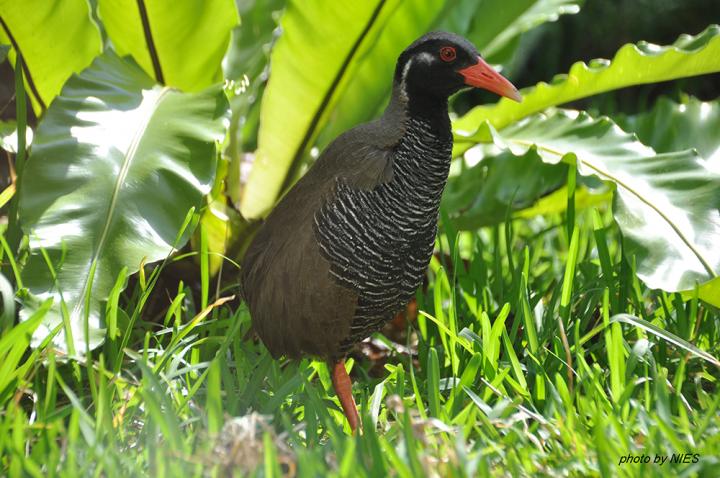
IMAGE

Credit: NIES

The number of critically endangered animals has been increasing in recent years. According to data from the International Union for the Conservation of Nature (IUCN), 1375 avian species are categorized as being endangered animals, and around 12% of the endangered species are avian. The conservation of endangered species is an important task for our next generation in order to maintain genetic diversity. The Okinawa rail, which is a species endemic to northern Okinawa Island, is an example of an endangered (EN) avian species. The Okinawa rail is categorized EN on the IUCN red list, because its individual numbers are estimated to be approximately 1500.

As part of the cellular conservation of endangered avian species, our group initiated a primary cell culture project aimed at preserving endangered avian species in Japan, such as the Okinawa rail. However, primary cells cannot be cultured indefinitely because of cellular senescence and stresses caused by cell culture. To overcome these cell culture limitations, primary cells have to be immortalized. Although immortalized cultured cells are useful for various functional assays or transcriptome analysis, highly efficient and reproducible immortalization methods have not been developed in avian-derived cells. We firstly introduced the simian Virus 40T antigen (SV40T) and human papillomavirus (HPV)-E6E7 to chick and Okinawa rail (endangered species) derived fibroblast. However, neither the SV40T nor E6E7 genes could induce avian cell immortality. Accordingly, we attempted to use a recently developed immortalization method, which involves the co-expression of mutant CDK4, Cyclin D and TERT (K4DT method) in these avian cells. Cellular division until the senescence was significantly extended by K4DT although the K4DT method could not induce the efficient immortalization in mass cell population. As a result, we succeeded to obtain the immortalized avian cells with K4DT expression. We conclude that the K4DT method is useful to extend the cell division and immortalization of avian-derived cells.

###

The research is published on November 11, 2018 in Journal of Cellular Physiology.

Article:

Katayama M, Kiyono T, Ohmaki H, Eitsuka T, Endoh D, Inoue-Murayama M, Nakajima N, Onuma M, Fukuda T. Extended proliferation of chicken and Okinawa rail derived fibroblasts by expression of cell cycle regulators. Journal of Cellular Physiology. DOI: 10.1002/jcp.27417

Under line: Wildlife Genome Collaborative Research Group in National Institute for Environmental Studies, Japan.

Contact:

Manabu Onuma
National Institute for Environmental Studies
16-2 Onogawa, Tsukuba, Ibaraki 305-8506 Japan
@nies.go.jp

Masafumi Katayama
National Institute for Environmental Studies
16-2 Onogawa, Tsukuba, Ibaraki 305-8506 Japan
@nies.go.jp

Tomokazu Fukuda
Iwate University, Graduate School of Science and Engineering
Iwate University, Faculty of Science and Engineering, Laboratory of Cell Engineering and Molecular Genetics
4-3-5, Ueda, Morioka-city, Iwate Prefecture, 020-8551, Japan

Media Contact

Manabu Onuma
[email protected]

http://www.nies.go.jp/index-e.html

Related Journal Article

http://dx.doi.org/10.1002/jcp.27417

Share12Tweet8Share2ShareShareShare2

Related Posts

Florida Cane Toad: Complex Spread and Selective Evolution

Florida Cane Toad: Complex Spread and Selective Evolution

February 7, 2026
New Study Uncovers Mechanism Behind Burn Pit Particulate Matter–Induced Lung Inflammation

New Study Uncovers Mechanism Behind Burn Pit Particulate Matter–Induced Lung Inflammation

February 6, 2026

DeepBlastoid: Advancing Automated and Efficient Evaluation of Human Blastoids with Deep Learning

February 6, 2026

Navigating the Gut: The Role of Formic Acid in the Microbiome

February 6, 2026
Please login to join discussion

POPULAR NEWS

  • Robotic Ureteral Reconstruction: A Novel Approach

    Robotic Ureteral Reconstruction: A Novel Approach

    82 shares
    Share 33 Tweet 21
  • Digital Privacy: Health Data Control in Incarceration

    63 shares
    Share 25 Tweet 16
  • Study Reveals Lipid Accumulation in ME/CFS Cells

    57 shares
    Share 23 Tweet 14
  • Breakthrough in RNA Research Accelerates Medical Innovations Timeline

    53 shares
    Share 21 Tweet 13

About

We bring you the latest biotechnology news from best research centers and universities around the world. Check our website.

Follow us

Recent News

Evaluating Pediatric Emergency Care Quality in Ethiopia

TPMT Expression Predictions Linked to Azathioprine Side Effects

Improving Dementia Care with Enhanced Activity Kits

Subscribe to Blog via Email

Enter your email address to subscribe to this blog and receive notifications of new posts by email.

Join 73 other subscribers
  • Contact Us

Bioengineer.org © Copyright 2023 All Rights Reserved.

Welcome Back!

Login to your account below

Forgotten Password?

Retrieve your password

Please enter your username or email address to reset your password.

Log In
No Result
View All Result
  • Homepages
    • Home Page 1
    • Home Page 2
  • News
  • National
  • Business
  • Health
  • Lifestyle
  • Science

Bioengineer.org © Copyright 2023 All Rights Reserved.