

• HOME
  • NEWS
  • EXPLORE
    • CAREER
      • Companies
      • Jobs
    • EVENTS
    • iGEM
      • News
      • Team
    • PHOTOS
    • VIDEO
    • WIKI
  • BLOG
  • COMMUNITY
    • FACEBOOK
    • INSTAGRAM
    • TWITTER
Saturday, February 7, 2026
BIOENGINEER.ORG
No Result
View All Result
  • Login
  • HOME
  • NEWS
  • EXPLORE
    • CAREER
      • Companies
      • Jobs
        • Lecturer
        • PhD Studentship
        • Postdoc
        • Research Assistant
    • EVENTS
    • iGEM
      • News
      • Team
    • PHOTOS
    • VIDEO
    • WIKI
  • BLOG
  • COMMUNITY
    • FACEBOOK
    • INSTAGRAM
    • TWITTER
  • HOME
  • NEWS
  • EXPLORE
    • CAREER
      • Companies
      • Jobs
        • Lecturer
        • PhD Studentship
        • Postdoc
        • Research Assistant
    • EVENTS
    • iGEM
      • News
      • Team
    • PHOTOS
    • VIDEO
    • WIKI
  • BLOG
  • COMMUNITY
    • FACEBOOK
    • INSTAGRAM
    • TWITTER
No Result
View All Result
Bioengineer.org
No Result
View All Result
Home NEWS Science News Biology

The unique biodiversity: 6,900 hydrobionts species were found in Russian Far Eastern basin

Bioengineer by Bioengineer
November 15, 2018
in Biology
Reading Time: 2 mins read
0
Share on FacebookShare on TwitterShare on LinkedinShare on RedditShare on Telegram
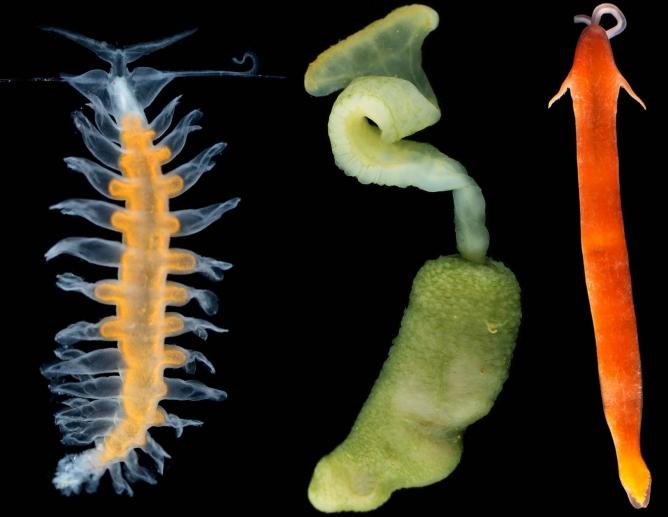
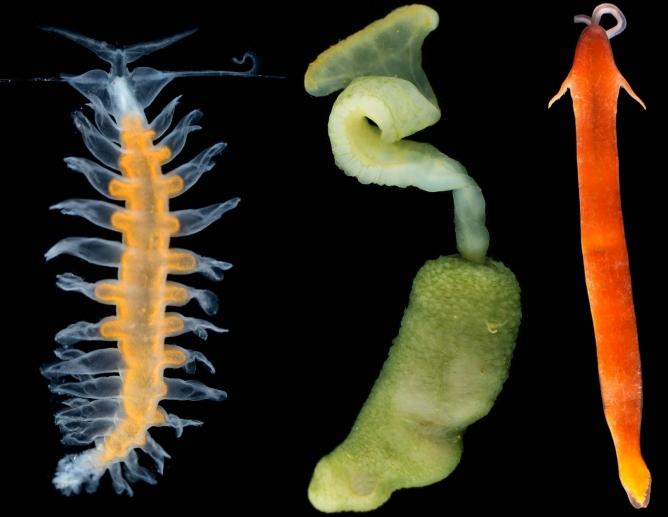
IMAGE

Credit: Captured by A. Mayorova, Ph.D., FEFU.

Being supported by mega-grant from Russian Science Foundation (RSF), researchers of Far Eastern Federal University (FEFU) and Far Eastern Branch of the Russian Academy of Sciences (FEB RAS), have revealed about 6900 hydrobionts species in the Russian Far Eastern basin. The Sea of Japan turned out to be especially rich, approximately 42 percent of all Far Eastern species inhabit here. The large-scale research program was carried out from 2014 to 2018.

This was announced by Vice-President of the RAS, Head of the Department of Biodiversity and Marine Bioresources of the FEFU School of Natural Sciences Andrei Adrianov, presenting the results of the project "Technologies for Monitoring and Rational Use of Marine Biological Resources".

During five expeditions scientists have obtained new data on the biological diversity of the seas of the Far East. According to Andrei Adrianov, more than 6,900 species of aquatic organisms populate the Russian economic zone of the Far Eastern basin. That exceeds the number of species in the economic zone of all European countries. The Sea of Japan is particularly rich: as a result of deep-sea research, the number of identified organisms has increased six-fold compared with the previously known. Wherein, 201 of 621 species are new to science.

"Deep-sea research revolutionized our understanding of biological diversity. In the Far Eastern basin, hundreds and hundreds of previously unknown organisms were found. Now a team of scientists is describing these new species. We have yet to evaluate the potential of their use. Many hydrobionts were identified as having important antitumor and antibacterial properties, which means they can become the basis to design the new generation of drugs," said Andrei Adrianov.

A large-scale research program was carried out by the scientists of FEFU and the FEB RAS in the course of 2014 to 2018 at the expense of the RSF mega-grant. Scientists have developed research in five major fields: the creation of technologies for accounting, reproduction and control of biological resources, methods for assessing pollution of marine ecosystems, as well as new drugs and food. In the project were engaged 100 employees of the FEFU and the FEB RAS, 60% of which are young scientists. On the basis of the research 568 scientific articles have already been published, including 331 in international journals.

###

Media Contact

Alexander Zverev
[email protected]

http://https://www.dvfu.ru/en/

Share15Tweet8Share2ShareShareShare2

Related Posts

Florida Cane Toad: Complex Spread and Selective Evolution

Florida Cane Toad: Complex Spread and Selective Evolution

February 7, 2026
New Study Uncovers Mechanism Behind Burn Pit Particulate Matter–Induced Lung Inflammation

New Study Uncovers Mechanism Behind Burn Pit Particulate Matter–Induced Lung Inflammation

February 6, 2026

DeepBlastoid: Advancing Automated and Efficient Evaluation of Human Blastoids with Deep Learning

February 6, 2026

Navigating the Gut: The Role of Formic Acid in the Microbiome

February 6, 2026
Please login to join discussion

POPULAR NEWS

  • Robotic Ureteral Reconstruction: A Novel Approach

    Robotic Ureteral Reconstruction: A Novel Approach

    82 shares
    Share 33 Tweet 21
  • Digital Privacy: Health Data Control in Incarceration

    63 shares
    Share 25 Tweet 16
  • Study Reveals Lipid Accumulation in ME/CFS Cells

    57 shares
    Share 23 Tweet 14
  • Breakthrough in RNA Research Accelerates Medical Innovations Timeline

    53 shares
    Share 21 Tweet 13

About

We bring you the latest biotechnology news from best research centers and universities around the world. Check our website.

Follow us

Recent News

Improving Dementia Care with Enhanced Activity Kits

Decoding Prostate Cancer Origins via snFLARE-seq, mxFRIZNGRND

Digital Health Perspectives from Baltic Sea Experts

Subscribe to Blog via Email

Enter your email address to subscribe to this blog and receive notifications of new posts by email.

Join 73 other subscribers
  • Contact Us

Bioengineer.org © Copyright 2023 All Rights Reserved.

Welcome Back!

Login to your account below

Forgotten Password?

Retrieve your password

Please enter your username or email address to reset your password.

Log In
No Result
View All Result
  • Homepages
    • Home Page 1
    • Home Page 2
  • News
  • National
  • Business
  • Health
  • Lifestyle
  • Science

Bioengineer.org © Copyright 2023 All Rights Reserved.