

• HOME
  • NEWS
  • EXPLORE
    • CAREER
      • Companies
      • Jobs
    • EVENTS
    • iGEM
      • News
      • Team
    • PHOTOS
    • VIDEO
    • WIKI
  • BLOG
  • COMMUNITY
    • FACEBOOK
    • INSTAGRAM
    • TWITTER
Thursday, January 15, 2026
BIOENGINEER.ORG
No Result
View All Result
  • Login
  • HOME
  • NEWS
  • EXPLORE
    • CAREER
      • Companies
      • Jobs
        • Lecturer
        • PhD Studentship
        • Postdoc
        • Research Assistant
    • EVENTS
    • iGEM
      • News
      • Team
    • PHOTOS
    • VIDEO
    • WIKI
  • BLOG
  • COMMUNITY
    • FACEBOOK
    • INSTAGRAM
    • TWITTER
  • HOME
  • NEWS
  • EXPLORE
    • CAREER
      • Companies
      • Jobs
        • Lecturer
        • PhD Studentship
        • Postdoc
        • Research Assistant
    • EVENTS
    • iGEM
      • News
      • Team
    • PHOTOS
    • VIDEO
    • WIKI
  • BLOG
  • COMMUNITY
    • FACEBOOK
    • INSTAGRAM
    • TWITTER
No Result
View All Result
Bioengineer.org
No Result
View All Result
Home NEWS Science News Biology

The first cave-dwelling centipede from southern China

Bioengineer by Bioengineer
November 13, 2018
in Biology
Reading Time: 2 mins read
0
Share on FacebookShare on TwitterShare on LinkedinShare on RedditShare on Telegram
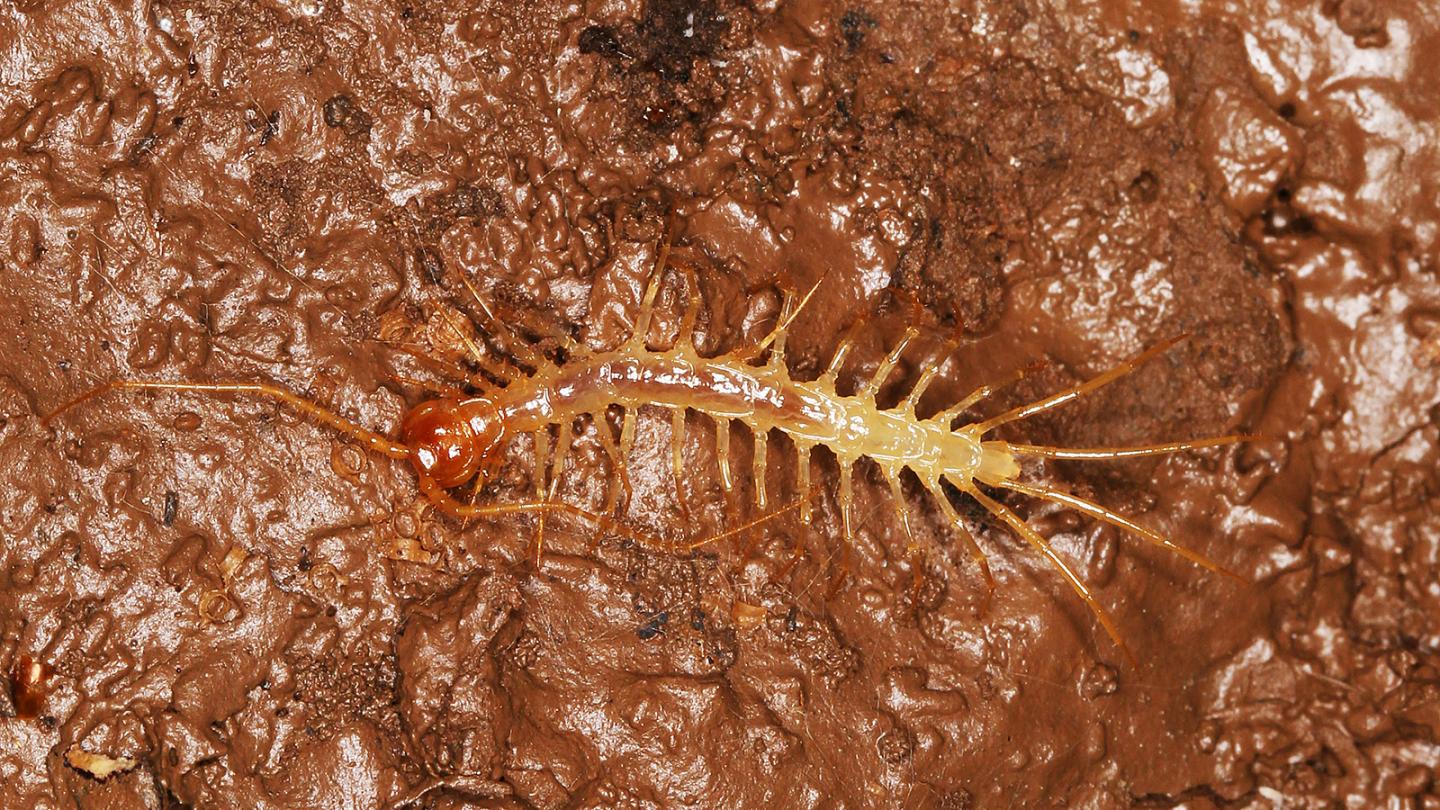
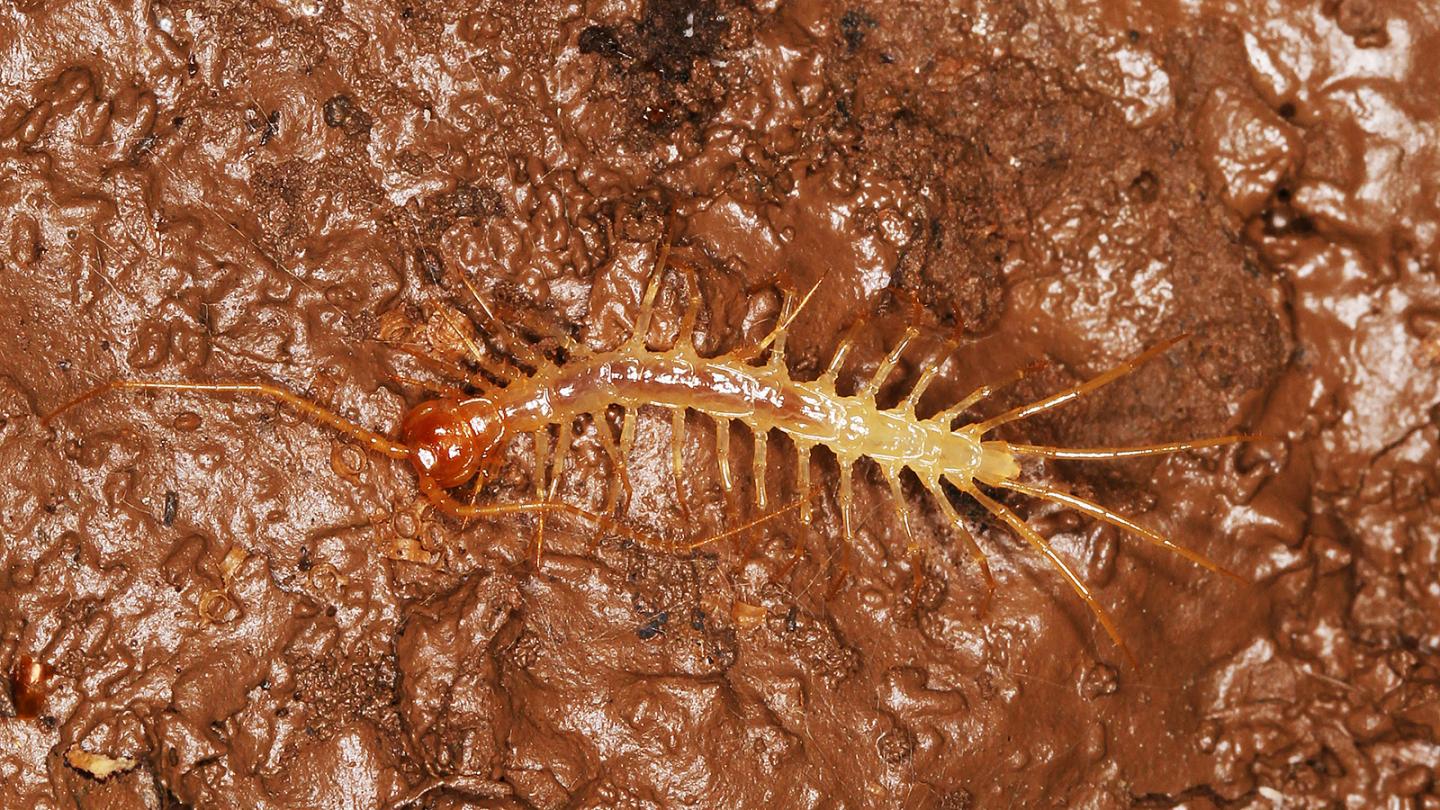
IMAGE

Credit: Hui-qin Ma

Chinese scientists recorded the first cave-dwelling centipede known so far from southern China. To the amazement of the team, the specimens collected during a survey in the Gaofeng village, Guizhou Province, did not only represent a species that had been successfully hiding away from biologists in the subterranean darkness, but it also turned out to be the very first amongst the order of stone centipedes to be discovered underground in the country.

Found by the team of Qing Li, Xuan Guo and Dr Hui-ming Chen of the Guizhou Institute of Biology, and Su-jian Pei and Dr Hui-qin Ma of Hengshui University, the new cavedweller is described under the name of Australobius tracheoperspicuus in the open-access journal ZooKeys.

The new centipede is quite tiny, measuring less than 20 mm in total body length. It is also characterised with pale yellow-brownish colour and antennae comprised of 26 segments each. Similar to other cave-dwelling organisms which have evolved to survive away from sunlight, it has no eyes.

In their paper, the authors point out that Chinese centipedes and millipedes remain poorly known, where the statement holds particularly true for the fauna of stone centipedes: the members of the order Lithobiomorpha. As of today, there are only 80 species and subspecies of lithobiomorphs known from the country. However, none of them lives underground.

In addition, the study provides an identification key for all six species of the genus Australobius recorded in China.

###

Original source:

Li Q, Pei S-j, Guo X, Ma H-q, Chen H-m (2018) Australobius tracheoperspicuus sp. n., the first subterranean species of centipede from southern China (Lithobiomorpha, Lithobiidae). ZooKeys 795: 83-91. https://doi.org/10.3897/zookeys.795.28036

Media Contact

Hui-qin Ma
[email protected]
@Pensoft

http://www.pensoft.net

Related Journal Article

http://dx.doi.org/10.3897/zookeys.795.28036

Share13Tweet8Share2ShareShareShare2

Related Posts

blank

Genomic Islands Propel ST-131 E. coli Resistance Evolution

January 15, 2026
blank

Histological Changes During Fish Sex Change Unveiled

January 15, 2026

Cold Stress: RNA Expression and Regulatory Network Insights in Pigs

January 15, 2026

Sporobolus ioclados: Survival Strategies in Desert Ecosystems

January 15, 2026
Please login to join discussion

POPULAR NEWS

  • Enhancing Spiritual Care Education in Nursing Programs

    155 shares
    Share 62 Tweet 39
  • PTSD, Depression, Anxiety in Childhood Cancer Survivors, Parents

    147 shares
    Share 59 Tweet 37
  • Robotic Ureteral Reconstruction: A Novel Approach

    75 shares
    Share 30 Tweet 19
  • Study Reveals Lipid Accumulation in ME/CFS Cells

    53 shares
    Share 21 Tweet 13

About

We bring you the latest biotechnology news from best research centers and universities around the world. Check our website.

Follow us

Recent News

Symmetry Patterns in Language Category Systems

Advanced Machine Learning Enhances Fuel Cell Efficiency

Comparing Three NAD+ Boosters: Effects on Circulation and Microbes

Subscribe to Blog via Email

Enter your email address to subscribe to this blog and receive notifications of new posts by email.

Join 71 other subscribers
  • Contact Us

Bioengineer.org © Copyright 2023 All Rights Reserved.

Welcome Back!

Login to your account below

Forgotten Password?

Retrieve your password

Please enter your username or email address to reset your password.

Log In
No Result
View All Result
  • Homepages
    • Home Page 1
    • Home Page 2
  • News
  • National
  • Business
  • Health
  • Lifestyle
  • Science

Bioengineer.org © Copyright 2023 All Rights Reserved.