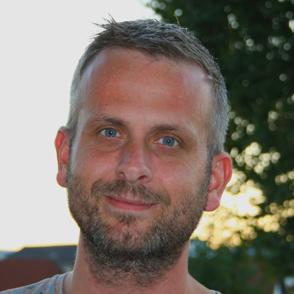
Credit: Sjoerd van Wijk
An effective regulation of programmed cell death is crucial for the correct development of embryos, a working innate immune system, and the prevention of cancer. How cells control the switch between cell survival and death, and which signalling pathways are involved, remain unclear. Proteins that interact with death receptors in these signalling pathways are often marked with various forms of ubiquitin chains, such as linear (M1) and K63-linked polyubiquitin chains. Deubiquitinating enzymes, which specifically break down ubiquitin chains, play a central role in the regulation of these chains, death receptor signalling, and cell fate.
"In our project, we want to investigate the network of M1-deubiquitinating enzymes and interactions with death receptor signalling in mammalian cells in order to understand the fundamental role of the ubiquitin in cell death or survival," explains Sjoerd van Wijk, group leader at the Institute of Experimental Cancer Research in Pediatrics. The ultimate goal is to understand human diseases, in particular how cancer develops and spreads, and how cells protect themselves against invasive bacteria.
In his research group, van Wijk pursues multidisciplinary approaches using state-of-the-art technology. Through collaborations with Dr. Manuel Kaulich (CRISPR/Cas9 Screening Centre at Goethe University), he has access to highly efficient screening methods to unravel the molecular events that control death receptor function. The analysis of these molecular complexes is also being supported by the ubiquitin mass spectrometry at the Institute for Biochemistry II at Goethe University (Prof. Dr. Ivan Dikic) and at the Institute of Molecular Biology in Mainz (Dr. Petra Beli), as well as by the high-resolution microscopy at the Institute of Physical and Theoretical Chemistry at Goethe University (Prof. Dr. Mike Heilemann).
###
An image may be downloaded at: http://www.uni-frankfurt.de/74652845
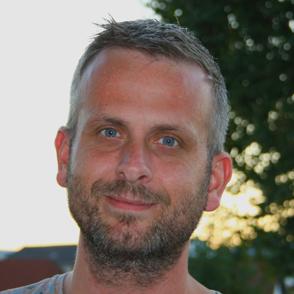
Credit: Dr. Sjoerd van Wijk
Further information: Dr. Sjoerd van Wijk, Institute for Experimental Cancer Research in Pediatrics, Faculty of Medicine, Niederrad Campus, Tel. +49 69 67866574, Email: [email protected].
Current news about science, teaching, and society in GOETHE-UNI online (http://www.aktuelles.uni-frankfurt.de)
Goethe University is a research-oriented university in the European financial centre Frankfurt The university was founded in 1914 through private funding, primarily from Jewish sponsors, and has since produced pioneering achievements in the areas of social sciences, sociology and economics, medicine, quantum physics, brain research, and labour law. It gained a unique level of autonomy on 1 January 2008 by returning to its historic roots as a "foundation university". Today, it is among the top ten in external funding and among the top three largest universities in Germany, with three clusters of excellence in medicine, life sciences and the humanities. Together with the Technical University of Darmstadt and the University of Mainz, it acts as a partner of the inter-state strategic Rhine-Main University Alliance. Internet: http://www.uni-frankfurt.de
Publisher: The President of Goethe University Editor: Dr. Anne Hardy, Referee for Science Communication, PR & Communication Department, Theodor-W.-Adorno-Platz 1, 60323 Frankfurt am Main, Tel: (069) 798-13035, Fax: (069) 798-763 12531.
Media Contact
Dr. Sjoerd van Wijk
[email protected]
49-696-786-6574
@goetheuni
http://www.uni-frankfurt.de
Original Source
https://aktuelles.uni-frankfurt.de/englisch/improving-the-understanding-of-death-receptor-functions-in-cells/