• HOME
  • NEWS
  • EXPLORE
    • CAREER
      • Companies
      • Jobs
    • EVENTS
    • iGEM
      • News
      • Team
    • PHOTOS
    • VIDEO
    • WIKI
  • BLOG
  • COMMUNITY
    • FACEBOOK
    • INSTAGRAM
    • TWITTER
Sunday, October 4, 2026
BIOENGINEER.ORG
No Result
View All Result
  • Login
  • HOME
  • NEWS
  • EXPLORE
    • CAREER
      • Companies
      • Jobs
        • Lecturer
        • PhD Studentship
        • Postdoc
        • Research Assistant
    • EVENTS
    • iGEM
      • News
      • Team
    • PHOTOS
    • VIDEO
    • WIKI
  • BLOG
  • COMMUNITY
    • FACEBOOK
    • INSTAGRAM
    • TWITTER
No Result
View All Result
Bioengineer.org
No Result
View All Result
Home NEWS Science News

HKBU and Tencent break world record for fast and accurate AI training

Bioengineer by Bioengineer
November 6, 2018
in Science News
Reading Time: 2 mins read
0
Share on FacebookShare on TwitterShare on LinkedinShare on RedditShare on Telegram
IMAGE

Credit: HKBU

Researchers at Hong Kong Baptist University (HKBU) have partnered with a team from Tencent Machine Learning to create a new technique for training Artificial Intelligence (AI) machines faster than ever before, while maintaining accuracy.

During the experiment the team succeeded in training two popular deep neural networks called AlexNet and ResNet-50 in just 4 minutes and 6.6 minutes respectively. Previously the fastest time was 11 minutes for AlexNet and 15 minutes for ResNet-50.

AlexNet and ResNet-50 are deep neural networks built on ImageNet, a large-scale dataset for visual recognition. Once trained, the system was able to recognise and label an object in a given photo. The result is significantly faster than previous records and outperforms all other existing systems.

Machine learning is a set of mathematical approaches which enables computers to "learn" from data, without explicitly being programmed by humans. The resulting algorithms can then be applied to a variety of data and visual recognition tasks used in AI.

The HKBU team is comprised of Professor Chu Xiaowen and PhD student Shi Shaohuai from the Department of Computer Science.

Professor Chu said: "We have proposed a new optimised training method that significantly improves the best output without losing accuracy. In AI training, researchers strive to train their networks faster, but this can lead to a decrease in accuracy. As a result, training machine-learning models at high speed while maintaining accuracy and precision is a vital goal for scientists."

Professor Chu said the time required to train AI machines is affected by both computing time and communication time. The research team attained breakthroughs in both aspects to create this record-breaking achievement.

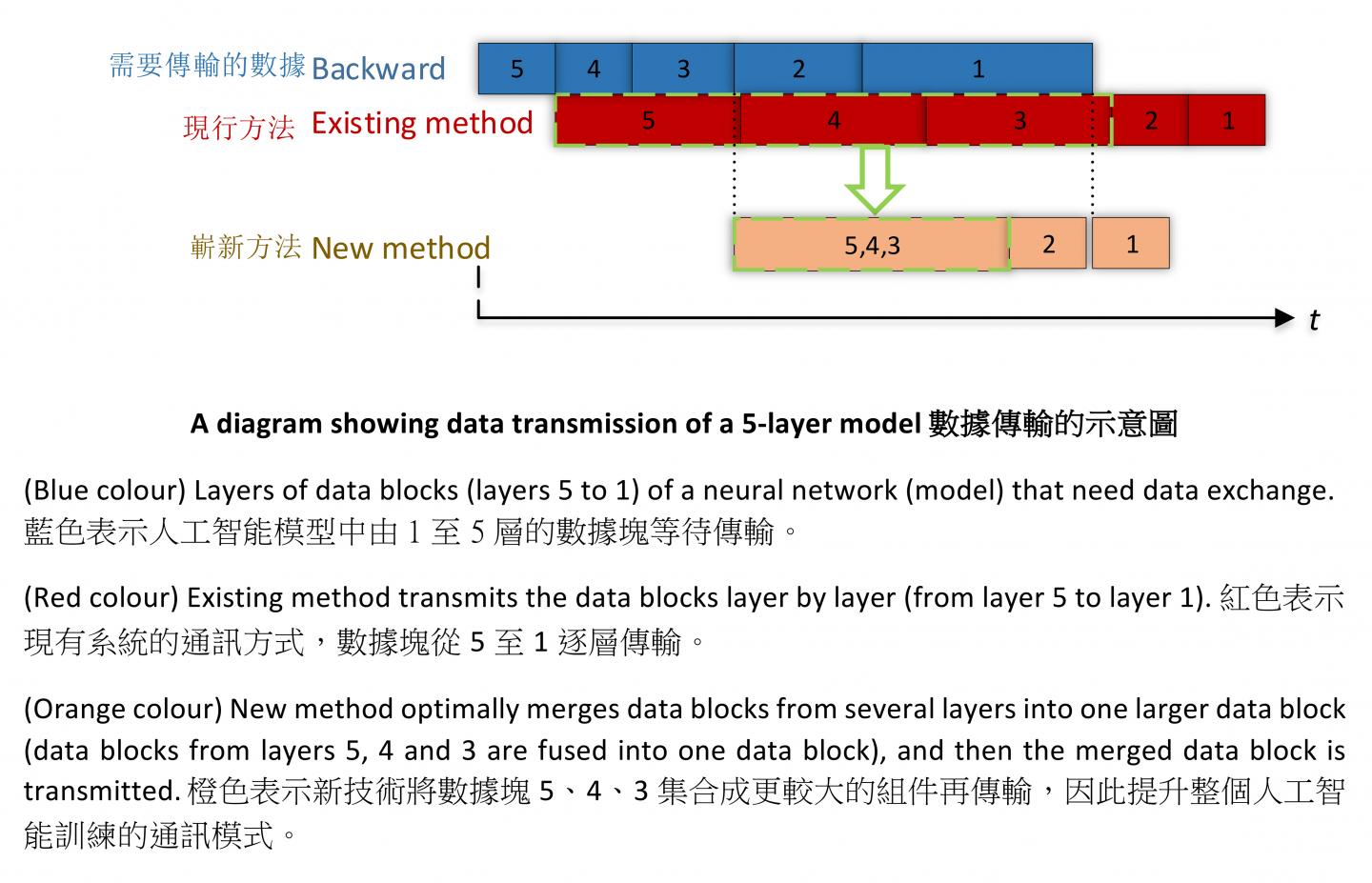
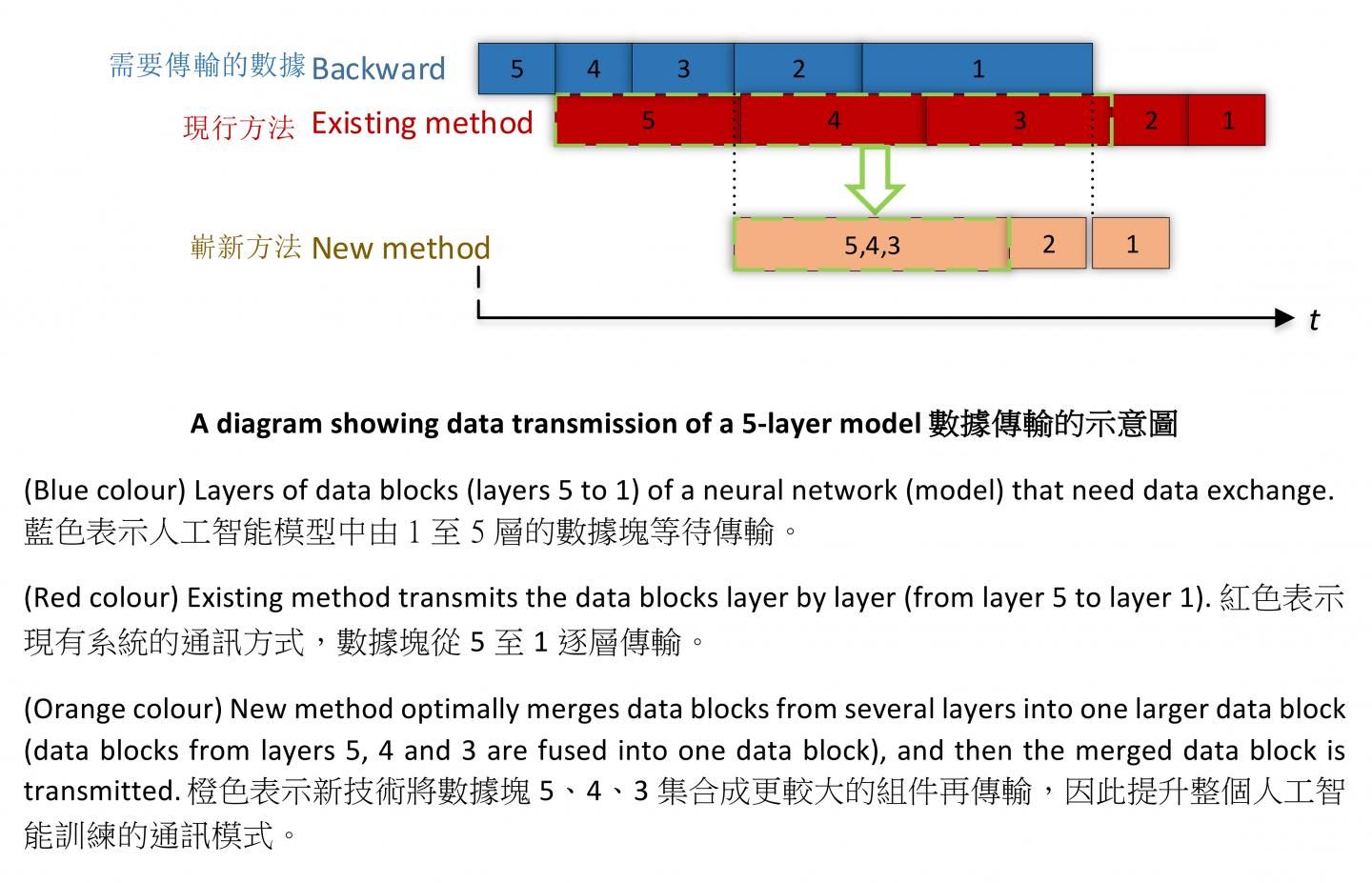
This included adopting a simpler computational method, known as FP16, to replace the more traditional one, FP32, making computation much faster without losing accuracy. As communication time is affected by the size of data blocks, the team came up with a communication technique named "tensor fusion", which combines smaller pieces of data into larger ones, optimising the transmission pattern and thereby improving the efficiency of communication during AI training.

This new technique can be adopted in large-scale image classification, and it can also be applied to other AI applications, including machine translation; natural language processing (NLP) to enhance interactions between human language and computers; medical imaging analysis; and online multiplayer battle games.

###

Media Contact

HKBU
[email protected]

http://www.hkbu.edu.hk

Original Source

https://arxiv.org/abs/1807.11205

Share12Tweet8Share2ShareShareShare2

Related Posts

Squeezing Polypropylene Flips Its Insulation From Rubbery to Glassy Conduction

Squeezing Polypropylene Flips Its Insulation From Rubbery to Glassy Conduction

October 4, 2026
Metarrestin's Anti-Cancer Mechanism Mapped Through Network Pharmacology

Metarrestin’s Anti-Cancer Mechanism Mapped Through Network Pharmacology

October 4, 2026

Cell Death Genes Could Predict Survival in Esophageal Cancer, Study Finds

October 4, 2026

Sulfated Seaweed Polymer Helps Gels Protect Anthocyanins Until the Gut

October 4, 2026
Please login to join discussion

POPULAR NEWS

  • Alloys That Shrink Their Own Grains: New PIX Mechanism Refines Metals With Heat Alone

    Alloys That Shrink Their Own Grains: New PIX Mechanism Refines Metals With Heat Alone

    29 shares
    Share 12 Tweet 7
  • Endurance Exercise Reshapes the Liver in Males and Females Through Distinct Molecular Routes

    29 shares
    Share 12 Tweet 7
  • Single Transcription Factor PU.1 Rapidly Converts Fibroblasts into Macrophage-Lineage Cells

    29 shares
    Share 12 Tweet 7
  • New Scale Measures How Ready Nurse Educators Really Are for the AI Era

    29 shares
    Share 12 Tweet 7

About

We bring you the latest biotechnology news from best research centers and universities around the world. Check our website.

Follow us

Recent News

Alloys That Shrink Their Own Grains: New PIX Mechanism Refines Metals With Heat Alone

Endurance Exercise Reshapes the Liver in Males and Females Through Distinct Molecular Routes

Single Transcription Factor PU.1 Rapidly Converts Fibroblasts into Macrophage-Lineage Cells

Subscribe to Blog via Email

Enter your email address to subscribe to this blog and receive notifications of new posts by email.

Join 85 other subscribers
  • Contact Us

Bioengineer.org © Copyright 2023 All Rights Reserved.

Welcome Back!

Login to your account below

Forgotten Password?

Retrieve your password

Please enter your username or email address to reset your password.

Log In
No Result
View All Result
  • Homepages
    • Home Page 1
    • Home Page 2
  • News
  • National
  • Business
  • Health
  • Lifestyle
  • Science

Bioengineer.org © Copyright 2023 All Rights Reserved.