

• HOME
  • NEWS
  • EXPLORE
    • CAREER
      • Companies
      • Jobs
    • EVENTS
    • iGEM
      • News
      • Team
    • PHOTOS
    • VIDEO
    • WIKI
  • BLOG
  • COMMUNITY
    • FACEBOOK
    • INSTAGRAM
    • TWITTER
Tuesday, April 21, 2026
BIOENGINEER.ORG
No Result
View All Result
  • Login
  • HOME
  • NEWS
  • EXPLORE
    • CAREER
      • Companies
      • Jobs
        • Lecturer
        • PhD Studentship
        • Postdoc
        • Research Assistant
    • EVENTS
    • iGEM
      • News
      • Team
    • PHOTOS
    • VIDEO
    • WIKI
  • BLOG
  • COMMUNITY
    • FACEBOOK
    • INSTAGRAM
    • TWITTER
  • HOME
  • NEWS
  • EXPLORE
    • CAREER
      • Companies
      • Jobs
        • Lecturer
        • PhD Studentship
        • Postdoc
        • Research Assistant
    • EVENTS
    • iGEM
      • News
      • Team
    • PHOTOS
    • VIDEO
    • WIKI
  • BLOG
  • COMMUNITY
    • FACEBOOK
    • INSTAGRAM
    • TWITTER
No Result
View All Result
Bioengineer.org
No Result
View All Result
Home NEWS Science News Biology

Detecting E. coli strains using molecular electronics

Bioengineer by Bioengineer
November 5, 2018
in Biology
Reading Time: 2 mins read
0
Share on FacebookShare on TwitterShare on LinkedinShare on RedditShare on Telegram
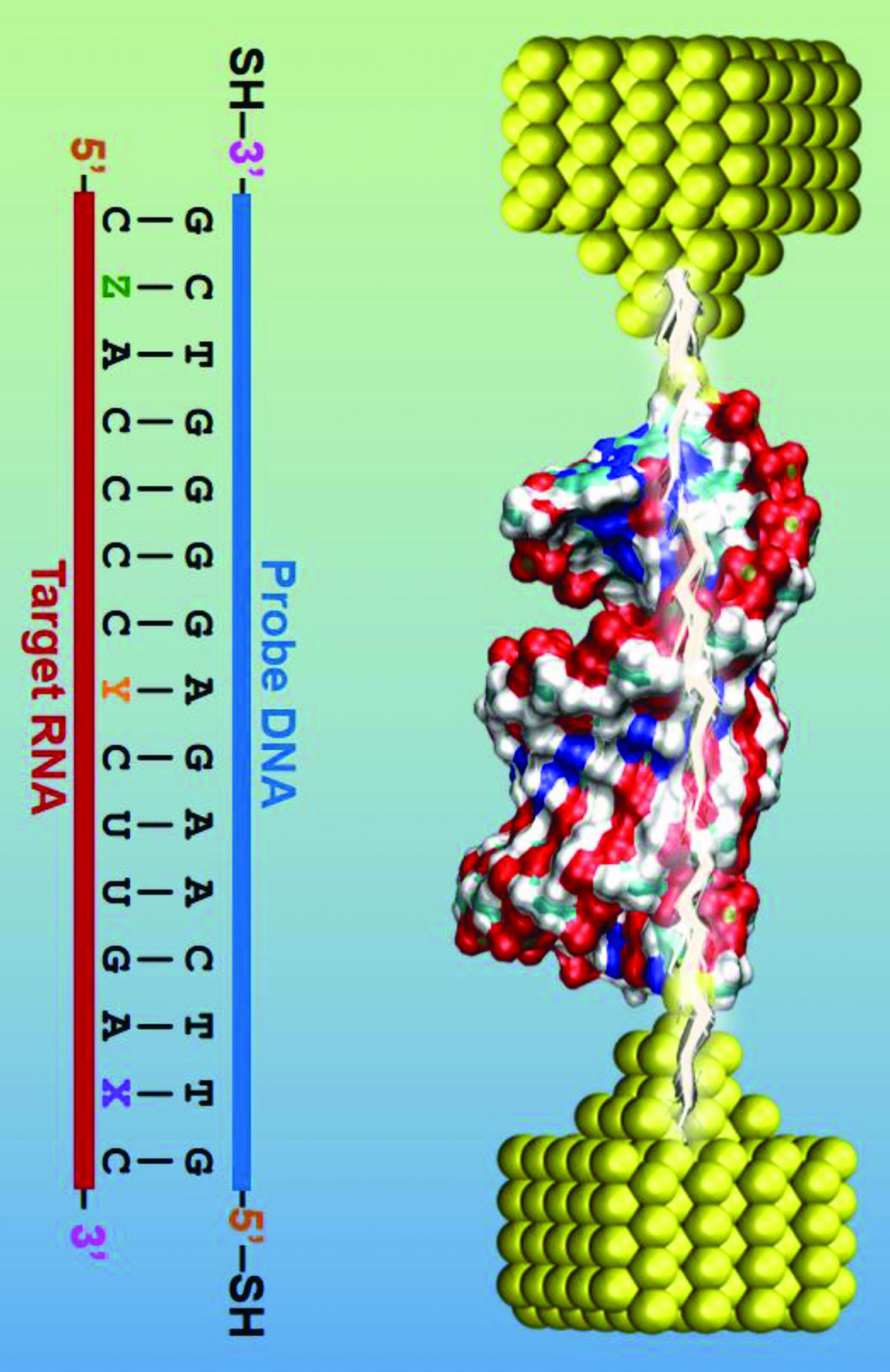
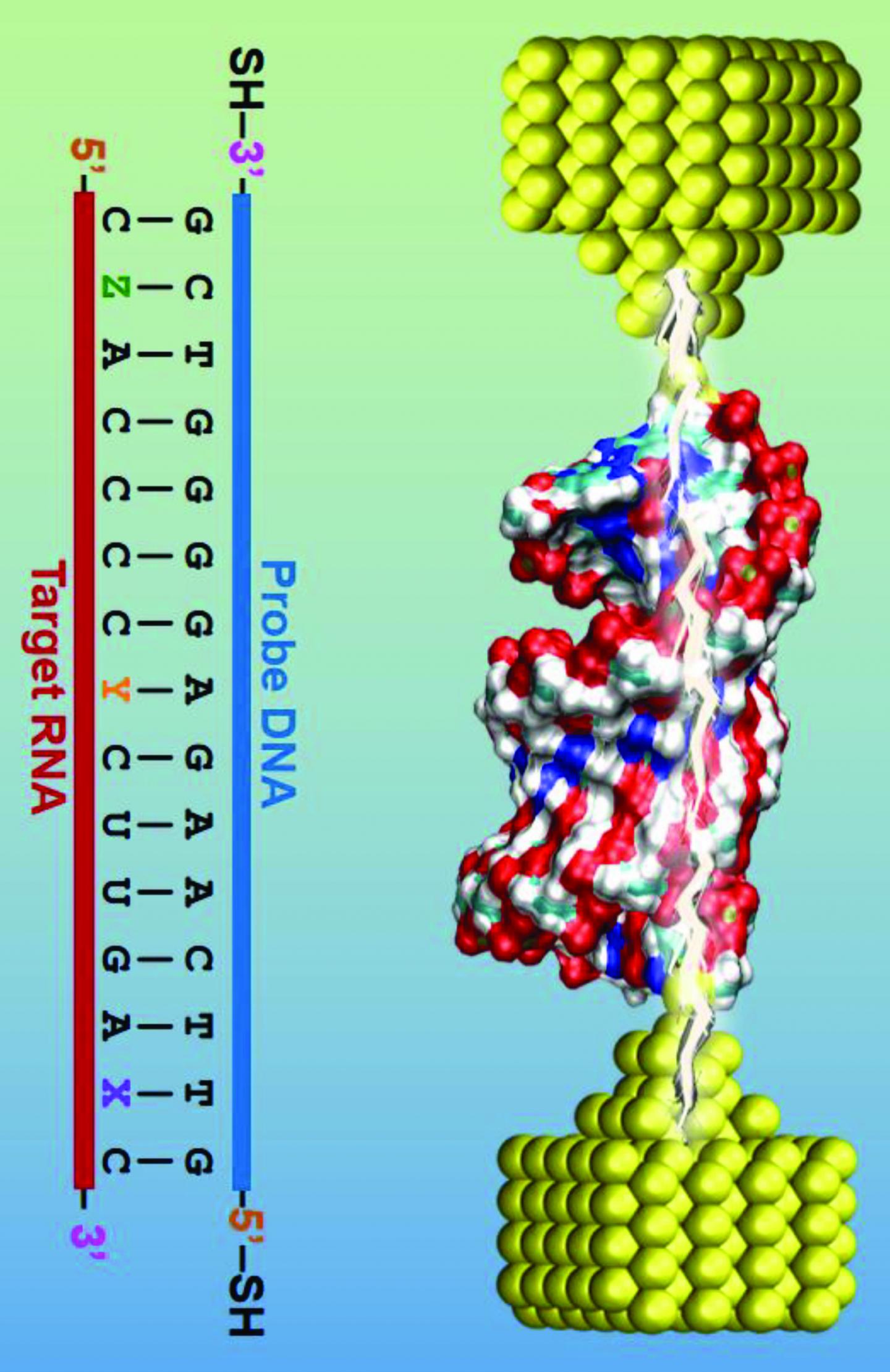
IMAGE

Credit: Josh Hihath/UC Davis

Finding a fast and inexpensive way to detect specific strains of bacteria and viruses is critical to food safety, water quality, environmental protection and human health. However, current methods for detecting illness-causing strains of bacteria such as E. coli require either time-intensive biological cell cultures or DNA amplification approaches that rely on expensive laboratory equipment.

Now, Josh Hihath, an associate professor of electrical and computer engineering at the University of California, Davis, and colleagues at the University of Washington and TOBB University of Economics and Technology in Ankara, Turkey have adapted a molecular electronic device called a single-molecule break junction to detect RNA from strains of E. coli known for causing illness. The findings were published online today (Nov. 5) in the journal Nature Nanotechnology.

"The reliable, efficient and inexpensive detection and identification of specific strains of microorganisms such as E. coli is a grand challenge in biology and the health sciences," said Hihath. "Our technique could pave the way for rapid, straightforward detection of pathogens, antimicrobial resistant bacterial strains and biomarkers for cancer."

Hihath and his team focused on E. coli since it is a common pathogen that could easily be found in the food supply, but might not cause illness in a benign form. The worst strain of E. coli, called E. coli O157:H7, produces a toxic substance called Shiga toxin that causes bloody diarrhea, kidney failure and even death.

Single-molecule break junction devices consist of two metal electrodes with atomically sharp interfaces that are brought into contact in a liquid solution of interest, such as a solution containing RNA sequences from E.coli. As the electrodes are brought into contact and pulled apart, an electrical bias is applied and the current is measured. This process is repeated hundreds or thousands of times to determine the conductance of a single molecule.

"One of the questions we asked is how small of a change in the sequence is needed to cause a meaningful change in the electrical conductance?" said Hihath. "The smallest thing we can change is a single-base, so we decided to see if a single-base change can be measured."

By testing short sequences of RNA bound to DNA with chemical linkers, the team examined an E. coli sequence that would produce Shiga toxin. Their findings showed that changes in the electrical resistance of RNA due to a single-base change could be measured, which would allow them to see not only if a sequence was E.coli, but the specific strain of E.coli that produces Shiga toxin.

"A system that could selectively identify short sequences of DNA or RNA opens up new avenues for developing an electronic sensor platform for a wide range of applications," he adds. "Eventually, we want to get to the point where we can extract RNA samples from real organisms and measure their conductance on a sensing platform."

###

This work was supported in part by the National Science Foundation.

Media Contact

Andy Fell
[email protected]
530-752-4533
@ucdavisnews

http://www.ucdavis.edu

Original Source

http://blogs.ucdavis.edu/egghead/2018/11/05/detecting-e-coli-strains-using-molecular-electronics/ http://dx.doi.org/10.1038/s41565-018-0285-x

Share12Tweet8Share2ShareShareShare2

Related Posts

Breakthrough Genetic Discoveries Unveil New Perspectives on Developmental Dysplasia of the Hip

Breakthrough Genetic Discoveries Unveil New Perspectives on Developmental Dysplasia of the Hip

April 21, 2026
Mars Rover Discovers Novel Organic Compounds in Groundbreaking Experiment

Mars Rover Discovers Novel Organic Compounds in Groundbreaking Experiment

April 21, 2026

Unlocking Pain and Epilepsy: New Insights from the Molecular Keyhole

April 21, 2026

How the Liver’s Internal Clock Regulates Daily Fat Secretion

April 20, 2026
Please login to join discussion

POPULAR NEWS

  • Research Indicates Potential Connection Between Prenatal Medication Exposure and Elevated Autism Risk

    766 shares
    Share 306 Tweet 192
  • Scientists Investigate Possible Connection Between COVID-19 and Increased Lung Cancer Risk

    65 shares
    Share 26 Tweet 16
  • Salmonella Haem Blocks Macrophages, Boosts Infection

    56 shares
    Share 22 Tweet 14
  • NSF funds machine-learning research at UNO and UNL to study energy requirements of walking in older adults

    101 shares
    Share 40 Tweet 25

About

We bring you the latest biotechnology news from best research centers and universities around the world. Check our website.

Follow us

Recent News

Early Immune Responses Associated with Protective HIV Antibodies

Breakthrough Genetic Discoveries Unveil New Perspectives on Developmental Dysplasia of the Hip

Macronutrient, Bioactive Differences in Commercial vs Non-Profit Donor Milk

Subscribe to Blog via Email

Enter your email address to subscribe to this blog and receive notifications of new posts by email.

Join 79 other subscribers
  • Contact Us

Bioengineer.org © Copyright 2023 All Rights Reserved.

Welcome Back!

Login to your account below

Forgotten Password?

Retrieve your password

Please enter your username or email address to reset your password.

Log In
No Result
View All Result
  • Homepages
    • Home Page 1
    • Home Page 2
  • News
  • National
  • Business
  • Health
  • Lifestyle
  • Science

Bioengineer.org © Copyright 2023 All Rights Reserved.