• HOME
  • NEWS
  • EXPLORE
    • CAREER
      • Companies
      • Jobs
    • EVENTS
    • iGEM
      • News
      • Team
    • PHOTOS
    • VIDEO
    • WIKI
  • BLOG
  • COMMUNITY
    • FACEBOOK
    • INSTAGRAM
    • TWITTER
Saturday, February 7, 2026
BIOENGINEER.ORG
No Result
View All Result
  • Login
  • HOME
  • NEWS
  • EXPLORE
    • CAREER
      • Companies
      • Jobs
        • Lecturer
        • PhD Studentship
        • Postdoc
        • Research Assistant
    • EVENTS
    • iGEM
      • News
      • Team
    • PHOTOS
    • VIDEO
    • WIKI
  • BLOG
  • COMMUNITY
    • FACEBOOK
    • INSTAGRAM
    • TWITTER
  • HOME
  • NEWS
  • EXPLORE
    • CAREER
      • Companies
      • Jobs
        • Lecturer
        • PhD Studentship
        • Postdoc
        • Research Assistant
    • EVENTS
    • iGEM
      • News
      • Team
    • PHOTOS
    • VIDEO
    • WIKI
  • BLOG
  • COMMUNITY
    • FACEBOOK
    • INSTAGRAM
    • TWITTER
No Result
View All Result
Bioengineer.org
No Result
View All Result
Home NEWS Science News Biology

What’s in the air? There’s more to it than we thought

Bioengineer by Bioengineer
November 2, 2018
in Biology
Reading Time: 2 mins read
0
Share on FacebookShare on TwitterShare on LinkedinShare on RedditShare on Telegram
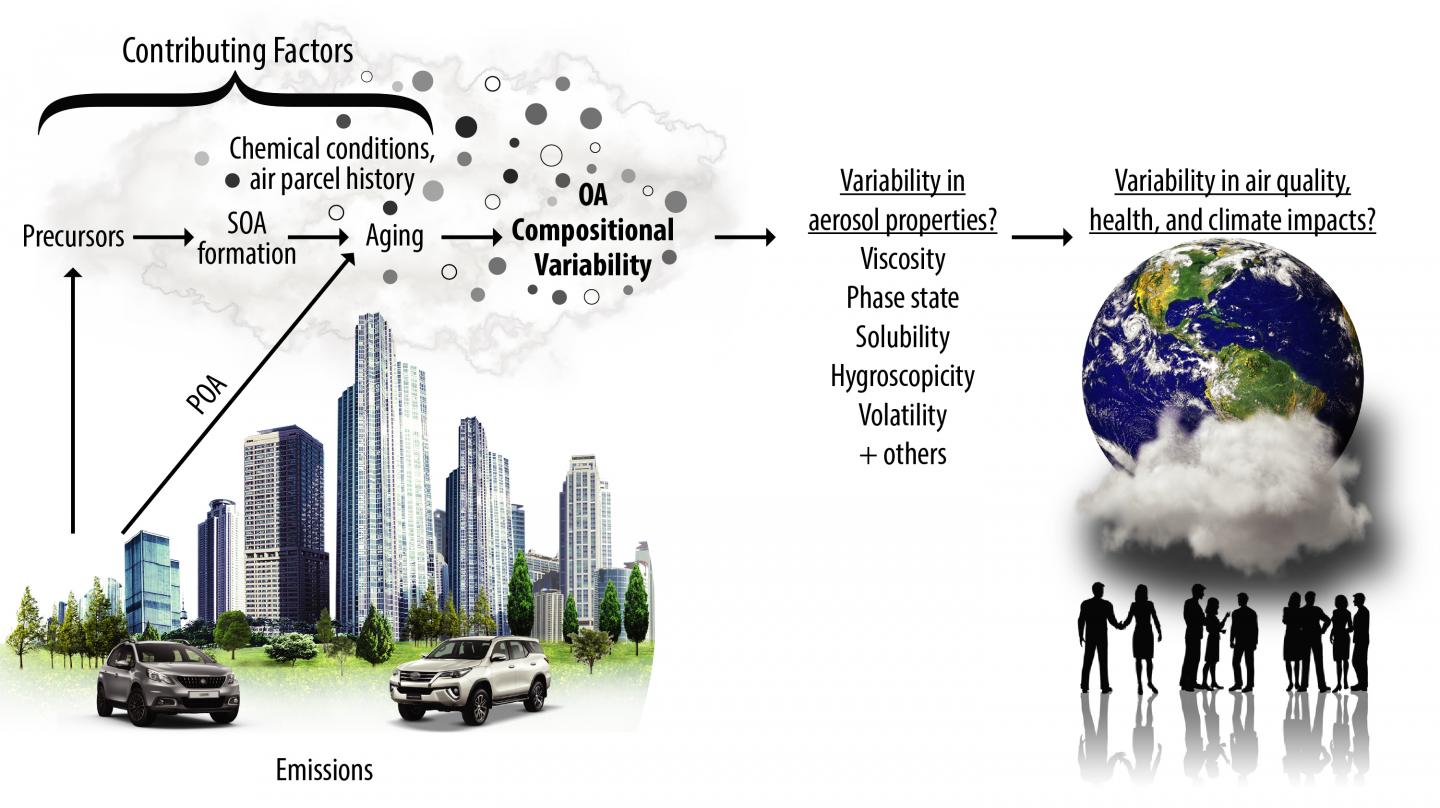
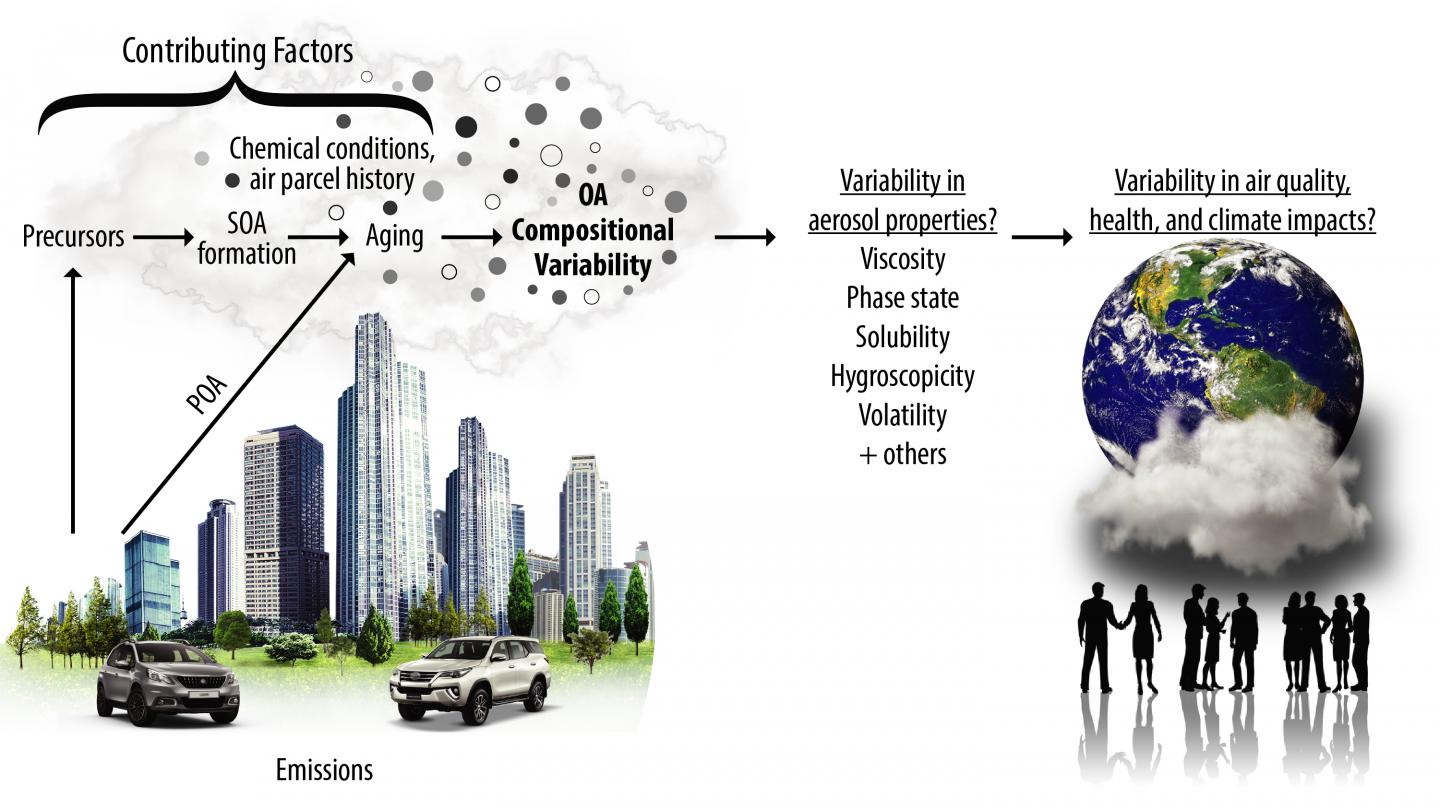
IMAGE

Credit: Yale University

New Haven, Conn. – Yale researchers have found that a type of air pollution is much more complicated than previous studies indicated.

Using high-powered equipment to analyze air samples, the researchers were able to get a detailed look at the molecular makeup of organic aerosols, which have a significant presence in the atmosphere. Posing risks to health and climate, these airborne particles generally fall into two categories: Primary organic aerosols that can form during combustion, such as in car and truck exhaust, and secondary organic aerosols that result from oxidation of organic gases and particles in the air.

For the study, published Nov. 2 in Nature's Communications Chemistry, the researchers used a combination of liquid chromatography, which separates thousands of compounds in a sample, and a mass spectrometer, which identifies and analyzes those compounds.

"Here, we can actually differentiate molecules that would otherwise appear to be very similar," said the study's senior author, Drew Gentner, assistant professor of chemical & environmental engineering. "In past studies, they had less information on molecular identities across the complex mixtures present. With these instruments, we can determine molecular formulas with more accuracy."

That's a significant advancement, the researchers note, since knowing what harmful elements are in the air is critical to finding ways to reduce them, added Gentner.

"If you develop an air pollution control policy based on less specific information for organic aerosol, there may be much more variability in the molecular-level composition than you might expect, which could influence aerosol properties and impacts," said Jenna Ditto, a Ph.D. candidate in Gentner's lab and lead author of the study.

Collected over three weeks at each site in the summer, samples were taken from a forest in Michigan, and from urban environments in Atlanta and New York City. Most surprising, said the researchers, were the variations they saw in samples taken from the same sites. In most cases, up to 70% of the compounds at a site were distinct from each other in consecutive samples.

Even if certain causes remain constant, the researchers said, a number of factors could be driving the variability. "The different types of compounds emitted from cars and plants could vary from car to car or tree to tree," Ditto said.

Other factors, such as weather patterns and chemical oxidation conditions can also change. Individually, these variations are usually slight, but they can add up to significant differences, said the researchers.

Building off of this study, the researchers said they expect to analyze the results further to get a better sense of what types of health and climate effects these variabilities may pose.

"There's a wealth of information in these details for the field to use," Gentner said. "There's valuable data that you can capitalize on to understand what's happening in the whole complex system."

###

Media Contact

William Weir
[email protected]
203-432-0105
@yale

http://www.yale.edu

Related Journal Article

http://dx.doi.org/10.1038/s42004-018-0074-3

Share12Tweet8Share2ShareShareShare2

Related Posts

Florida Cane Toad: Complex Spread and Selective Evolution

Florida Cane Toad: Complex Spread and Selective Evolution

February 7, 2026
New Study Uncovers Mechanism Behind Burn Pit Particulate Matter–Induced Lung Inflammation

New Study Uncovers Mechanism Behind Burn Pit Particulate Matter–Induced Lung Inflammation

February 6, 2026

DeepBlastoid: Advancing Automated and Efficient Evaluation of Human Blastoids with Deep Learning

February 6, 2026

Navigating the Gut: The Role of Formic Acid in the Microbiome

February 6, 2026
Please login to join discussion

POPULAR NEWS

  • Robotic Ureteral Reconstruction: A Novel Approach

    Robotic Ureteral Reconstruction: A Novel Approach

    82 shares
    Share 33 Tweet 21
  • Digital Privacy: Health Data Control in Incarceration

    63 shares
    Share 25 Tweet 16
  • Study Reveals Lipid Accumulation in ME/CFS Cells

    57 shares
    Share 23 Tweet 14
  • Breakthrough in RNA Research Accelerates Medical Innovations Timeline

    53 shares
    Share 21 Tweet 13

About

We bring you the latest biotechnology news from best research centers and universities around the world. Check our website.

Follow us

Recent News

Decoding Prostate Cancer Origins via snFLARE-seq, mxFRIZNGRND

Digital Health Perspectives from Baltic Sea Experts

Florida Cane Toad: Complex Spread and Selective Evolution

Subscribe to Blog via Email

Enter your email address to subscribe to this blog and receive notifications of new posts by email.

Join 73 other subscribers
  • Contact Us

Bioengineer.org © Copyright 2023 All Rights Reserved.

Welcome Back!

Login to your account below

Forgotten Password?

Retrieve your password

Please enter your username or email address to reset your password.

Log In
No Result
View All Result
  • Homepages
    • Home Page 1
    • Home Page 2
  • News
  • National
  • Business
  • Health
  • Lifestyle
  • Science

Bioengineer.org © Copyright 2023 All Rights Reserved.