Credit: Virginia Tech Carilion Research Institute
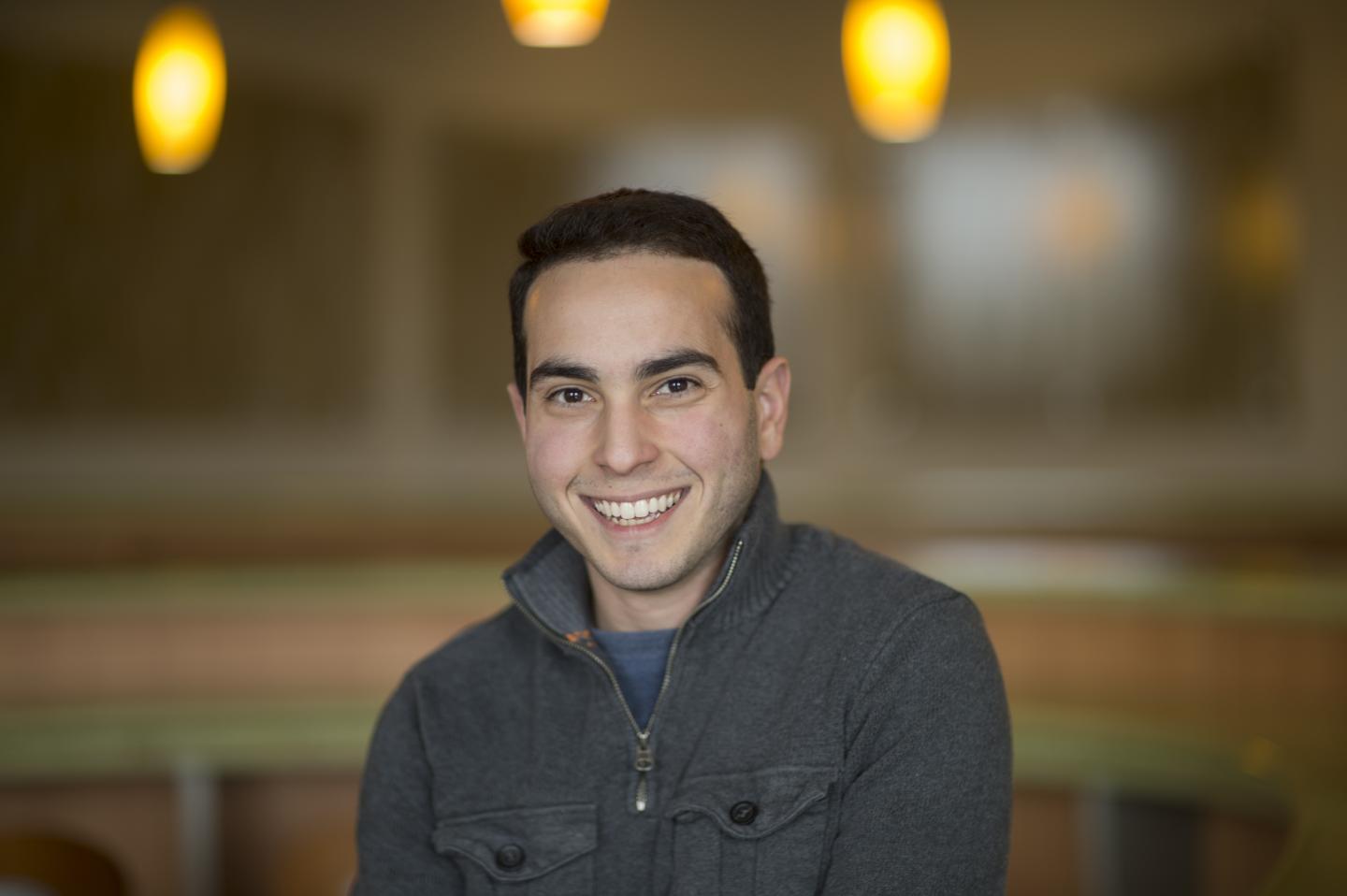
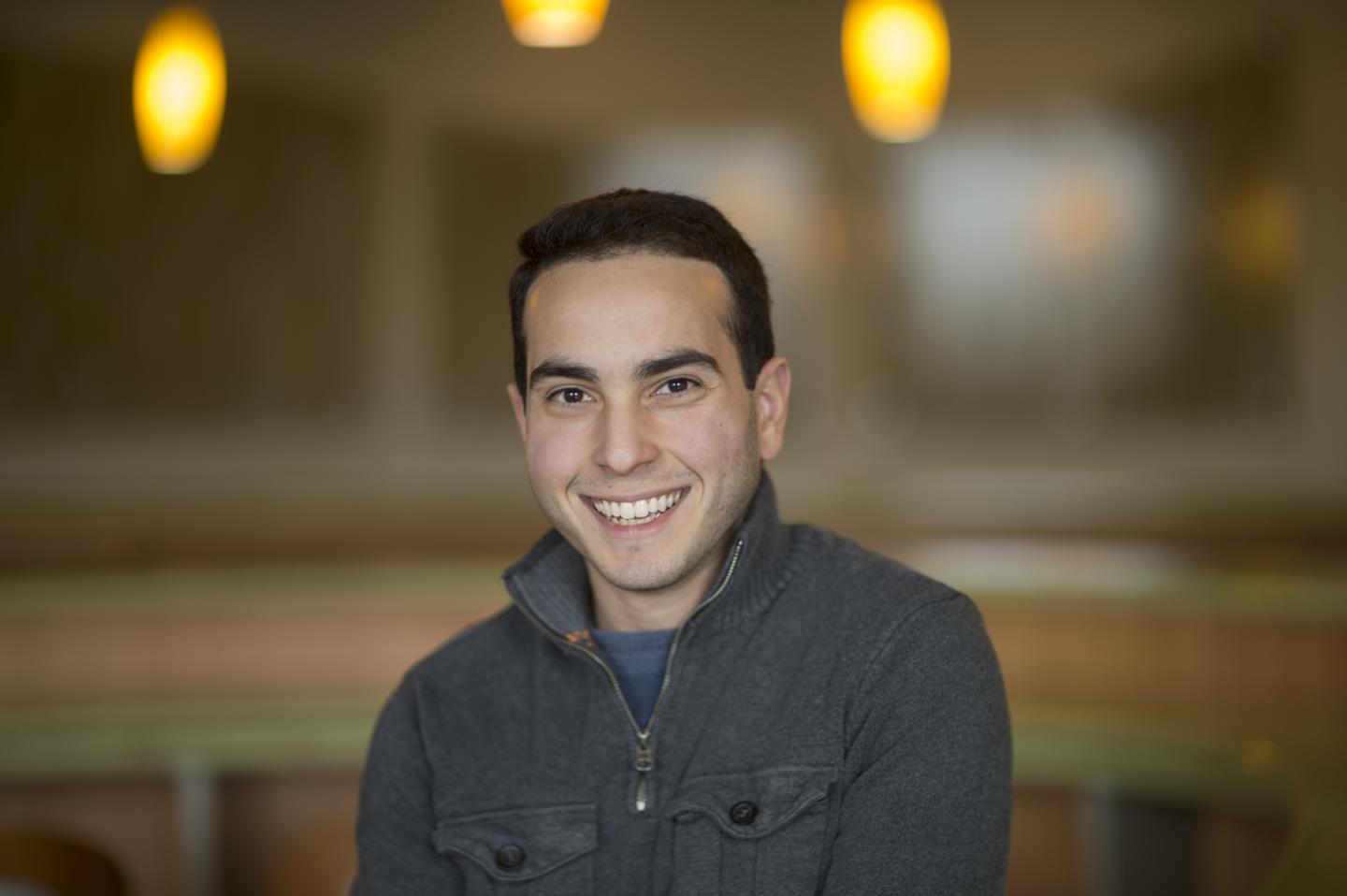
Ubadah Sabbagh, a doctoral student in Virginia Tech's Translational Biology, Medicine, and Health (TBMH) Graduate Program, was one of 15 graduate students and postdoctoral researchers named as a Society for Neuroscience fellow this year. He will be recognized at the Society's annual conference, held this year in San Diego, California, from Nov. 3 through Nov. 7.
Sabbagh conducts his dissertation research in the laboratory of Michael Fox, an associate professor at the Virginia Tech Carilion Research Institute and the director of the VTCRI Developmental and Translational Neurobiology Center. Fox is also an associate professor in the Department of Biological Sciences in Virginia Tech's College of Science. Under Fox's mentorship, Sabbagh studies how neural circuits associated with the visual system develop.
"Ubadah is an exceptional trainee," Fox said. "Not only is he intellectually engaged in the lab and with his science, but he contributes significantly to science outreach and policy. In this manner, he contributes to many of the missions of the Society for Neuroscience. We are very proud that Ubadah gets to represent our lab and VTCRI as an SfN Neuroscience Scholars Fellow."
The fellowshipis a part of the Society for Neuroscience's two-year training initiative called the Neuroscience Scholars Program, which aims to provide support for underrepresented and diverse neuroscience graduate students and postdoctoral associates. All qualified applicants are given access to webinars and an online mentorship community, but only 15 are selected as fellows to be paired with senior mentors, receive two years of complimentary membership, and awarded funding to attend the Society for Neuroscience annual meetings as well as other neuroscience conferences.
"It's an incredible opportunity to learn not only from established scientists, but also from my fellow trainees," Sabbagh said. "By the end of the two-year fellowship, I hope to be a more well-rounded researcher and to have cultivated professional relationships that will last my career."
Sabbagh was matched to mentor Gabriel Kreiman, an associate professor in the Department of Ophthalmology at Harvard Medical School, who he will meet in person for the first time at the Society for Neuroscience annual meeting. Krieman, who also holds appointments in Harvard University's Center for Brain Science and the Program in Neuroscience, studies visual recognition systems, learning, and memory in the brain to understand how neural circuits compute with the goal of informing biologically-inspired artificial intelligence systems.
"Navigating the path of hypothesis generation, choosing scientific problems, selecting a lab, conducting research, and publishing manuscripts can be fascinating, but also daunting. I hope that sharing some of our experiences can help enhance success," said Kreiman, who noted that he's excited to be a part of the mentorship program and to help guide the next generation of scholars in neuroscience. "One of the greatest pleasures of academia is seeing your mentees thrive in their own careers."
Along with the additional mentorship and peer networking, Sabbagh also has access to grant development experts to review and help strengthen his grant proposals as he applies for research funding.
"That's an important aspect of professional development in research – funding moves the science forward," Sabbagh said. "Grant writing takes practice and editing; gaining insight from the people who do this professionally is invaluable."
Sabbagh also plans to make good use of the funding available for conference attendance.
"Of course, the world is smaller now, we can tweet, email, and Skype with scientists pretty much anywhere, but there's no substitute I know of for those in-person connections you can make that can lead to great scientific collaborations," Sabbagh said.
Sabbagh, a permanent resident of the United States, is originally from Syria.
"There are so many international conferences relevant to my field I can't risk attending due to the current travel bans," Sabbagh said. "With this extra funding, though, I can attend more conferences in the United States and, hopefully, still make collaborative connections."
Eventually, Sabbagh said, he'd like to become a professor and mentor himself.
"I know the value of good mentorship, and how it contributes to the scientific enterprise at large," Sabbagh said. "A goal of mine is to learn from this experience how to be a better mentor, one who will empower more diverse and underrepresented people to become leaders in science. I'm grateful for and honored by such an opportunity to grow."
###
Media Contact
Ashley WennersHerron
[email protected]
540-526-2002
@vtnews
http://www.vtnews.vt.edu
Original Source
https://research.vtc.vt.edu/news/2018/nov/02/roanoke-based-virginia-tech-graduate-student-selec/