• HOME
  • NEWS
  • EXPLORE
    • CAREER
      • Companies
      • Jobs
    • EVENTS
    • iGEM
      • News
      • Team
    • PHOTOS
    • VIDEO
    • WIKI
  • BLOG
  • COMMUNITY
    • FACEBOOK
    • INSTAGRAM
    • TWITTER
Monday, October 5, 2026
BIOENGINEER.ORG
No Result
View All Result
  • Login
  • HOME
  • NEWS
  • EXPLORE
    • CAREER
      • Companies
      • Jobs
        • Lecturer
        • PhD Studentship
        • Postdoc
        • Research Assistant
    • EVENTS
    • iGEM
      • News
      • Team
    • PHOTOS
    • VIDEO
    • WIKI
  • BLOG
  • COMMUNITY
    • FACEBOOK
    • INSTAGRAM
    • TWITTER
  • HOME
  • NEWS
  • EXPLORE
    • CAREER
      • Companies
      • Jobs
        • Lecturer
        • PhD Studentship
        • Postdoc
        • Research Assistant
    • EVENTS
    • iGEM
      • News
      • Team
    • PHOTOS
    • VIDEO
    • WIKI
  • BLOG
  • COMMUNITY
    • FACEBOOK
    • INSTAGRAM
    • TWITTER
No Result
View All Result
Bioengineer.org
No Result
View All Result
Home NEWS Science News

Artificial intelligence bot trained to recognize galaxies

Bioengineer by Bioengineer
October 31, 2018
in Science News
Reading Time: 3 mins read
0
Share on FacebookShare on TwitterShare on LinkedinShare on RedditShare on Telegram
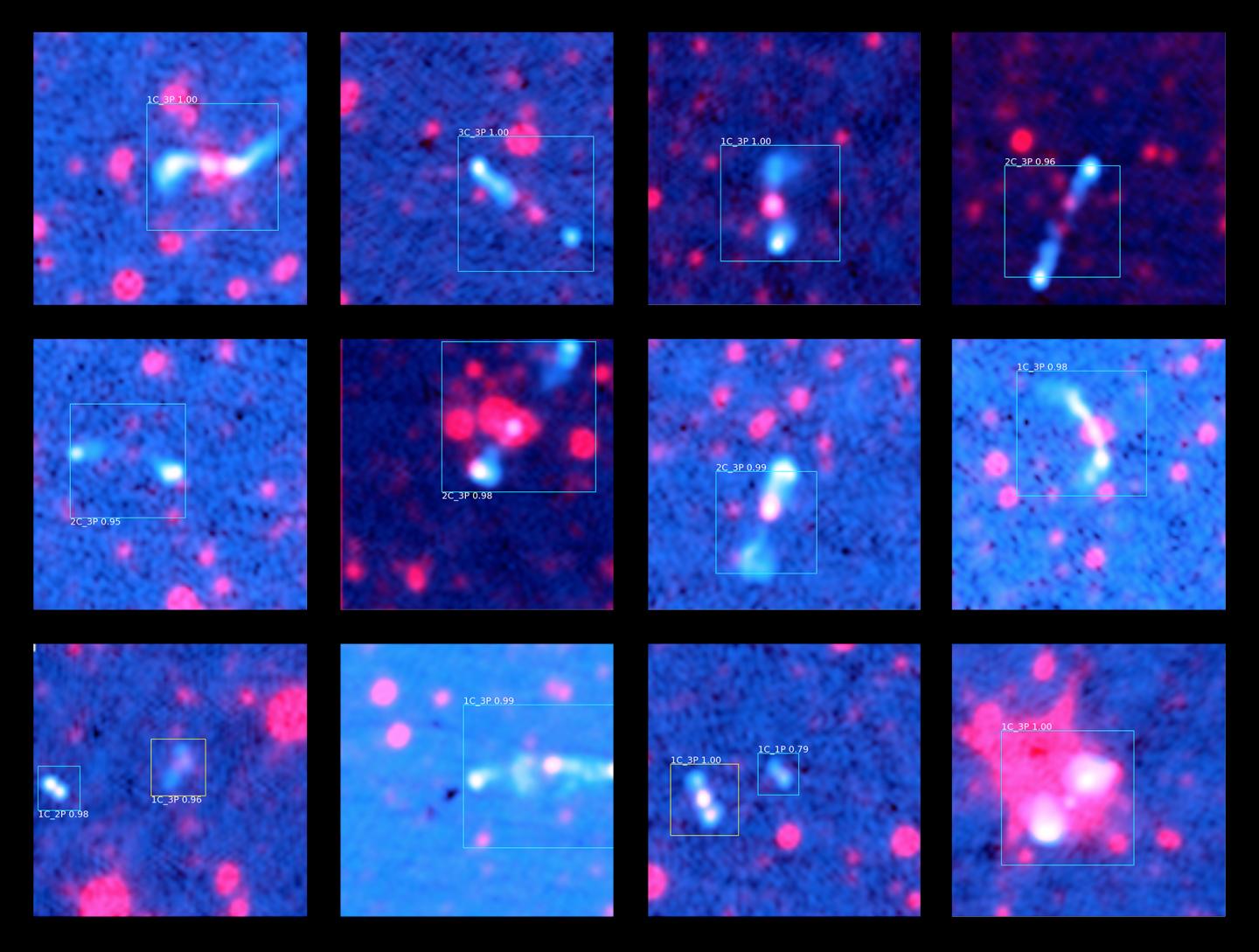
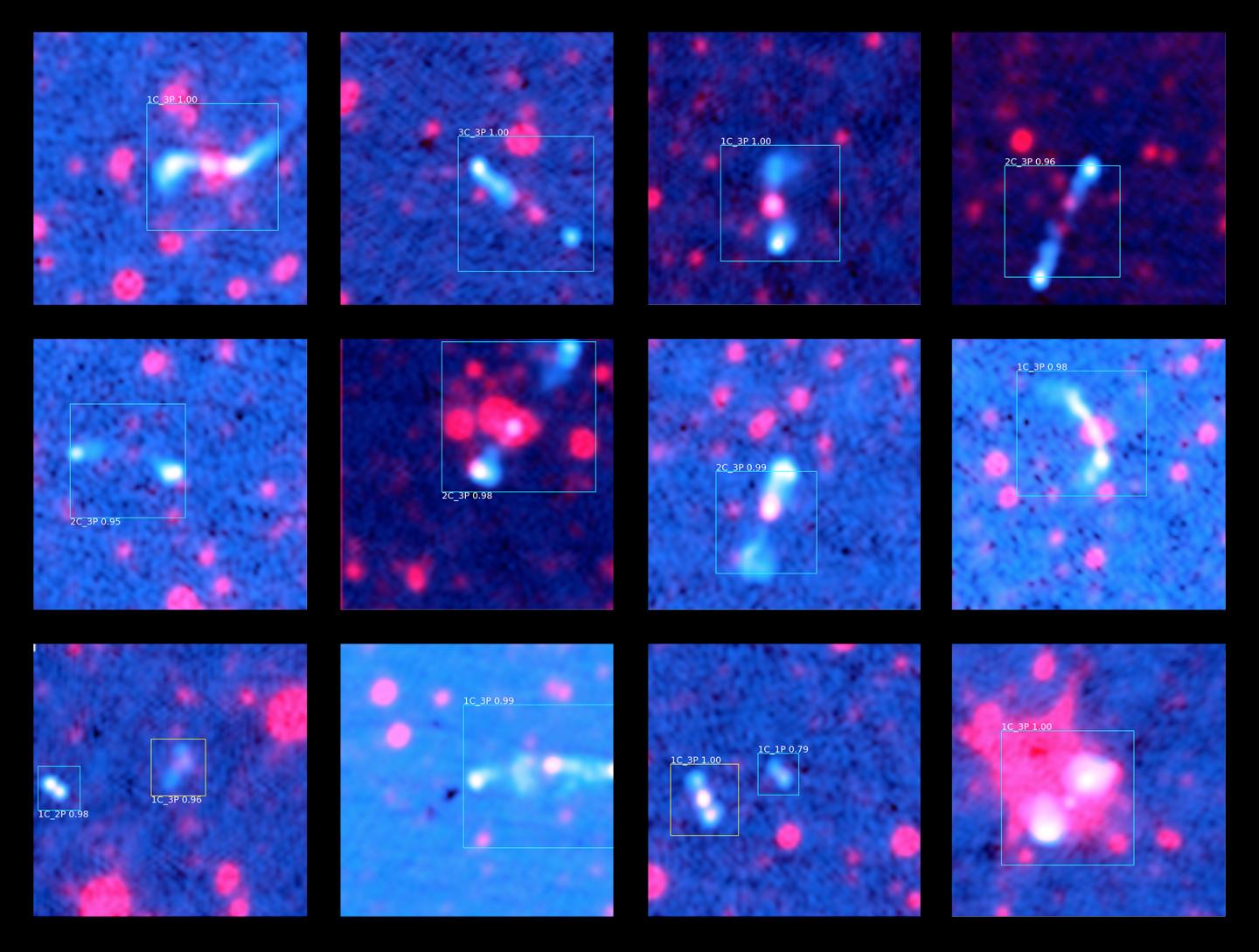
IMAGE

Credit: Dr. Chen Wu and Dr. Ivy Wong, ICRAR/UWA.

Researchers have taught an artificial intelligence program used to recognise faces on Facebook to identify galaxies in deep space.

The result is an AI bot named ClaRAN that scans images taken by radio telescopes.

Its job is to spot radio galaxies–galaxies that emit powerful radio jets from supermassive black holes at their centres.

ClaRAN is the brainchild of big data specialist Dr Chen Wu and astronomer Dr Ivy Wong, both from The University of Western Australia node of the International Centre for Radio Astronomy Research (ICRAR).

Dr Wong said black holes are found at the centre of most, if not all, galaxies.

"These supermassive black holes occasionally burp out jets that can be seen with a radio telescope," she said.

"Over time, the jets can stretch a long way from their host galaxies, making it difficult for traditional computer programs to figure out where the galaxy is.

"That's what we're trying to teach ClaRAN to do."

Dr Wu said ClaRAN grew out of an open source version of Microsoft and Facebook's object detection software.

He said the program was completely overhauled and trained to recognise galaxies instead of people.

ClaRAN itself is also open source and publicly available on GitHub.

Dr Wong said the upcoming EMU survey using the WA-based Australian Square Kilometre Array Pathfinder (ASKAP) telescope is expected to observe up to 70 million galaxies across the history of the Universe.

She said traditional computer algorithms are able to correctly identify 90 per cent of the sources.

"That still leaves 10 per cent, or seven million 'difficult' galaxies that have to be eyeballed by a human due to the complexity of their extended structures," Dr Wong said.

Dr Wong has previously harnessed the power of citizen science to spot galaxies through the Radio Galaxy Zoo project.

"If ClaRAN reduces the number of sources that require visual classification down to one per cent, this means more time for our citizen scientists to spend looking at new types of galaxies," she said.

A highly-accurate catalogue produced by Radio Galaxy Zoo volunteers was used to train ClaRAN how to spot where the jets originate.

Dr Wu said ClaRAN is an example of a new paradigm called 'programming 2.0'.

"All you do is set up a huge neural network, give it a ton of data, and let it figure out how to adjust its internal connections in order to generate the expected outcome," he said.

"The new generation of programmers spend 99 per cent of their time crafting the best quality data sets and then train the AI algorithms to optimise the rest.

"This is the future of programming."

Dr Wong said ClaRAN has huge implications for how telescope observations are processed.

"If we can start implementing these more advanced methods for our next generation surveys, we can maximise the science from them," she said.

"There's no point using 40-year-old methods on brand new data, because we're trying to probe further into the Universe than ever before."

###

A research paper on ClaRAN was released today in Monthly Notices of the Royal Astronomical Society, published by Oxford University Press.

ICRAR

The International Centre for Radio Astronomy Research (ICRAR) is a joint venture between Curtin University and The University of Western Australia with support and funding from the State Government of Western Australia. http://www.icrar.org

Media Contact

Kirsten Gottschalk
[email protected]
61-438-361-876
@icrar

Home

Share12Tweet8Share2ShareShareShare2

Related Posts

Moderate Drought Is the Sweet Spot That Makes Bougainvillea Bloom, Study Finds

Moderate Drought Is the Sweet Spot That Makes Bougainvillea Bloom, Study Finds

October 5, 2026
Head Lice in Thai Schools Carry Mutations Linked to Pyrethroid Resistance

Head Lice in Thai Schools Carry Mutations Linked to Pyrethroid Resistance

October 5, 2026

AI Reads Ultrasound and MRI Together to Predict Breast Cancer Subtypes Without a Biopsy

October 5, 2026

Gut Bacteria Recipe Turns Ordinary Liberica Coffee Into Award-Winning Specialty Beans

October 5, 2026
Please login to join discussion

POPULAR NEWS

  • Alloys That Shrink Their Own Grains: New PIX Mechanism Refines Metals With Heat Alone

    Alloys That Shrink Their Own Grains: New PIX Mechanism Refines Metals With Heat Alone

    29 shares
    Share 12 Tweet 7
  • Endurance Exercise Reshapes the Liver in Males and Females Through Distinct Molecular Routes

    29 shares
    Share 12 Tweet 7
  • Single Transcription Factor PU.1 Rapidly Converts Fibroblasts into Macrophage-Lineage Cells

    29 shares
    Share 12 Tweet 7
  • New Scale Measures How Ready Nurse Educators Really Are for the AI Era

    29 shares
    Share 12 Tweet 7

About

We bring you the latest biotechnology news from best research centers and universities around the world. Check our website.

Follow us

Recent News

Alloys That Shrink Their Own Grains: New PIX Mechanism Refines Metals With Heat Alone

Endurance Exercise Reshapes the Liver in Males and Females Through Distinct Molecular Routes

Single Transcription Factor PU.1 Rapidly Converts Fibroblasts into Macrophage-Lineage Cells

Subscribe to Blog via Email

Success! An email was just sent to confirm your subscription. Please find the email now and click 'Confirm' to start subscribing.

Join 85 other subscribers
  • Contact Us

Bioengineer.org © Copyright 2023 All Rights Reserved.

Welcome Back!

Login to your account below

Forgotten Password?

Retrieve your password

Please enter your username or email address to reset your password.

Log In
No Result
View All Result
  • Homepages
    • Home Page 1
    • Home Page 2
  • News
  • National
  • Business
  • Health
  • Lifestyle
  • Science

Bioengineer.org © Copyright 2023 All Rights Reserved.