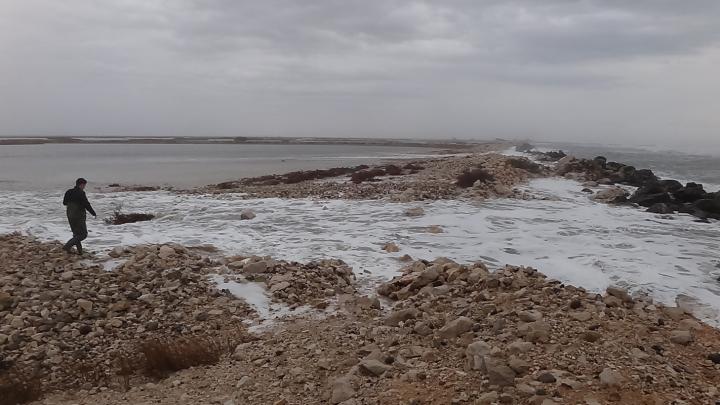
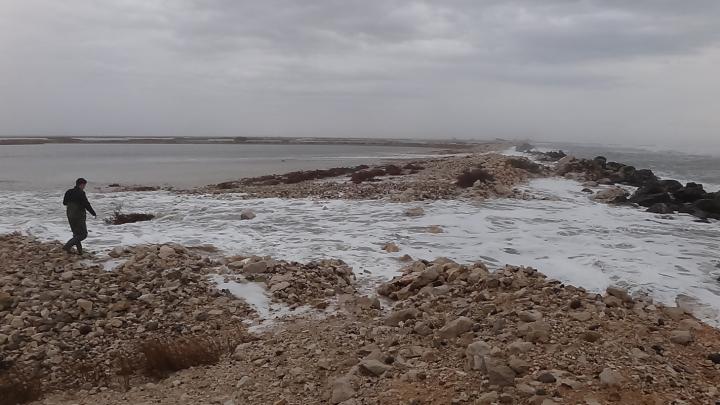
Credit: Photograph courtesy: Sarah St.Arnaud, Tour du Valat, Arles, France
As the Mediterranean Basin is experiencing the impact of climate change more than ever, an international network of scientists has worked together to synthesize the effects of climate change and environmental problems, as well as the incurred risks, in the region, to facilitate decision-making in addressing the issues.
This first-ever synthesis of multiple environmental changes and risks affecting the livelihoods of people in the entire region has just been published in the latest issue of Nature Climate Change.
The rates of climate change observed in the Mediterranean Basin exceed the global trends for most variables. The impact has further exacerbated the existing environmental problems caused by land use changes such as urbanization and agricultural intensification, increasing pollution and declining biodiversity.
Led by Professor Dr Wolfgang Cramer from the Mediterranean Institute for Biodiversity and Ecology, an international team of scientists has just published a review article in Nature Climate Change to address the current and future risks related to these changes, titled "Climate change and interconnected risks to sustainable development in the Mediterranean".
Professor Michael Tsimplis from the School of Law at City University of Hong Kong who is part of the international team and has multidisciplinary background with research in oceanography and climate change said, "this paper suggests that the risks posed by climate change in the Mediterranean Sea were underestimated because each was only examined independently. But in reality, they are interconnected and interact with social and economic problems exacerbating their impacts. So they all have to be addressed at the same time and within the same financial constraints."
The paper reviews the various environmental changes and the risks posed by these changes in the five major interconnected domains, namely water resources, ecosystems, food safety and security, health, and human security.
For an instance, average temperatures in this region have already risen by 1.4°C since the pre-industrial era, 0.4°C more than the global average. Even if future global warming is limited to 2°C, as prescribed by the Paris Agreement, summer rainfall is at risk to be reduced by 10 to 30% in some regions, thereby enhancing existing water shortages and decreasing agricultural productivity, particularly in southern countries.
Due to climate change alone, the irrigation demands in the region are projected to increase between 4 and 18% by the end of the century. Population growth may escalate these numbers furthers to 22-74%. Tourism development, new industries and urban sprawl may increase water pollution, too.
The acidification of sea water, increasing heatwaves in combination with drought and land-use change also affect the natural ecosystems, posing risks in biodiversity and fisheries.
Food production from agriculture and fisheries across the Mediterranean region is also changing due to the social, economic and environmental changes. Combined with the ongoing switch to more animal-based food production, southern countries are at risk to increase their dependence on trade.
Public health is impacted by multiple trends of change, through heat waves, pollution (higher risk of cardiovascular or respiratory diseases), and the increased spread of disease vectors (West Nile virus, Dengue, Chikungunya). In politically unstable countries, environmental change is an increasingly relevant factor for socio-economic risks, due to famines, migration and conflict. Human security will also be threatened due to extreme weather, such as a rise in sea level posing a higher risk of storm surges for people living in coastal areas in the region.
To facilitate decision-making in the face of these risks, the authors call for a pan-Mediterranean integrated risk assessment. Therefore, the Mediterranean Experts on Climate and Environmental Change (MedECC) network has been established, currently involving 400 scientific experts, supported by government agencies and other partners, to produce a full synthesis of risks and present it to decision makers for debate and approval.
###
Media Contact
P.K. Lee
[email protected]
852-344-28925
Related Journal Article
http://dx.doi.org/10.1038/s41558-018-0299-2