• HOME
  • NEWS
  • EXPLORE
    • CAREER
      • Companies
      • Jobs
    • EVENTS
    • iGEM
      • News
      • Team
    • PHOTOS
    • VIDEO
    • WIKI
  • BLOG
  • COMMUNITY
    • FACEBOOK
    • INSTAGRAM
    • TWITTER
Saturday, February 7, 2026
BIOENGINEER.ORG
No Result
View All Result
  • Login
  • HOME
  • NEWS
  • EXPLORE
    • CAREER
      • Companies
      • Jobs
        • Lecturer
        • PhD Studentship
        • Postdoc
        • Research Assistant
    • EVENTS
    • iGEM
      • News
      • Team
    • PHOTOS
    • VIDEO
    • WIKI
  • BLOG
  • COMMUNITY
    • FACEBOOK
    • INSTAGRAM
    • TWITTER
  • HOME
  • NEWS
  • EXPLORE
    • CAREER
      • Companies
      • Jobs
        • Lecturer
        • PhD Studentship
        • Postdoc
        • Research Assistant
    • EVENTS
    • iGEM
      • News
      • Team
    • PHOTOS
    • VIDEO
    • WIKI
  • BLOG
  • COMMUNITY
    • FACEBOOK
    • INSTAGRAM
    • TWITTER
No Result
View All Result
Bioengineer.org
No Result
View All Result
Home NEWS Science News Health

Polymers offer a better view

Bioengineer by Bioengineer
October 24, 2018
in Health
Reading Time: 2 mins read
0
Share on FacebookShare on TwitterShare on LinkedinShare on RedditShare on Telegram
IMAGE

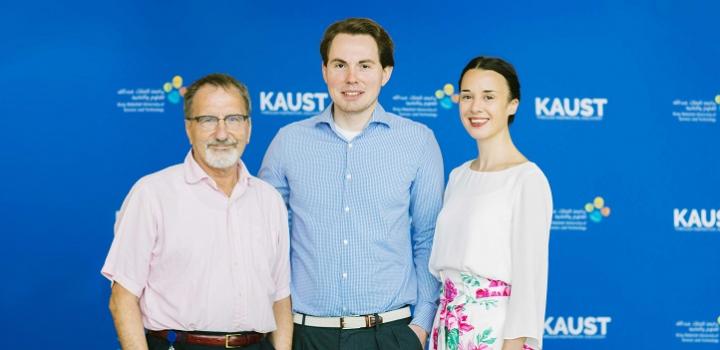
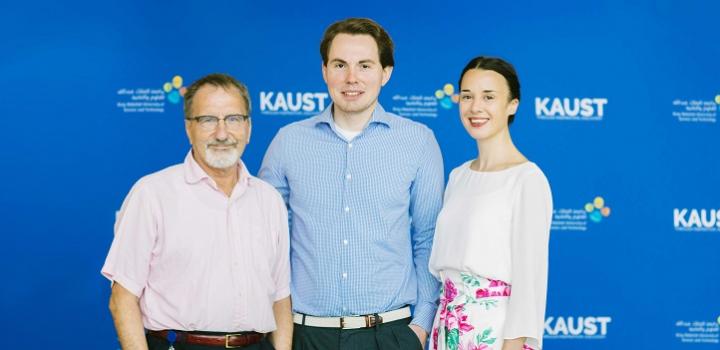
Credit: © 2018 KAUST

Improvements in how samples are prepared will add range and flexibility to a method that detects the location of selected molecules within a biological sample, such as a slice of tissue.

In the chemical analysis tool known as matrix-assisted laser-desorption/ionization mass spectrometry (MALDI MS), a laser beam kicks charged particles, known as ions, out of the sample. The ions are then fed through a mass spectrometer that detects them based on their mass. Repeating this process thousands of times, while the sample is moved in two dimensions, generates images that reveal the distribution of selected molecules throughout the sample. This process enables researchers to study the role of specific chemicals in biological and pathological applications.

Before the sample can be analyzed in this way, it must be embedded in a material called a matrix, but the small molecules generally used to form matrices impose limitations on the technique. Detecting metabolites, small molecules of biological and medical interest, has been particularly difficult due to interfering signals from molecules of the matrix.

Now a new class of matrices made of polymers that have larger molecules than conventional matrices has been developed by Dominik L. Michels from KAUST's Visual Computing Center together with former KAUST postdoctoral researcher Franziska Lissel, who is now a junior faculty researching at the Leibniz Institute of Polymer Research (IPF) in Germany. In addition, the KAUST Catalysis Center's Nikos Hadjichristidis was essential to the success of the project.

"This eliminates many of the disadvantages of small molecule matrices," says Lissel. She explains that the new polymer matrices enable the tracking of many more of the chemicals of interest in studying cancer as well as the location of drugs, which were previously unaccessible using MALDI imaging. "There are so many more research questions we can now explore," she adds.

One surprise for the researchers came when they realized that samples embedded in the polymer matrices could be examined for positively as well as negatively charged ions. This rare dual-mode analysis brings powerful increased flexibility to the procedure.

###

Media Contact

Carolyn Unck
[email protected]
966-054-470-0408

http://kaust.edu.sa/

Original Source

https://discovery.kaust.edu.sa/en/article/720/polymers-offer-a-better-view http://dx.doi.org/10.1021/jacs.8b06637


Share12Tweet7Share2ShareShareShare1

Related Posts

Phage-Antibiotic Combo Beats Resistant Peritoneal Infection

February 7, 2026

Boosting Remote Healthcare: Stepped-Wedge Trial Insights

February 7, 2026

Barriers and Boosters of Seniors’ Physical Activity in Karachi

February 7, 2026

Evaluating Pediatric Emergency Care Quality in Ethiopia

February 7, 2026
Please login to join discussion

POPULAR NEWS

  • Robotic Ureteral Reconstruction: A Novel Approach

    Robotic Ureteral Reconstruction: A Novel Approach

    82 shares
    Share 33 Tweet 21
  • Digital Privacy: Health Data Control in Incarceration

    63 shares
    Share 25 Tweet 16
  • Study Reveals Lipid Accumulation in ME/CFS Cells

    57 shares
    Share 23 Tweet 14
  • Breakthrough in RNA Research Accelerates Medical Innovations Timeline

    53 shares
    Share 21 Tweet 13

About

We bring you the latest biotechnology news from best research centers and universities around the world. Check our website.

Follow us

Recent News

Phage-Antibiotic Combo Beats Resistant Peritoneal Infection

Boosting Remote Healthcare: Stepped-Wedge Trial Insights

Barriers and Boosters of Seniors’ Physical Activity in Karachi

Subscribe to Blog via Email

Enter your email address to subscribe to this blog and receive notifications of new posts by email.

Join 73 other subscribers
  • Contact Us

Bioengineer.org © Copyright 2023 All Rights Reserved.

Welcome Back!

Login to your account below

Forgotten Password?

Retrieve your password

Please enter your username or email address to reset your password.

Log In
No Result
View All Result
  • Homepages
    • Home Page 1
    • Home Page 2
  • News
  • National
  • Business
  • Health
  • Lifestyle
  • Science

Bioengineer.org © Copyright 2023 All Rights Reserved.