• HOME
  • NEWS
  • EXPLORE
    • CAREER
      • Companies
      • Jobs
    • EVENTS
    • iGEM
      • News
      • Team
    • PHOTOS
    • VIDEO
    • WIKI
  • BLOG
  • COMMUNITY
    • FACEBOOK
    • INSTAGRAM
    • TWITTER
Saturday, February 7, 2026
BIOENGINEER.ORG
No Result
View All Result
  • Login
  • HOME
  • NEWS
  • EXPLORE
    • CAREER
      • Companies
      • Jobs
        • Lecturer
        • PhD Studentship
        • Postdoc
        • Research Assistant
    • EVENTS
    • iGEM
      • News
      • Team
    • PHOTOS
    • VIDEO
    • WIKI
  • BLOG
  • COMMUNITY
    • FACEBOOK
    • INSTAGRAM
    • TWITTER
  • HOME
  • NEWS
  • EXPLORE
    • CAREER
      • Companies
      • Jobs
        • Lecturer
        • PhD Studentship
        • Postdoc
        • Research Assistant
    • EVENTS
    • iGEM
      • News
      • Team
    • PHOTOS
    • VIDEO
    • WIKI
  • BLOG
  • COMMUNITY
    • FACEBOOK
    • INSTAGRAM
    • TWITTER
No Result
View All Result
Bioengineer.org
No Result
View All Result
Home NEWS Science News Health

New technique reveals limb control in flies — and maybe robots

Bioengineer by Bioengineer
October 22, 2018
in Health
Reading Time: 2 mins read
0
Share on FacebookShare on TwitterShare on LinkedinShare on RedditShare on Telegram
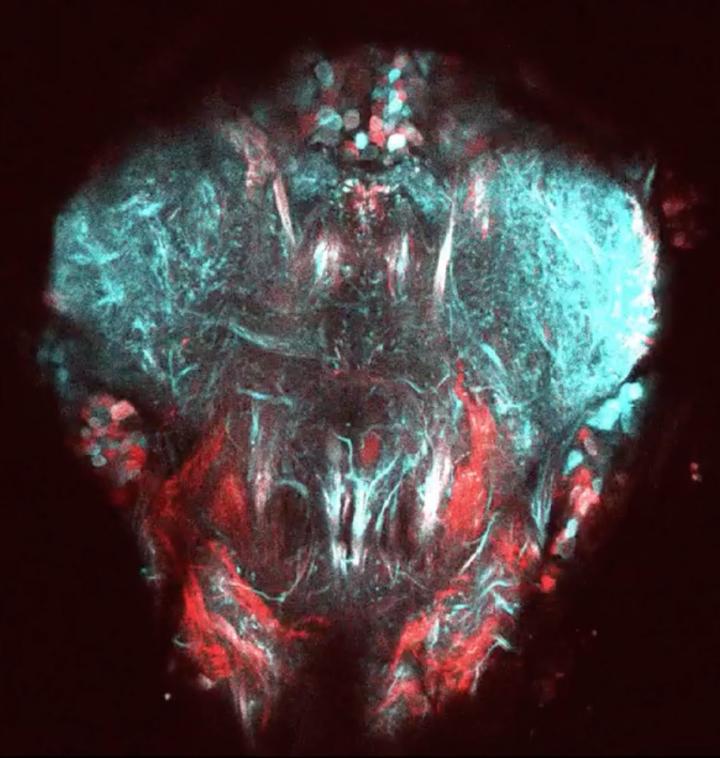
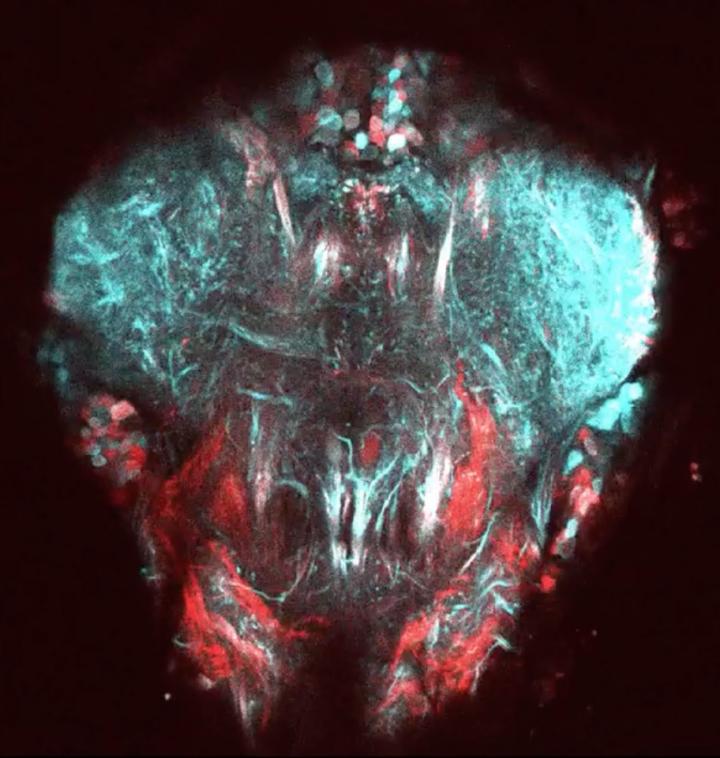
IMAGE

Credit: Pavan Ramdya, EPFL

One of the major goals of biology, medicine, and robotics is to understand how limbs are controlled by circuits of neurons working together. And as if that is not complex enough, a meaningful study of limb activity also has to take place while animals are behaving and moving. The problem is that it is virtually impossible to get a complete view of the activity of motor and premotor circuits that control limbs during behavior, in either vertebrates or invertebrates.

Scientists from the lab of Pavan Ramdya at EPFL's Brain Mind Institute and Interfaculty Institute of Bioengineering have developed a new method for recording the activity of limb control neural circuits in the popular model organism, the fruit fly Drosophila melanogaster. The method uses an advanced imaging technique called "two-photon microscopy" to observe the firing of fluorescently labeled neurons that become brighter when they are active.

The scientists focused on the fly's ventral nerve cord, which is a major neural circuit controlling the legs, neck, wings, and two dumbbell-shaped organs that the insect uses to orient itself, called the "halteres". But most importantly, they were able to image the fly's ventral nerve cord while the animal was carrying out specific behaviors.

The scientists discovered different patterns of activity across populations of neurons in the cord during movement and behavior. Specifically, the researchers looked at grooming and walking, which allowed them to study neurons involved in the fly's ability to walk forward, backwards, or to turn while navigating complex environments.

Finally, the team developed a genetic technique that makes it easier to access to the ventral nerve cord. This can help future studies that directly investigate circuits associated with complex limb movements.

"I am very excited about our new recording approach," says Professor Pavan Ramdya. "Combined with the powerful genetic tools available for studying the fly, I believe we can rapidly make an impact on understanding how we move our limbs and how we might build robots that move around the world just as effectively as animals."

###

Other contributors

Johns Hopkins University

EPFL Biomedical Imaging Group

EPFL Center for Biomedical Imaging

Media Contact

Nik Papageorgiou
[email protected]
41-216-932-105
@EPFL_en

http://www.epfl.ch/index.en.html

Related Journal Article

http://dx.doi.org/10.1038/s41467-018-06857-z

Share12Tweet7Share2ShareShareShare1

Related Posts

Evaluating Pediatric Emergency Care Quality in Ethiopia

February 7, 2026

TPMT Expression Predictions Linked to Azathioprine Side Effects

February 7, 2026

Improving Dementia Care with Enhanced Activity Kits

February 7, 2026

Decoding Prostate Cancer Origins via snFLARE-seq, mxFRIZNGRND

February 7, 2026
Please login to join discussion

POPULAR NEWS

  • Robotic Ureteral Reconstruction: A Novel Approach

    Robotic Ureteral Reconstruction: A Novel Approach

    82 shares
    Share 33 Tweet 21
  • Digital Privacy: Health Data Control in Incarceration

    63 shares
    Share 25 Tweet 16
  • Study Reveals Lipid Accumulation in ME/CFS Cells

    57 shares
    Share 23 Tweet 14
  • Breakthrough in RNA Research Accelerates Medical Innovations Timeline

    53 shares
    Share 21 Tweet 13

About

We bring you the latest biotechnology news from best research centers and universities around the world. Check our website.

Follow us

Recent News

Evaluating Pediatric Emergency Care Quality in Ethiopia

TPMT Expression Predictions Linked to Azathioprine Side Effects

Improving Dementia Care with Enhanced Activity Kits

Subscribe to Blog via Email

Success! An email was just sent to confirm your subscription. Please find the email now and click 'Confirm' to start subscribing.

Join 73 other subscribers
  • Contact Us

Bioengineer.org © Copyright 2023 All Rights Reserved.

Welcome Back!

Login to your account below

Forgotten Password?

Retrieve your password

Please enter your username or email address to reset your password.

Log In
No Result
View All Result
  • Homepages
    • Home Page 1
    • Home Page 2
  • News
  • National
  • Business
  • Health
  • Lifestyle
  • Science

Bioengineer.org © Copyright 2023 All Rights Reserved.