• HOME
  • NEWS
  • EXPLORE
    • CAREER
      • Companies
      • Jobs
    • EVENTS
    • iGEM
      • News
      • Team
    • PHOTOS
    • VIDEO
    • WIKI
  • BLOG
  • COMMUNITY
    • FACEBOOK
    • INSTAGRAM
    • TWITTER
Saturday, February 7, 2026
BIOENGINEER.ORG
No Result
View All Result
  • Login
  • HOME
  • NEWS
  • EXPLORE
    • CAREER
      • Companies
      • Jobs
        • Lecturer
        • PhD Studentship
        • Postdoc
        • Research Assistant
    • EVENTS
    • iGEM
      • News
      • Team
    • PHOTOS
    • VIDEO
    • WIKI
  • BLOG
  • COMMUNITY
    • FACEBOOK
    • INSTAGRAM
    • TWITTER
  • HOME
  • NEWS
  • EXPLORE
    • CAREER
      • Companies
      • Jobs
        • Lecturer
        • PhD Studentship
        • Postdoc
        • Research Assistant
    • EVENTS
    • iGEM
      • News
      • Team
    • PHOTOS
    • VIDEO
    • WIKI
  • BLOG
  • COMMUNITY
    • FACEBOOK
    • INSTAGRAM
    • TWITTER
No Result
View All Result
Bioengineer.org
No Result
View All Result
Home NEWS Science News Biology

Color-changing contact lens could enhance monitoring of eye disease treatments

Bioengineer by Bioengineer
October 10, 2018
in Biology
Reading Time: 2 mins read
0
Share on FacebookShare on TwitterShare on LinkedinShare on RedditShare on Telegram
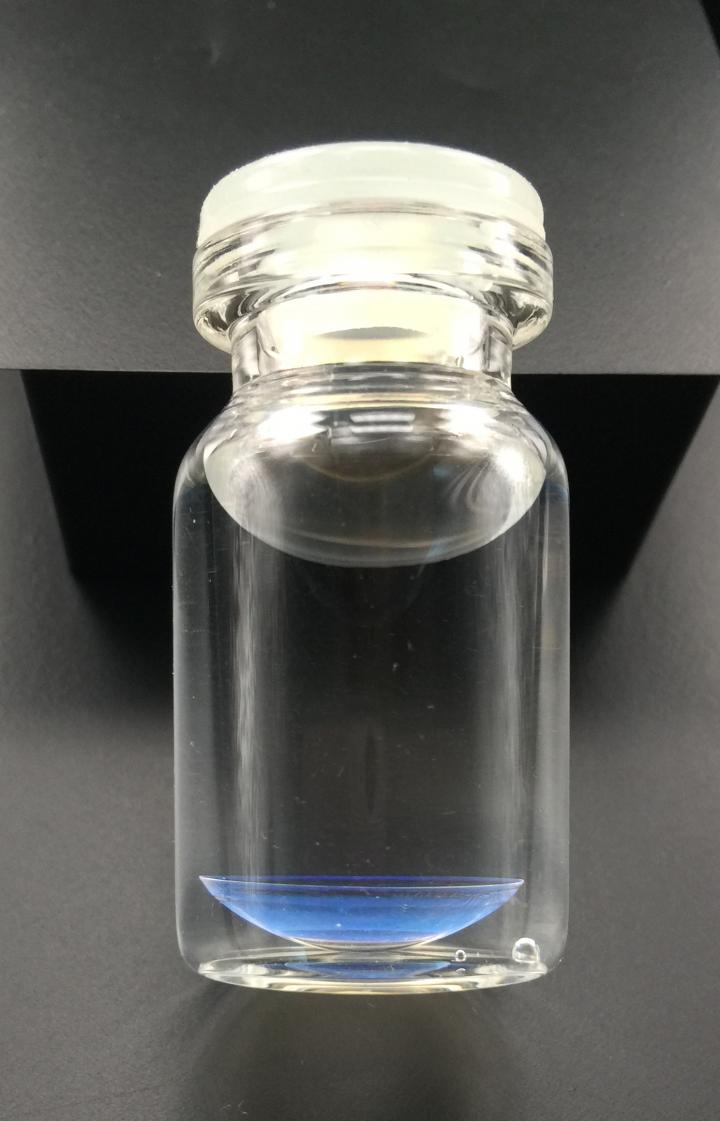
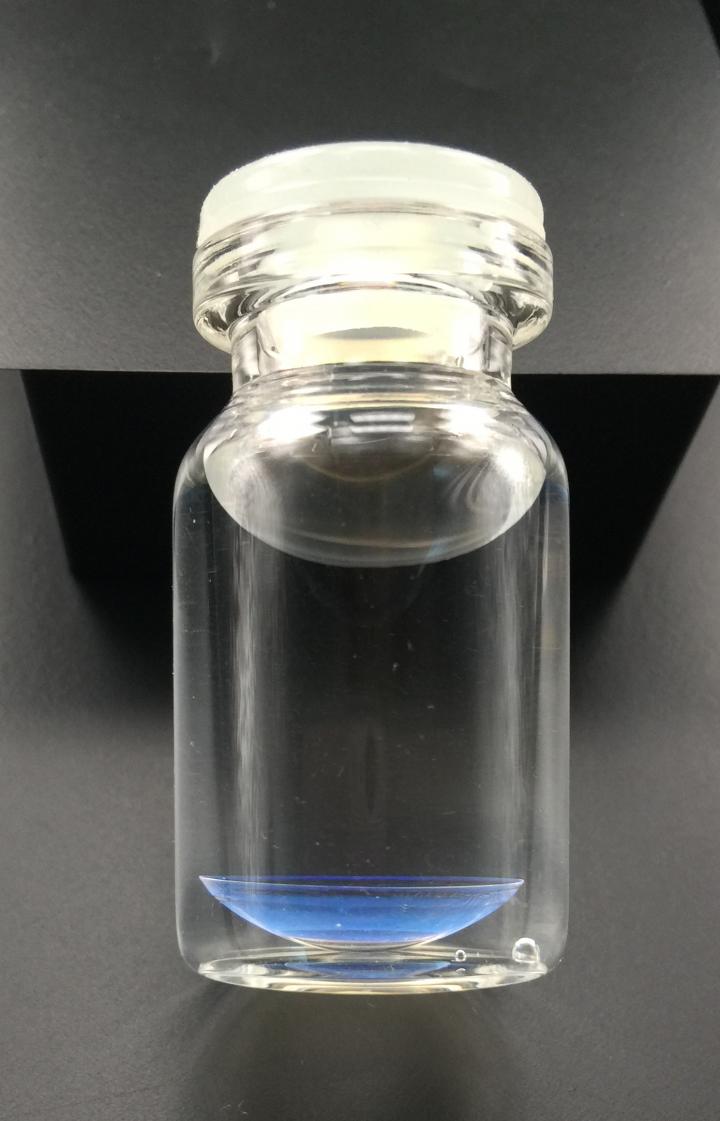
IMAGE

Credit: American Chemical Society

For all the good they do, eye drops and ointments have one major drawback: It's hard to tell how much of the medication is actually getting to the eye. Now in a study appearing in ACS Applied Materials & Interfaces, scientists report that they have developed a contact lens that changes color as drugs are released. This visual indicator could help eye doctors and patients readily determine whether these medications are where they should be.

Eyes are adept at keeping things out. When something ventures into or toward an eye, the lids blink and tears start rapidly flowing to avoid infection and damage from foreign objects. These processes are usually helpful, but they can hinder the uptake of much-needed medications. Studies suggest that less than 5 percent of drugs in eye drops and ointments are absorbed, and much of the absorbed medication ends up in the bloodstream instead of the eye, causing side effects. Contact lenses may be a more effective way to deliver drugs directly to the eye, but real-time monitoring of drug release is still a challenge. So Dawei Deng and Zhouying Xie sought to create a drug-delivering contact lens that would change color as the medication is released into the eye.

The researchers fabricated a color-sensitive contact lens using molecular imprinting, a technique that creates molecular cavities in a polymer structure that match the size and shape of a specific compound, such as a medicine. In laboratory experiments, the molecularly imprinted contact lenses were loaded with timolol, a drug used to treat glaucoma. Then, the team exposed the lenses to a solution of artificial tears, which was used as a stand-in for the eye. As the drug was released from the contacts, the architecture of the molecules near the drug changed, which also changed the color in the iris area of the lenses. No dye was involved in the process, reducing possible side effects. The researchers could see this shift with the naked eye and with a fiber optic spectrometer. They conclude this new lens could control and indicate the sustained release of many ophthalmic drugs.

###

The authors acknowledge funding from the National Key Research and Development Program of China, the Natural Science Foundation of Jiangsu Province, the National Natural Science Foundation, the Fundamental Research Funds for the Central Universities, and the Program for New Century Excellent Talents in University of the Ministry of Education of China.

The abstract that accompanies this study is available here.

The American Chemical Society, the world's largest scientific society, is a not-for-profit organization chartered by the U.S. Congress. ACS is a global leader in providing access to chemistry related information and research through its multiple databases, peer-reviewed journals and scientific conferences. ACS does not conduct research, but publishes and publicizes peer-reviewed scientific studies. Its main offices are in Washington, D.C. and Columbus, Ohio.

To automatically receive news releases from the American Chemical Society, contact [email protected].

Follow us on Twitter | Facebook

Media Contact

Katie Cottingham
[email protected]
301-775-8455
@ACSpressroom

http://www.acs.org

Share12Tweet8Share2ShareShareShare2

Related Posts

Florida Cane Toad: Complex Spread and Selective Evolution

Florida Cane Toad: Complex Spread and Selective Evolution

February 7, 2026
New Study Uncovers Mechanism Behind Burn Pit Particulate Matter–Induced Lung Inflammation

New Study Uncovers Mechanism Behind Burn Pit Particulate Matter–Induced Lung Inflammation

February 6, 2026

DeepBlastoid: Advancing Automated and Efficient Evaluation of Human Blastoids with Deep Learning

February 6, 2026

Navigating the Gut: The Role of Formic Acid in the Microbiome

February 6, 2026
Please login to join discussion

POPULAR NEWS

  • Robotic Ureteral Reconstruction: A Novel Approach

    Robotic Ureteral Reconstruction: A Novel Approach

    82 shares
    Share 33 Tweet 21
  • Digital Privacy: Health Data Control in Incarceration

    63 shares
    Share 25 Tweet 16
  • Study Reveals Lipid Accumulation in ME/CFS Cells

    57 shares
    Share 23 Tweet 14
  • Breakthrough in RNA Research Accelerates Medical Innovations Timeline

    53 shares
    Share 21 Tweet 13

About

We bring you the latest biotechnology news from best research centers and universities around the world. Check our website.

Follow us

Recent News

TPMT Expression Predictions Linked to Azathioprine Side Effects

Improving Dementia Care with Enhanced Activity Kits

Decoding Prostate Cancer Origins via snFLARE-seq, mxFRIZNGRND

Subscribe to Blog via Email

Enter your email address to subscribe to this blog and receive notifications of new posts by email.

Join 73 other subscribers
  • Contact Us

Bioengineer.org © Copyright 2023 All Rights Reserved.

Welcome Back!

Login to your account below

Forgotten Password?

Retrieve your password

Please enter your username or email address to reset your password.

Log In
No Result
View All Result
  • Homepages
    • Home Page 1
    • Home Page 2
  • News
  • National
  • Business
  • Health
  • Lifestyle
  • Science

Bioengineer.org © Copyright 2023 All Rights Reserved.