Credit: Harry Campbell/Johns Hopkins Center for Health Security
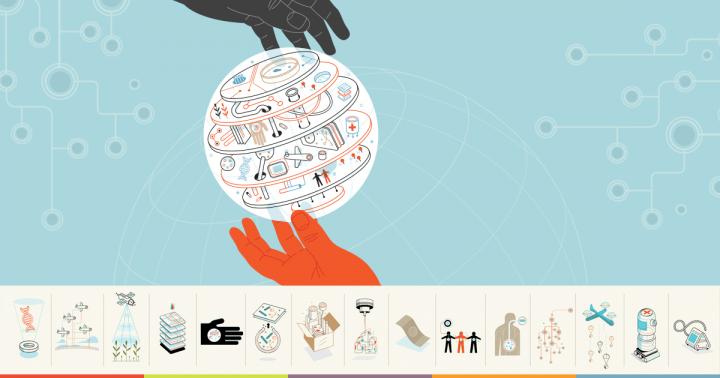
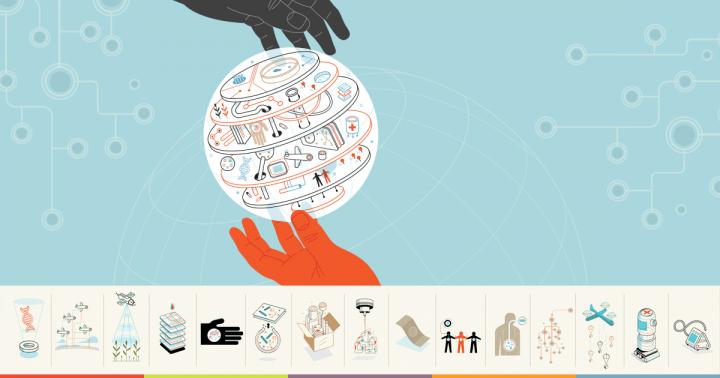
Strategic investment in 15 promising technologies could help make the world better prepared and equipped to prevent future infectious disease outbreaks from becoming catastrophic events.
This subset of emerging technologies and their potential application are the focus of a new report, Technologies to Address Global Catastrophic Biological Risks, by a team of researchers at the Johns Hopkins Center for Health Security. The study is among the first to assess technologies for the purpose of reducing GCBRs–a special category of risk defined previously by the Center as threats from biological agents that could lead to sudden, extraordinary, widespread disaster beyond the collective capability of national and international organizations and the private sector to control.
"While systems to respond [to an outbreak] are in place in many areas of the world, traditional approaches can be too slow or limited in scope to prevent biological events from becoming severe, even in the best of circumstances," wrote the Center authors. "This type of response remains critically important for today's emergencies, but it can and should be augmented by novel methods and technologies to improve the speed, accuracy, scalability, and reach of the response."
Through an extensive literature review and interviews with more than 50 experts, the Center project team identified 15 example technologies and grouped them into 5 broad categories that are significantly relevant to public health preparedness and response:
- Disease Detection, Surveillance, and Situational Awareness: Ubiquitous Genomic Sequencing and Sensing, Drone Networks for Environmental Detection, Remote Sensing for Agricultural Pathogens
- Infectious Disease Diagnostics: Microfluidic Devices, Handheld Mass Spectrometry, Cell-Free Diagnostics
- Distributed Medical Countermeasure Manufacturing: 3D Printing of Chemicals and Biologics, Synthetic Biology for Manufacturing MCMs
- Medical Countermeasure Distribution, Dispensing, and Administration: Microarray Patches for Vaccine Administration, Self-Spreading Vaccines, Ingestible Bacteria for Vaccination, Self-Amplifying mRNA Vaccines, Drone Delivery to Remote Locations
- Medical Care and Surge Capacity: Robotics and Telehealth, Portable Easy-to-Use Ventilator
The project team noted their list is not exhaustive or an endorsement of specific companies. The team used a modified version of DARPA's Heilmeier Catechism to standardize the process of evaluating each technology and formulating guidance for funding decisions. That process informed the team's high-level assessment of the readiness of each technology (from early development to being field-ready), the potential impact of the technology on GCBR reduction (from low to high), and the amount of financial investment that would be needed to meaningfully deploy the technology (from low to high). Details on these findings are included in the report.
Crystal Watson, DrPH, MPH, a senior scholar at the Center, Senior Analyst Matthew Watson, and Senior Scholar Tara Kirk Sell, PhD, MA, co-led the project team, which also included Caitlin Rivers, PhD, MPH; Matthew Shearer, MPH; former Analyst Christopher Hurtado, MHS; former Research Assistant Ashley Geleta, MS; and Tom Inglesby, MD, the Center's director. Their work contributes new ideas to a field in need of innovation despite important, ongoing progress in both the public and private sectors to address pandemic risk.
"The adoption and use of novel technologies for the purpose of epidemic control and public health often lag well behind the innovation curve because they do not have a lucrative market driving their development," wrote the authors. "This leaves unrealized opportunities for improved practice."
They recommend creating a consortium of technology developers, public health practitioners, and policymakers tasked with understanding pressing problems surrounding pandemics and GCBRs and jointly developing technology solutions.
###
This project was supported by funding from the Open Philanthropy Project and is the most recent addition to the Center's leading research and scholarship on GCBRs. In May 2018, Center authors published, The Characteristics of Pandemic Pathogens, which established a framework for identifying naturally occurring microorganisms that could be GCBRs and made broad recommendations for improving GCBR preparedness efforts.
About the Johns Hopkins Center for Health Security:
The Johns Hopkins Center for Health Security works to protect people from epidemics and disasters and build resilient communities through innovative scholarship, engagement, and research that strengthens the organizations, systems, policies, and programs essential to preventing and responding to public health crises. The Center is part of the Johns Hopkins Bloomberg School of Public Health and is located in Baltimore, MD.
Media Contact
Nick Alexopulos
[email protected]
@JHSPH_CHS
http://www.centerforhealthsecurity.org/
Original Source
http://www.centerforhealthsecurity.org/about-the-center/pressroom/press_releases/2018-10-09_technology-global-catastrophic-biological-risks.html