• HOME
  • NEWS
  • EXPLORE
    • CAREER
      • Companies
      • Jobs
    • EVENTS
    • iGEM
      • News
      • Team
    • PHOTOS
    • VIDEO
    • WIKI
  • BLOG
  • COMMUNITY
    • FACEBOOK
    • INSTAGRAM
    • TWITTER
Saturday, February 7, 2026
BIOENGINEER.ORG
No Result
View All Result
  • Login
  • HOME
  • NEWS
  • EXPLORE
    • CAREER
      • Companies
      • Jobs
        • Lecturer
        • PhD Studentship
        • Postdoc
        • Research Assistant
    • EVENTS
    • iGEM
      • News
      • Team
    • PHOTOS
    • VIDEO
    • WIKI
  • BLOG
  • COMMUNITY
    • FACEBOOK
    • INSTAGRAM
    • TWITTER
  • HOME
  • NEWS
  • EXPLORE
    • CAREER
      • Companies
      • Jobs
        • Lecturer
        • PhD Studentship
        • Postdoc
        • Research Assistant
    • EVENTS
    • iGEM
      • News
      • Team
    • PHOTOS
    • VIDEO
    • WIKI
  • BLOG
  • COMMUNITY
    • FACEBOOK
    • INSTAGRAM
    • TWITTER
No Result
View All Result
Bioengineer.org
No Result
View All Result
Home NEWS Science News Health

Finding therapeutic targets to prevent atherosclerosis

Bioengineer by Bioengineer
October 9, 2018
in Health
Reading Time: 2 mins read
0
Share on FacebookShare on TwitterShare on LinkedinShare on RedditShare on Telegram
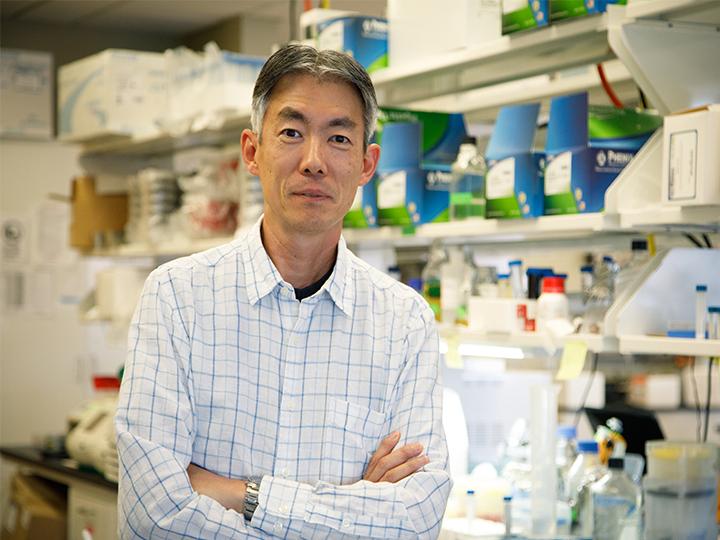
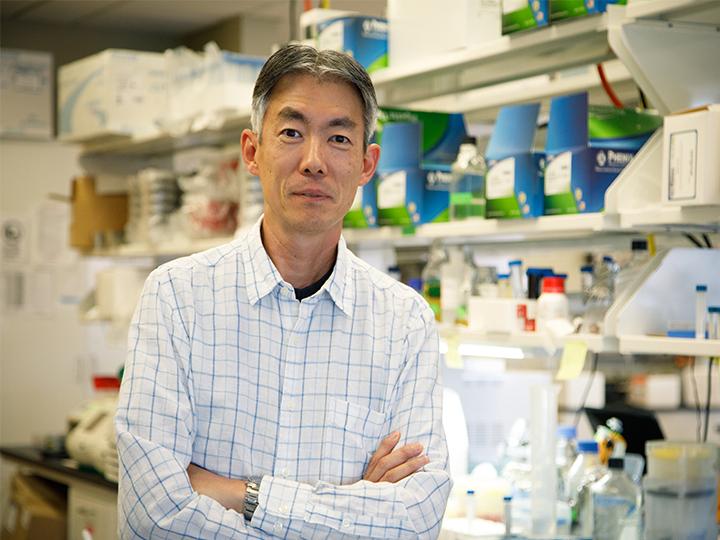
IMAGE

Credit: University of Houston

University of Houston biologist Michihisa Umetani, having discovered that a certain protein partnership acts to rapidly signal molecules inside blood vessels that danger is upon them, has been awarded $382,500 by the National Institutes of Health. It will allow him to examine how to target the Liver X Receptor (LXR) for new medicines that could encourage the receptor to do its job more consistently in the prevention of atherosclerosis, or fat buildup inside the arteries.

"We discovered that LXR, which belongs to a group of proteins called nuclear receptors, protects the cardiovascular system by activating another family member, the estrogen receptor," said Umetani whose work is being done at the UH Center for Nuclear Receptors and Cell Signaling. "Since LXR is activated by cholesterol metabolites, or oxysterols, our finding shows the link between cholesterol metabolism and estrogen actions."

LXR is one busy molecule. Its main function is to regulate lipid metabolism, which is the process of breaking down or storing fats for energy and maintaining proper cholesterol levels. It seems to link together cholesterol and the estrogen receptor. In addition to their roles in reproductive tissues, estrogen and its receptor are known to protect the vascular system.

In the past, drugs developed to activate LXR to be on continuous patrol for reducing cholesterol and lowering blood pressure, had severe side effects including causing a fatty liver.

"If we could make a drug that just works on LXR through the estrogen receptor actions, we could avoid the side effects and creation of the fatty liver," said Umetani, who is working to find the precise target for such a drug.

Umetani also explored the vascular endothelium, the inner lining of blood vessels. Disruption of the lining plays an integral role in the initiation of vascular inflammation, which leads to many cardiovascular diseases. He found that LXR plays an important role in maintaining vascular stability, including the acceleration of blood vessel repair and release of nitric oxide, a molecule considered to be atheroprotective, or protective against artherosclerosis.

"The potential roles of LXR in vascular endothelial cell function was unknown until our recent report. Therefore, new therapeutic approaches targeting only the beneficial aspects of LXR function are needed," he said.

###

Media Contact

Laurie Fickman
[email protected]
713-743-8454
@UH_News

http://www.uh.edu/news-events

Original Source

http://www.uh.edu/news-events/stories/2018/october-2018/10-09-18-umetani-blood-vessels.php

Share12Tweet7Share2ShareShareShare1

Related Posts

Digital Health Perspectives from Baltic Sea Experts

February 7, 2026

Exploring Decision-Making in Dementia Caregivers’ Mobility

February 7, 2026

Succinate Receptor 1 Limits Blood Cell Formation, Leukemia

February 7, 2026

Palmitoylation of Tfr1 Drives Platelet Ferroptosis and Exacerbates Liver Damage in Heat Stroke

February 7, 2026
Please login to join discussion

POPULAR NEWS

  • Robotic Ureteral Reconstruction: A Novel Approach

    Robotic Ureteral Reconstruction: A Novel Approach

    82 shares
    Share 33 Tweet 21
  • Digital Privacy: Health Data Control in Incarceration

    63 shares
    Share 25 Tweet 16
  • Study Reveals Lipid Accumulation in ME/CFS Cells

    57 shares
    Share 23 Tweet 14
  • Breakthrough in RNA Research Accelerates Medical Innovations Timeline

    53 shares
    Share 21 Tweet 13

About

We bring you the latest biotechnology news from best research centers and universities around the world. Check our website.

Follow us

Recent News

Digital Health Perspectives from Baltic Sea Experts

Florida Cane Toad: Complex Spread and Selective Evolution

Exploring Decision-Making in Dementia Caregivers’ Mobility

Subscribe to Blog via Email

Enter your email address to subscribe to this blog and receive notifications of new posts by email.

Join 73 other subscribers
  • Contact Us

Bioengineer.org © Copyright 2023 All Rights Reserved.

Welcome Back!

Login to your account below

Forgotten Password?

Retrieve your password

Please enter your username or email address to reset your password.

Log In
No Result
View All Result
  • Homepages
    • Home Page 1
    • Home Page 2
  • News
  • National
  • Business
  • Health
  • Lifestyle
  • Science

Bioengineer.org © Copyright 2023 All Rights Reserved.