• HOME
  • NEWS
  • EXPLORE
    • CAREER
      • Companies
      • Jobs
    • EVENTS
    • iGEM
      • News
      • Team
    • PHOTOS
    • VIDEO
    • WIKI
  • BLOG
  • COMMUNITY
    • FACEBOOK
    • INSTAGRAM
    • TWITTER
Sunday, May 31, 2026
BIOENGINEER.ORG
No Result
View All Result
  • Login
  • HOME
  • NEWS
  • EXPLORE
    • CAREER
      • Companies
      • Jobs
        • Lecturer
        • PhD Studentship
        • Postdoc
        • Research Assistant
    • EVENTS
    • iGEM
      • News
      • Team
    • PHOTOS
    • VIDEO
    • WIKI
  • BLOG
  • COMMUNITY
    • FACEBOOK
    • INSTAGRAM
    • TWITTER
  • HOME
  • NEWS
  • EXPLORE
    • CAREER
      • Companies
      • Jobs
        • Lecturer
        • PhD Studentship
        • Postdoc
        • Research Assistant
    • EVENTS
    • iGEM
      • News
      • Team
    • PHOTOS
    • VIDEO
    • WIKI
  • BLOG
  • COMMUNITY
    • FACEBOOK
    • INSTAGRAM
    • TWITTER
No Result
View All Result
Bioengineer.org
No Result
View All Result
Home NEWS Science News Biology

Know your enemy

Bioengineer by Bioengineer
October 9, 2018
in Biology
Reading Time: 2 mins read
0
Share on FacebookShare on TwitterShare on LinkedinShare on RedditShare on Telegram
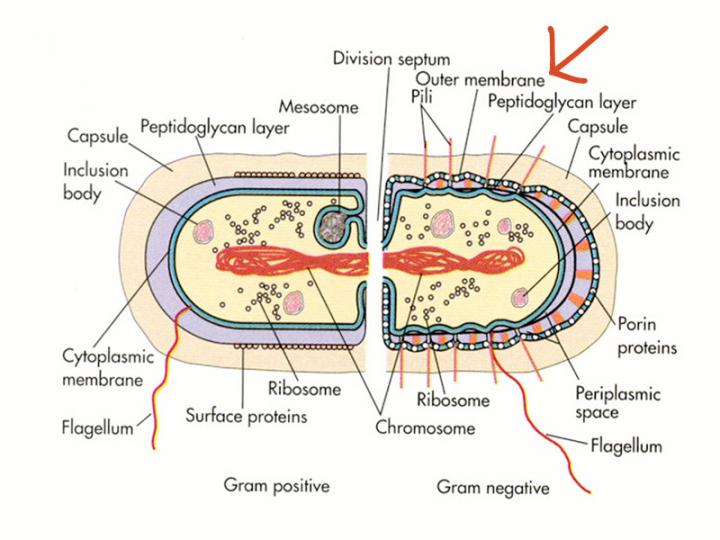
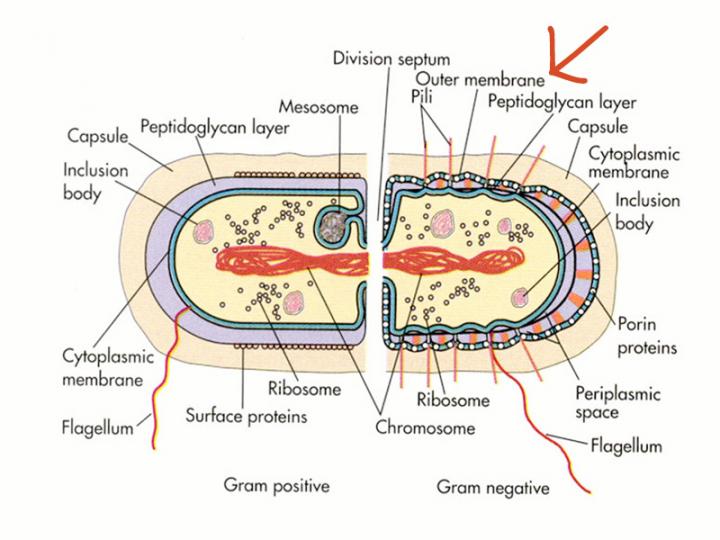
IMAGE

Credit: Microbiology Concepts (http://microbiologyconcepts.blogspot.com/2017/03/bacteria.html)

To fight your enemies, it helps to know their weaknesses. And, the more specific your knowledge, the easier it is to undermine their defenses. If your enemy sits safe behind a giant wall, for example, its valuable to know how your foe constructed it, what materials they used, and what cracks you could exploit.

We share a global enemy: antibiotic-resistant bacteria. According to the Centers for Disease Control and Prevention (CDC), "without urgent action, many modern medicines could become obsolete, turning event common infections into deadly threats." Certain bacteria, so-called Gram-negative bacteria, have a thick outer defense that protects them from toxins, antibiotics included.

To combat this growing crisis, researchers in the Kahne Lab meticulously document how our enemies work. During the last several years, they identified a number of previously unknown molecular machines and processes that build the bacteria's stubborn barrier, called the outer membrane. With these discoveries, they're starting to unravel its weaknesses.

Now, in a new paper published in the Journal of the American Chemical Society, Professor Daniel Kahne along with postdoctoral researcher Ran Xie and graduate student Rebecca J. Taylor, describe their latest findings. Gram-negative bacteria build their outer membrane, they write, with a burly glycolipid called lipopolysaccharide (LPS). So, if we could prevent LPS from reaching the outer membrane, their defense could weaken.

"To understand the factors that influence LPS transport, we developed a quantitative method to monitor transport rates," the authors report. Previously, the team designed a system to understand how LPS transport occurred. Most recently, they used a fluorescent material that binds to LPS to measure how much, and how quickly, it accumulates in the outer membrane. In addition, the team used their fluorescence-based test to learn which molecular components are integral to LPS transport. If, for example, the bacteria rely on one machine to build their barrier, researchers could investigate how to dismantle the machine and, therefore, the defense.

With their novel fluorescence-based tool, the team discovered crucial new details about LPS transport. ATP hydrolysis–the process by which the cell produces energy–is in fact integral to LPS transport. If transport stops, ATP hydrolysis stops. In addition, even if the cell has LPS in reserve and energy to spare, it will still stop transport. The team determined that the translocon–the machine that carries the LPS across the cell's membranes–controls the movement. "Using mutants of the transport machinery, we find that the final amount of LPS delivered into the membrane depends on the affinity of the outer membrane translocon for LPS."

Of course, more research is required to understand how the molecular machines and mechanisms in Gram-negative bacteria function (and malfunction). But the Kahne Lab's investigative work could one day lead to new treatments to combat antibiotic resistance and save lives, globally.

###

Media Contact

Caitlin McDermott-Murphy
[email protected]
617-496-2618
@HarvardResearch

http://www.harvard.edu

Original Source

https://chemistry.harvard.edu/news/know-your-enemy http://dx.doi.org/10.1021/jacs.8b07656

Share12Tweet8Share2ShareShareShare2

Related Posts

Ohio Wall Lizards Overcame Genetic Bottleneck Through Reproduction, Study Finds — Biology

Ohio Wall Lizards Overcame Genetic Bottleneck Through Reproduction, Study Finds

May 29, 2026
Double Agent Unveils Unexpected Revelations — Biology

Double Agent Unveils Unexpected Revelations

May 29, 2026

University of Toronto Scientists Work to Enhance Access to Advanced Research and Biomanufacturing Tools in Resource-Limited Areas

May 29, 2026

CLPTM1L Alters Lipid Rafts to Drive Glioblastoma Progression

May 29, 2026
Please login to join discussion

POPULAR NEWS

  • ESMO 2025: mRNA COVID Vaccines Enhance Efficacy of Cancer Immunotherapy

    319 shares
    Share 128 Tweet 80
  • Multi-Hospital Study Reveals Long Covid Burden Is Twice as High as Current Estimates

    81 shares
    Share 32 Tweet 20
  • Common Food Preservatives Associated with Elevated Blood Pressure and Increased Heart Disease Risk

    56 shares
    Share 22 Tweet 14
  • AI-Powered Atlas Uncovers Extensive Whole-Body Damage Linked to Obesity

    53 shares
    Share 21 Tweet 13

About

We bring you the latest biotechnology news from best research centers and universities around the world. Check our website.

Follow us

Recent News

Impact of Immigration Restrictions on the US Healthcare Workforce

Study Reveals Cancer Diagnostic Delays Linked to Population-Based Screening Using Cell-Free DNA Multicancer Early Detection Test

Innovative AI Technique Predicts Radiation Dosage Prior to Treatment in Advanced Prostate Cancer

Subscribe to Blog via Email

Success! An email was just sent to confirm your subscription. Please find the email now and click 'Confirm' to start subscribing.

Join 82 other subscribers
  • Contact Us

Bioengineer.org © Copyright 2023 All Rights Reserved.

Welcome Back!

Login to your account below

Forgotten Password?

Retrieve your password

Please enter your username or email address to reset your password.

Log In
No Result
View All Result
  • Homepages
    • Home Page 1
    • Home Page 2
  • News
  • National
  • Business
  • Health
  • Lifestyle
  • Science

Bioengineer.org © Copyright 2023 All Rights Reserved.