Credit: David Field
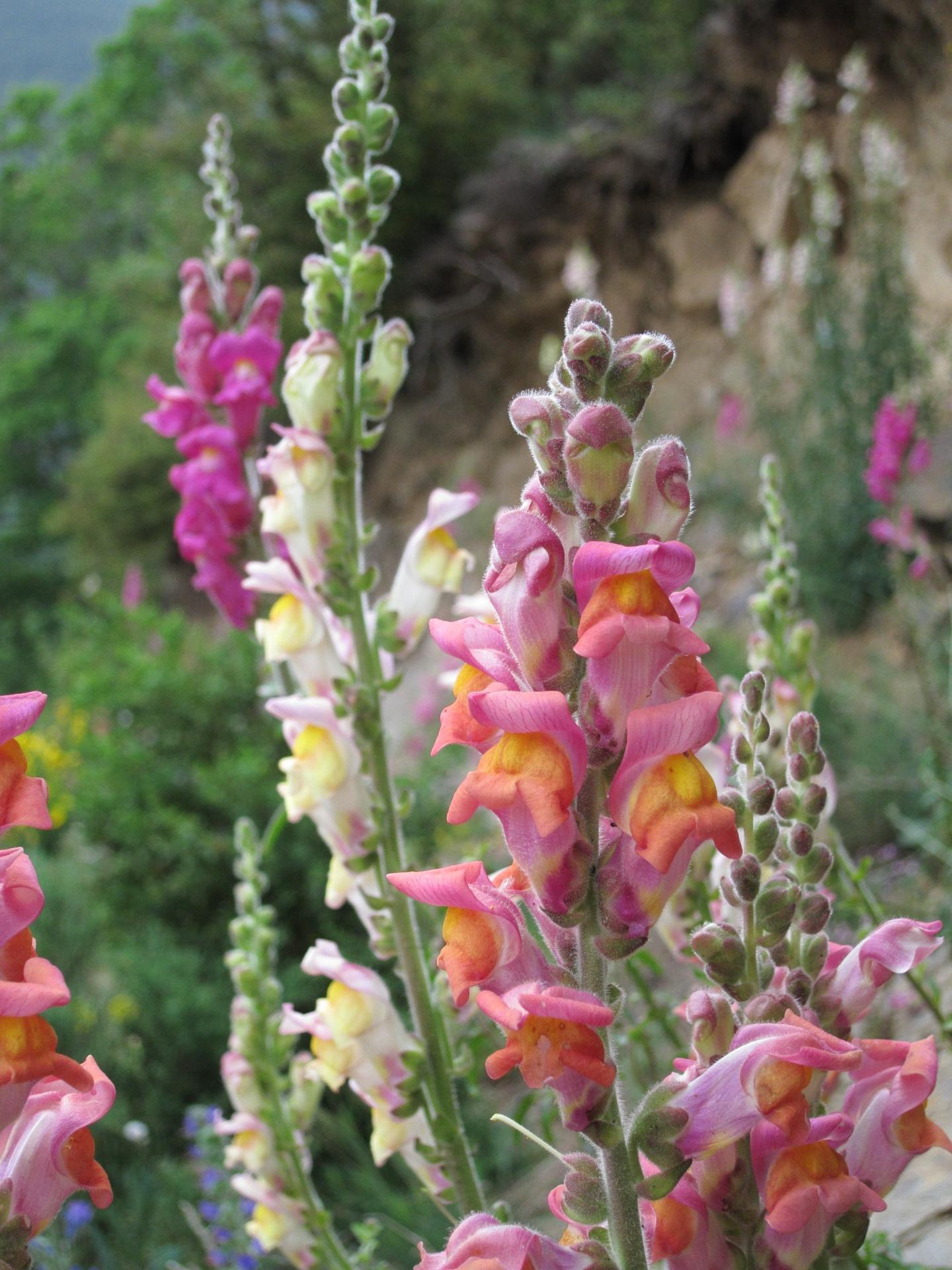
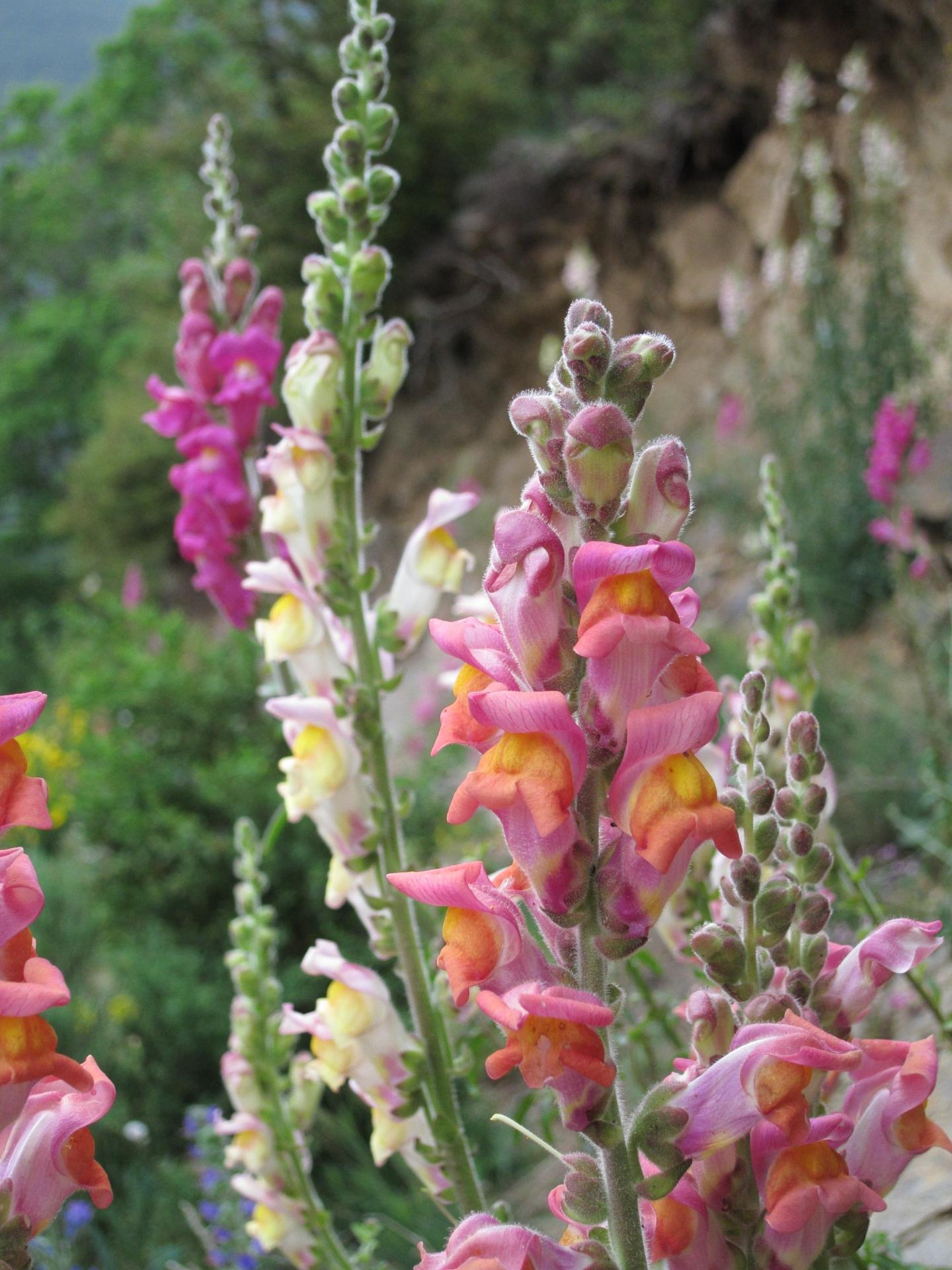
Snapdragons are charming tall plants, and flower in a range of bright colors. In Spain, where snapdragons grow wild, these flower colors show a remarkable pattern: When driving up a road from Barcelona to the Pyrenees, snapdragons of the species Antirrhinum majus bloom in magenta at the beginning of the road, before a population of yellow flowering snapdragons takes over – separated by just a two kilometer long stretch in which flower colors mix. Such hybrid zones of snapdragons are quite infrequent; only a few others are known. But why don't the snapdragons mix, with yellow and magenta flowers growing together over a wide area? Nick Barton at the Institute of Science and Technology Austria (IST Austria), together with David Field, previously postdoc in Barton's group and now Assistant Professor at the University of Vienna, collaborated with molecular geneticists at the John Innes Center in Norwich to investigate the causes of this pattern. Writing in today's edition of PNAS, the scientists report that they identified the genes responsible for flower color difference from DNA sequence data.
"DNA sequencing is becoming cheaper and cheaper. But analyzing sequence data and interpreting the patterns seen is very hard", Nick Barton explains, "In this study, we used sequence data from Antirrhinum plants to locate the individual genes which are responsible for the difference in flower color across the hybrid zone." The researchers compared the genome sequence of 50 snapdragons of each color, and measured how much the sequences diverged between magenta and yellow snapdragon populations. By plotting a statistical measure of divergence between the two populations, they found "islands" in the genome which are more divergent between yellow and magenta snapdragons than the rest of the genome. In the snapdragons, these islands correspond to genes responsible for flower color. The recent paper focuses on two of those genes, which determine the magenta pigment, and are located close together on the genome.
How the sharp difference between yellow and magenta populations is maintained was the subject of the PhD thesis by Tom Ellis in Nick Barton's lab. Through observations both in the field and in experiments at IST Austria, he found that bees prefer to pollinate the most common color flowers in a population: in magenta populations, bees mostly pollinate magenta flowers, in yellow populations, bees mostly pollinate yellow flowers. This selection in favour of the commonest type keeps the hybrid zone sharp, and prevents exchange of genes that are linked to the flower color genes.
In the current study, the researchers wanted to know how the two snapdragon populations become different. They found two reasons why the snapdragon populations diverge at the flower color genes. Firstly, selection has favoured new variants at the color genes that make the flowers more attractive to bees – causing these genes to sweep through the population, and leaving a sharp signal in the DNA sequences. Secondly, the flower genes become barriers to gene exchange. Any genes located close to or even between the flower genes cannot easily be swapped between the populations, and so the region of genome around the genes that determine flower color become divergent.
"Even with abundant DNA sequence data, it is often difficult to find exactly why species are different. Our study is the culmination of years of work, combining fieldwork and population genetics with genetic crosses, and analysis of gene expression", explains Nick Barton.
###
About IST Austria
The Institute of Science and Technology (IST Austria) is a PhD-granting research institution located in Klosterneuburg, 18 km from the center of Vienna, Austria. Inaugurated in 2009, the Institute is dedicated to basic research in the natural and mathematical sciences. IST Austria employs professors on a tenure-track system, postdoctoral fellows, and doctoral students. While dedicated to the principle of curiosity-driven research, the Institute owns the rights to all scientific discoveries and is committed to promote their use. The first president of IST Austria is Thomas A. Henzinger, a leading computer scientist and former professor at the University of California in Berkeley, USA, and the EPFL in Lausanne, Switzerland. The graduate school of IST Austria offers fully-funded PhD positions to highly qualified candidates with a bachelor's or master's degree in biology, neuroscience, mathematics, computer science, physics, and related areas. http://www.ist.ac.at
Media Contact
Elisabeth Guggenberger
[email protected]
@istaustria
http://Www.ist.ac.at
Related Journal Article
http://dx.doi.org/10.1073/pnas.1801832115