Credit: Ricardo Carrasco III
LOS ANGELES – For approximately 8 million Americans, visiting a doctor regularly is the key to managing their psoriasis, a chronic inflammatory skin condition characterized by itchy or painful red patches that can appear anywhere on the body. But for some people, seeing a specialist regularly can be a monumental challenge, especially for those who live in rural or underserved communities. A new study led by the Keck School of Medicine of USC, however, raises the possibility that one day, people with psoriasis may be able to simply go online to receive their care. Published today in JAMA Network Open, the study found that online and in-person care were equally effective at improving psoriasis symptoms.
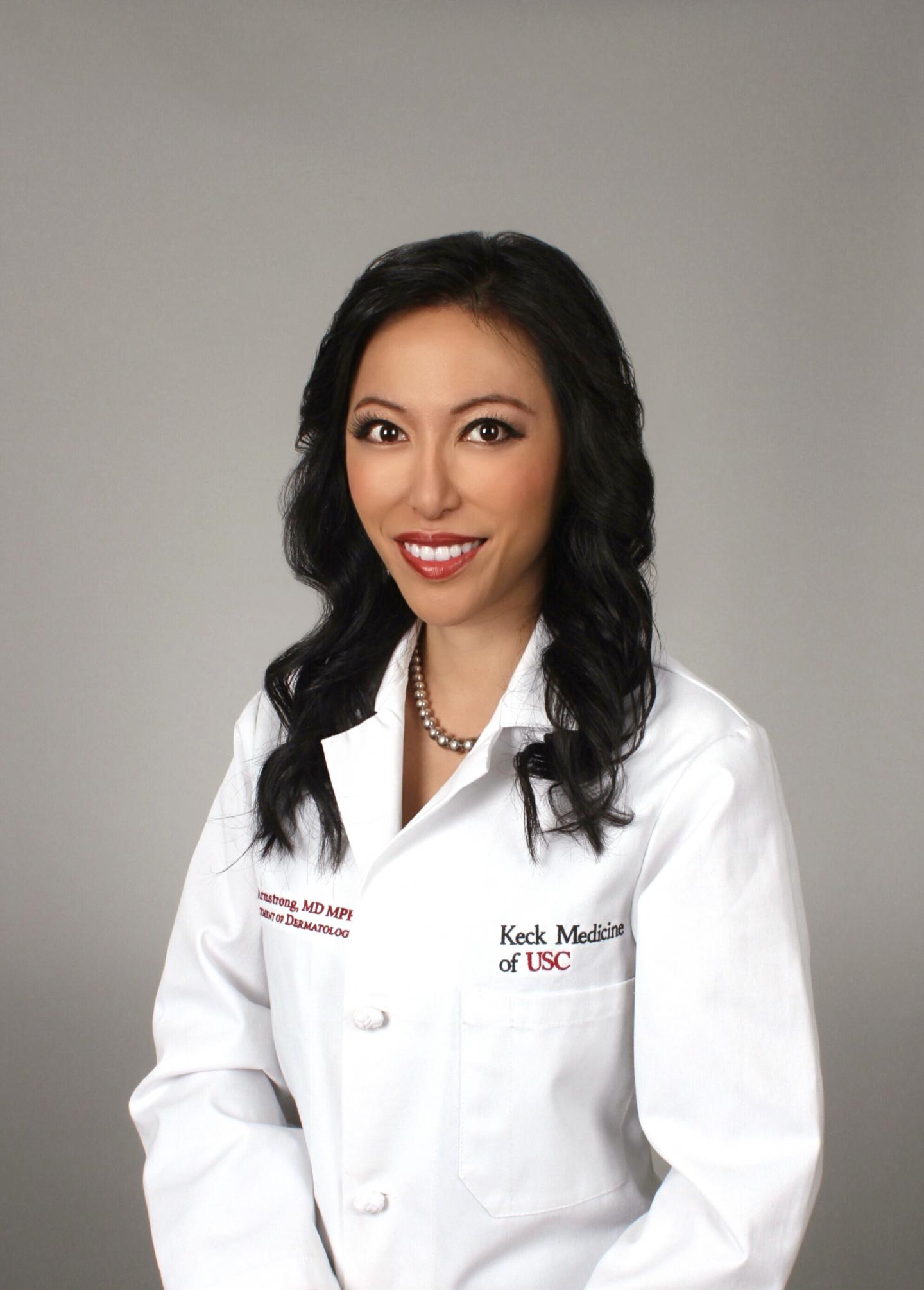
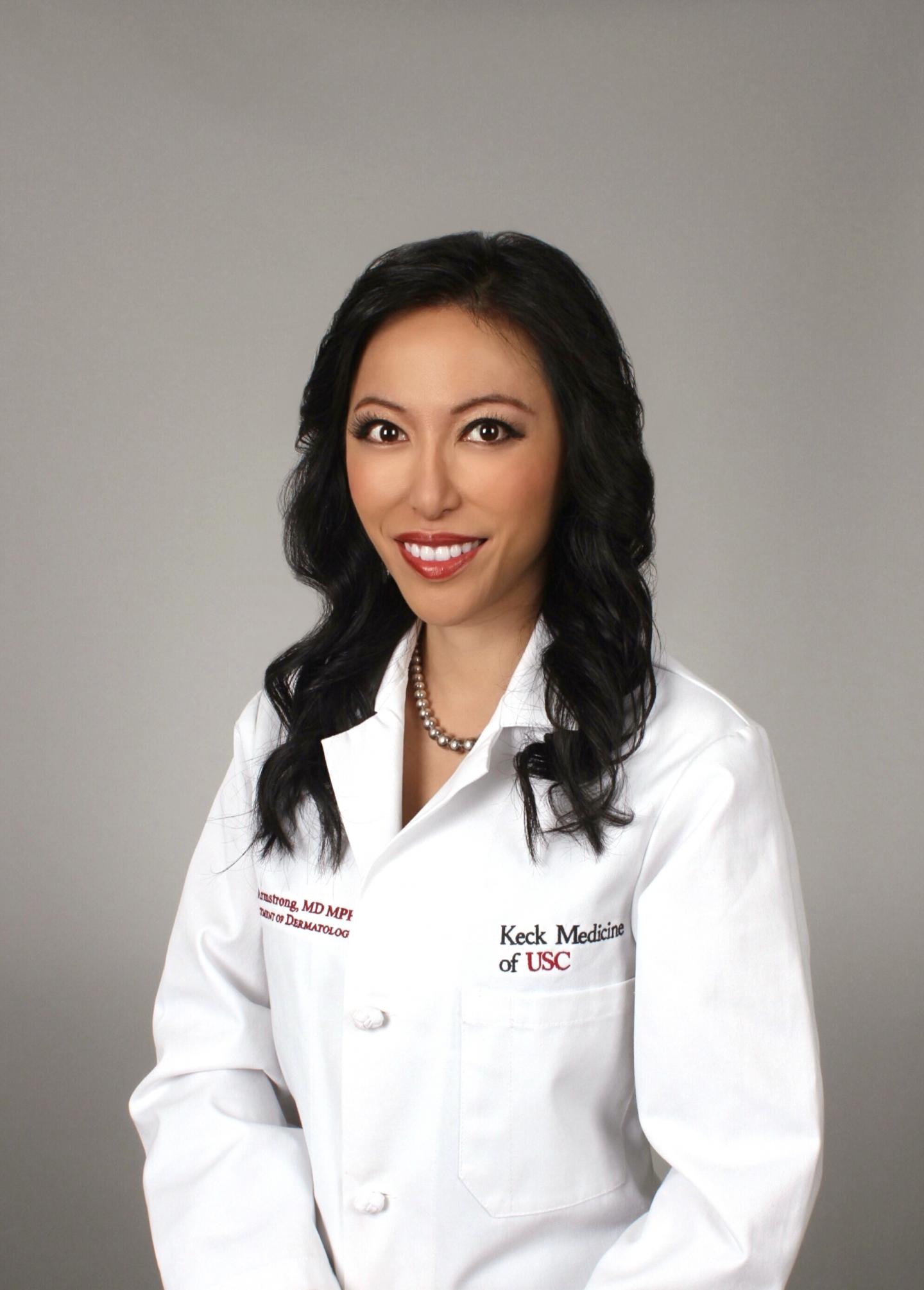
"Patients with chronic skin diseases need ongoing care, and depending on where they live, their access to dermatological care can be variable," says the study's lead author April Armstrong, MD, MPH, professor of dermatology (clinical scholar) and associate dean for clinical research at the Keck School. "Our study suggests that an online care delivery model is an effective way to bring high-quality care to patients regardless of where they live or what their work/life schedules look like."
In the multicenter study, Armstrong and her colleagues followed nearly 300 patients who had been randomized to either online or in-person care and monitored their symptom improvement.
Patients assigned to online care logged in to a secure, web-based connected health platform where they could communicate with their primary care provider or dermatologist, share images of their skin and receive treatment recommendations. After reviewing transmitted information, health care providers evaluated patients' progress, provided patient education and prescribed medications electronically. Patients assigned to in-person care received treatment as usual.
Psoriasis severity was measured at baseline and again at three, six, nine and 12 months. Across the follow-up visits, the two groups achieved similar improvement in psoriasis severity scores.
"From a patient's perspective, there are several benefits to an online care delivery model: They don't need to travel to a facility with specialty care, they can receive high-quality specialty care at home and they can communicate with their doctor at a time that's convenient for them," Armstrong says. "From a provider's perspective, the benefits include flexibility in where and when they work."
While this study focused on patients with psoriasis, Armstrong believes that the online care model has other potential applications as well.
"The use of teledermatology needs to be considered in other patient populations with chronic skin diseases such as atopic dermatitis. There is a critical need for children and adults with atopic dermatitis to receive high-quality specialist care for this condition through novel telehealth delivery methods," she says.
###
About the Keck School of Medicine of USC
Founded in 1885, the Keck School of Medicine of USC is among the nation's leaders in innovative patient care, scientific discovery, education and community service. The school has more than 1,750 full-time faculty members and voluntary faculty of more than 2,400 physicians. These faculty direct the education of approximately 800 medical students and 1,000 students pursuing graduate and postgraduate degrees. The school trains more than 900 resident physicians in more than 50 specialty or subspecialty programs and is the largest educator of physicians practicing in Southern California. Keck School faculty also conduct research and teach at several research centers and institutes, including the Eli and Edythe Broad Center for Regenerative Medicine and Stem Cell Research at USC, USC CardioVascular Thoracic Institute, USC Institute of Urology, USC Mark and Mary Stevens Neuroimaging and Informatics Institute, USC Norris Comprehensive Cancer Center, USC Roski Eye Institute and Zilkha Neurogenetic Institute.
In 2018, U.S. News & World Report ranked the Keck School among the top 35 medical schools in the country.
For more information, go to keck.usc.edu.
Media Contact
Cynthia Smith
[email protected]
323-442-3811
@keckmedusc
Related Journal Article
http://dx.doi.org/10.1001/jamanetworkopen.2018.3062