• HOME
  • NEWS
  • EXPLORE
    • CAREER
      • Companies
      • Jobs
    • EVENTS
    • iGEM
      • News
      • Team
    • PHOTOS
    • VIDEO
    • WIKI
  • BLOG
  • COMMUNITY
    • FACEBOOK
    • INSTAGRAM
    • TWITTER
Tuesday, May 5, 2026
BIOENGINEER.ORG
No Result
View All Result
  • Login
  • HOME
  • NEWS
  • EXPLORE
    • CAREER
      • Companies
      • Jobs
        • Lecturer
        • PhD Studentship
        • Postdoc
        • Research Assistant
    • EVENTS
    • iGEM
      • News
      • Team
    • PHOTOS
    • VIDEO
    • WIKI
  • BLOG
  • COMMUNITY
    • FACEBOOK
    • INSTAGRAM
    • TWITTER
  • HOME
  • NEWS
  • EXPLORE
    • CAREER
      • Companies
      • Jobs
        • Lecturer
        • PhD Studentship
        • Postdoc
        • Research Assistant
    • EVENTS
    • iGEM
      • News
      • Team
    • PHOTOS
    • VIDEO
    • WIKI
  • BLOG
  • COMMUNITY
    • FACEBOOK
    • INSTAGRAM
    • TWITTER
No Result
View All Result
Bioengineer.org
No Result
View All Result
Home NEWS Science News Biology

Lilly Pilly fossils reveal snowless Snowy Mountains

Bioengineer by Bioengineer
October 3, 2018
in Biology
Reading Time: 3 mins read
0
Share on FacebookShare on TwitterShare on LinkedinShare on RedditShare on Telegram
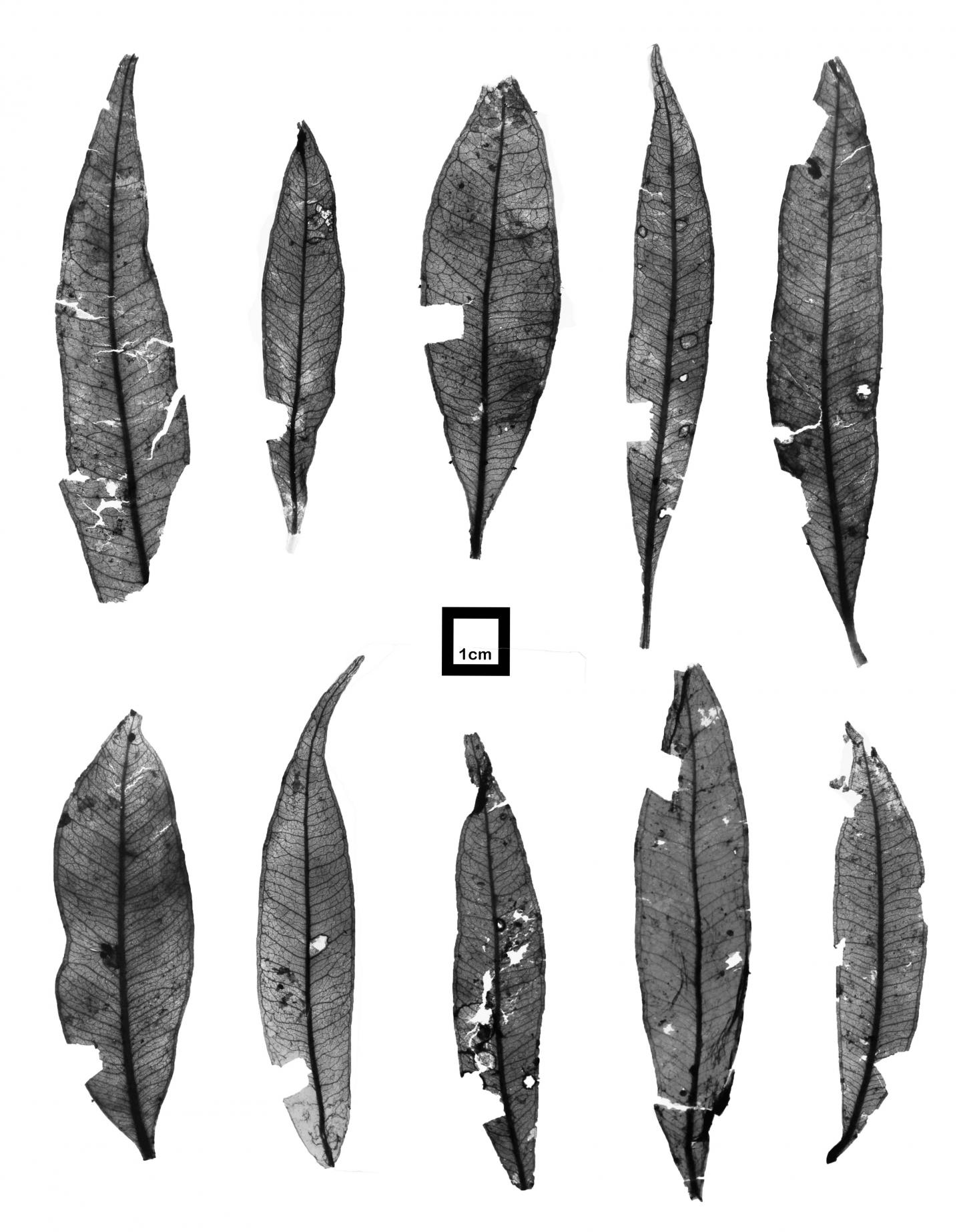
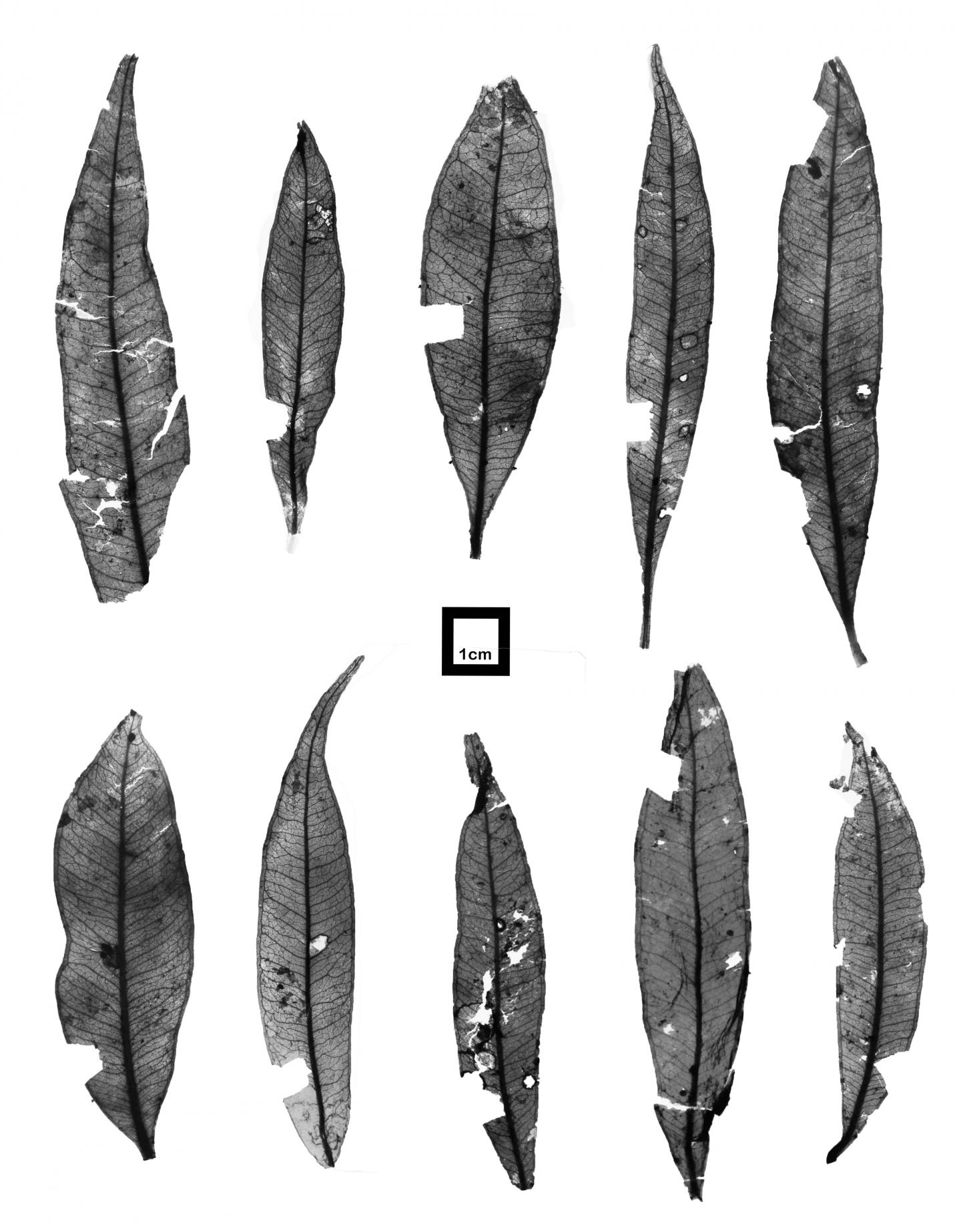
IMAGE

Credit: Myall Tarran

Leaf fossils discovered high in Australia's Snowy Mountains have revealed a past history of warmer rainforest vegetation and a lack of snow, in contrast with the alpine vegetation and winter snow-covered slopes of today.

University of Adelaide research, published in the American Journal of Botany, describes fossils of the iconic Australian tree, the Lilly Pilly, prized for its glossy, green leaves, white flowers, and red or pink edible fruits, and commonly planted in streets and gardens across Australia.

Lilly Pilly trees (from the genus Syzygium) occur naturally in tropical to subtropical rainforests throughout Australasia, southern Asia and Africa, not mountain slopes covered by winter snow.

Researchers identified fossil Lilly Pilly leaves recovered from old gold mining pits near the historic town of Kiandra, 1400 metres above sea level in the Snowy Mountains of New South Wales. The fossils are preserved in ancient lake sediments, overlain by basalt rock, deposited by lava flows that erupted during some of the last stages of uplift that produced the Eastern Highlands about 20 million years ago.

"The Lilly Pilly was a traditional food source for Aboriginal peoples and early European settlers and is still an important food source for many native animals and birds, as well as used for making cakes and jams," says lead researcher Myall Tarran, PhD candidate in the University's School of Biological Sciences.

"But despite being such an important and iconic plant, no convincing fossils have ever been described in the scientific literature, until now.

"These fossils add to growing evidence that in this region about 20 million years ago there would have been temperate rainforest. The climate was warmer and wetter, perhaps analogous to the modern day Atherton Tablelands in North Queensland.

"There would have been no, or very little, winter snowfall and the alpine zone, as we know it in the Snowy Mountains, was not yet established."

Mr Tarran says it's possible the lack of snow was a result of continuing tectonic uplift, but higher atmospheric carbon dioxide levels were likely to have played a role.

"Uplift still hadn't fully finished in the region at that stage, so perhaps this forest was actually growing at a slightly lower altitude," he says. "But we also know that atmospheric carbon dioxide levels, and therefore global average temperatures, were much higher during this time."

"The fossils provide us with a window into what the Snowy Mountains looked like in a much warmer world, and help us to think about what a warmer world will look like. For us here in Australia, that might mean no snow in the mountains."

###

Mr Tarran's research was supervised by Professor Bob Hill, Director of the University of Adelaide's Environment Institute, and Dr Peter Wilson, a Principal Research Scientist at the Royal Botanic Gardens Sydney, in collaboration with the State Herbarium of South Australia.

Media Contact:

Myall Tarran, PhD candidate, School of Biological Sciences, University of Adelaide, Mobile: +61 (0)435 735 620, [email protected]

Robyn Mills, Media Officer, Phone: +61 (0)8 8313 6341, Mobile: +61 (0)410 689 084, [email protected]

Media Contact

Myall Tarran
[email protected]
61-043-573-5620
@UniofAdelaide

http://www.adelaide.edu.au

Related Journal Article

http://dx.doi.org/10.1002/ajb2.1163

Share12Tweet8Share2ShareShareShare2

Related Posts

New Study from The Morton Arboretum Reveals Why Mexico and Central America’s Mountain Forests Are Oak Tree Hotspots — Biology

New Study from The Morton Arboretum Reveals Why Mexico and Central America’s Mountain Forests Are Oak Tree Hotspots

May 5, 2026
Gerald Joyce Elected to Prestigious American Philosophical Society — Biology

Gerald Joyce Elected to Prestigious American Philosophical Society

May 5, 2026

Author Correction: Lipopeptide Immunity Linked to Membrane Remodelling

May 4, 2026

Study Reveals Connection Between Prenatal Chemical Exposure and Chromosomal Abnormalities in Adult Sperm

May 4, 2026
Please login to join discussion

POPULAR NEWS

  • Research Indicates Potential Connection Between Prenatal Medication Exposure and Elevated Autism Risk

    834 shares
    Share 334 Tweet 209
  • New Study Reveals Plants Can Detect the Sound of Rain

    719 shares
    Share 287 Tweet 180
  • Scientists Investigate Possible Connection Between COVID-19 and Increased Lung Cancer Risk

    67 shares
    Share 27 Tweet 17
  • Salmonella Haem Blocks Macrophages, Boosts Infection

    61 shares
    Share 24 Tweet 15

About

We bring you the latest biotechnology news from best research centers and universities around the world. Check our website.

Follow us

Recent News

SIRT3-DsbA-L-TFAM Axis Limits Fatty Liver Disease

Advances in Neonatal Cell Therapies: 2025 Update

New Study from The Morton Arboretum Reveals Why Mexico and Central America’s Mountain Forests Are Oak Tree Hotspots

Subscribe to Blog via Email

Enter your email address to subscribe to this blog and receive notifications of new posts by email.

Join 82 other subscribers
  • Contact Us

Bioengineer.org © Copyright 2023 All Rights Reserved.

Welcome Back!

Login to your account below

Forgotten Password?

Retrieve your password

Please enter your username or email address to reset your password.

Log In
No Result
View All Result
  • Homepages
    • Home Page 1
    • Home Page 2
  • News
  • National
  • Business
  • Health
  • Lifestyle
  • Science

Bioengineer.org © Copyright 2023 All Rights Reserved.