• HOME
  • NEWS
  • EXPLORE
    • CAREER
      • Companies
      • Jobs
    • EVENTS
    • iGEM
      • News
      • Team
    • PHOTOS
    • VIDEO
    • WIKI
  • BLOG
  • COMMUNITY
    • FACEBOOK
    • INSTAGRAM
    • TWITTER
Saturday, January 10, 2026
BIOENGINEER.ORG
No Result
View All Result
  • Login
  • HOME
  • NEWS
  • EXPLORE
    • CAREER
      • Companies
      • Jobs
        • Lecturer
        • PhD Studentship
        • Postdoc
        • Research Assistant
    • EVENTS
    • iGEM
      • News
      • Team
    • PHOTOS
    • VIDEO
    • WIKI
  • BLOG
  • COMMUNITY
    • FACEBOOK
    • INSTAGRAM
    • TWITTER
  • HOME
  • NEWS
  • EXPLORE
    • CAREER
      • Companies
      • Jobs
        • Lecturer
        • PhD Studentship
        • Postdoc
        • Research Assistant
    • EVENTS
    • iGEM
      • News
      • Team
    • PHOTOS
    • VIDEO
    • WIKI
  • BLOG
  • COMMUNITY
    • FACEBOOK
    • INSTAGRAM
    • TWITTER
No Result
View All Result
Bioengineer.org
No Result
View All Result
Home NEWS Science News Health

Discovery offers hope for new Crohn’s disease treatment

Bioengineer by Bioengineer
September 2, 2016
in Health
Reading Time: 2 mins read
0
Share on FacebookShare on TwitterShare on LinkedinShare on RedditShare on Telegram
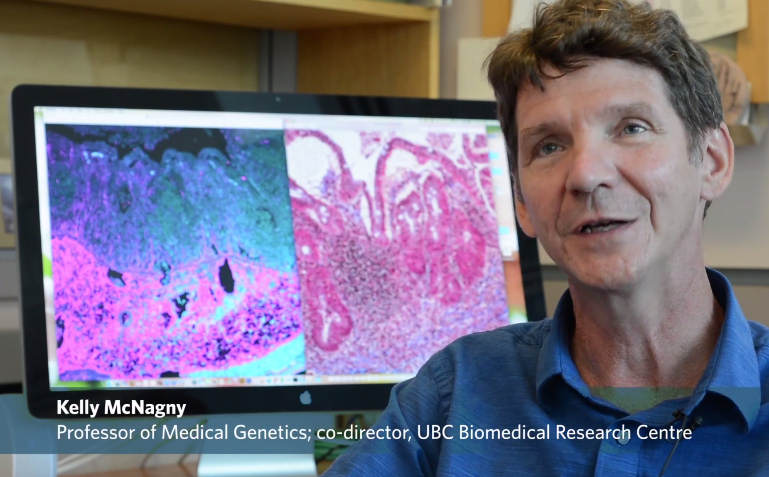
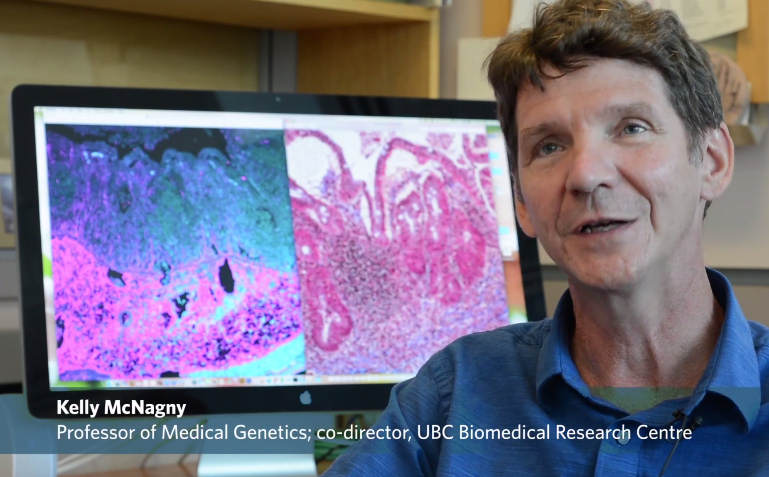
kelly McNagny
Credit: UBC

Scientists at the University of British Columbia have made a discovery that could potentially lead to treatments for a debilitating complication of Crohn’s disease.

Crohn’s disease is an inflammatory bowel disease in which the intestines of some patients can become blocked by thickened and scarred connective tissue–a condition known as fibrosis. When fibrosis occurs, surgical intervention is required to restore proper digestion. Repeated surgeries are not uncommon in Crohn’s patients.

In research outlined today in Science Immunology, scientists discovered a mutation that prevented mice from developing fibrosis after they were infected with a type of salmonella that mimics the symptoms of Crohn’s. The mutation had switched off a hormone receptor responsible for stimulating part of the body’s immune response.

“We found what we think are the inflammatory cells that drive fibrosis,” said co-author Kelly McNagny, professor of medical genetics and co-director of the UBC Biomedical Research Centre (BRC). “The gene that was defective in those cells is a hormone receptor, and there are drugs available that may be able to block that hormone receptor in normal cells and prevent fibrotic disease.”

What’s more, McNagny and his colleagues are hopeful that their discovery could be applied to other types of tissue that experience fibrosis.

“Fibrosis is a response to chronic inflammation, but it is also a process that occurs during normal aging. If you can reverse this, you’ve essentially found a way to promote regeneration rather than degeneration,” said lead author Bernard Lo, a PhD candidate at BRC.

Liver cirrhosis, chronic kidney disease, scarring from heart attacks and muscle degeneration all result in tissue fibrosis, noted McNagny. “We think that we can potentially block complications of all these age-related fibrotic diseases by dampening these particular inflammatory cell types,” he said.

The next step for McNagny’s lab will be to test drugs to find out whether they can stop or reverse fibrosis in mice.

###

“The orphan nuclear receptor ROR alpha and group 3 innate lymphoid cells drive fibrosis in a mouse model of Crohn’s disease” appears in Science Immunology.

The study received funding from the Canadian Institutes of Health Research (CIHR) and AllerGen NCE Inc., the Allergy, Genes and Environment Network.

Watch a video about the work here: https://youtu.be/MR8-zU8-NM0

Media Contact

Heather Amos
[email protected]
604-822-3213
@UBCnews

http://www.ubc.ca

The post Discovery offers hope for new Crohn’s disease treatment appeared first on Scienmag.

Share12Tweet8Share2ShareShareShare2

Related Posts

Lipedema Definition and Management: 2023 Global Consensus

January 10, 2026

Lucerastat Shows Promise in Fabry Disease Trials

January 10, 2026

Delirium Subtypes Affect Survival in Elderly Heart Failure Patients

January 10, 2026

Empowering Nursing Students in the AI Age

January 10, 2026
Please login to join discussion

POPULAR NEWS

  • Enhancing Spiritual Care Education in Nursing Programs

    154 shares
    Share 62 Tweet 39
  • PTSD, Depression, Anxiety in Childhood Cancer Survivors, Parents

    145 shares
    Share 58 Tweet 36
  • Impact of Vegan Diet and Resistance Exercise on Muscle Volume

    46 shares
    Share 18 Tweet 12
  • SARS-CoV-2 Subvariants Affect Outcomes in Elderly Hip Fractures

    45 shares
    Share 18 Tweet 11

About

We bring you the latest biotechnology news from best research centers and universities around the world. Check our website.

Follow us

Recent News

Exploring Heterosis in Abaca BC2 Hybrid Dioscoro 1

Revolutionary Deep Learning Model Enhances Rainfall Forecasting

Lipedema Definition and Management: 2023 Global Consensus

Subscribe to Blog via Email

Enter your email address to subscribe to this blog and receive notifications of new posts by email.

Join 71 other subscribers
  • Contact Us

Bioengineer.org © Copyright 2023 All Rights Reserved.

Welcome Back!

Login to your account below

Forgotten Password?

Retrieve your password

Please enter your username or email address to reset your password.

Log In
No Result
View All Result
  • Homepages
    • Home Page 1
    • Home Page 2
  • News
  • National
  • Business
  • Health
  • Lifestyle
  • Science

Bioengineer.org © Copyright 2023 All Rights Reserved.