Credit: WV DEP
A toxic red tide, or harmful algae bloom, is killing swaths of marine life and affecting the health of people living along Florida's southwest coast. Nationwide, harmful algae blooms cost an estimated $50 million each year. Excess nutrients such as nitrogen and phosphorus flowing downstream act as fertilizer, sparking these blooms in waterbodies such as the Gulf of Mexico, Lake Erie and Chesapeake Bay.
Paul Leisnham of the University of Maryland, College Park, is working to find out whether better management of nutrient-laden stormwater in urban areas can help. Leisnham has received one of 13 new grants from the National Science Foundation's (NSF) Dynamics of Coupled Natural and Human Systems (CNH) program. Total funding for the 2018 CNH awards is $15 million.
Since 2001, the CNH program has funded projects that look at the complex interactions between human and natural systems. CNH is part of NSF's Environmental Research and Education (ERE) portfolio, and awards are made through the directorates for Geosciences (GEO); Social, Behavioral and Economic Sciences (SBE); and Biological Sciences (BIO).
"The CNH program continues to break ground with grants that explore new directions in coupled human and natural systems," said Richard Yuretich, the CNH program director at NSF, representing GEO. "For example, CNH research is viewing the past through historical and archaeological methods to develop a picture of the relationship between people and Earth's environment."
CNH awardee David Breshears of the University of Arizona will investigate the connections among wildfires, drought, bark beetle infestations and other factors leading to tree die-offs across the country. Breshears and colleagues are looking at the economic impacts of forest loss on agricultural yields and crop values.
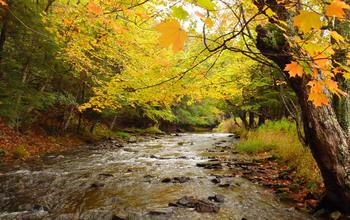
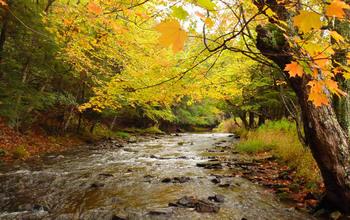
Jan Boll of Washington State University, another CNH awardee, will link hydrology, climatology and human development in headwater stream watersheds across North and South America. The amount of water flowing from headwaters to downstream cities, towns and villages is predicted to shift with environmental change.
And CNH grantee Joseph Manning of Yale University is studying the connections between long-ago volcanic eruptions and summer flooding of the Nile River to better understand the effects of volcanic eruptions today and in the future.
CNH considers humans and the environment as one interconnected system. This year's grantees will look at the ways people deal with environmental processes in a range of settings, including coasts, forests and cities.
"Improving knowledge about the complex ways humans interact with natural environmental phenomena and processes is a focus of the CNH program," said Thomas Baerwald, CNH program director representing SBE. "Projects examine how these interactions can enhance human well-being and environmental quality."
Addeds Liz Blood, CNH program director representing BIO, "CNH projects are focused on understanding how coupled natural and human systems are linked, and how these connections affect responses to changing environmental conditions — a key challenge for the 21st century."
Among other topics, 2018 CNH grantees will study tourism and mosquito-borne disease transmission in the Americas; links between reef fisheries and human health; and black carbon, or "soot," at the arctic ice edge.
All will lead to a new understanding of how people can best interact with the environment on a planet with limited — and often irreplaceable — resources.
2018 NSF CNH Awards
- People, Place, and Payments in Complex Human-Environment Systems, Li An, San Diego State University
- A Research Network for the Resilience of Headwater Systems and Water Availability for Downstream Communities Across the Americas, Jan Boll, Washington State University
- The Influence of Conflicting Policies and Supply-Chain Pressures on Farmers' Decisions and Tradeoffs with Respect to Biodiversity, Profitability, and Sustainability, Timothy Bowles, University of California, Berkeley
- Revealing the Hidden Ecoclimate Teleconnections Between Forest and Agriculture in the U.S. Enables Novel Governance Strategies for a Telecoupled World, David Breshears, University of Arizona
- Exploring the History of Coupled Climatic and Human Influences on Ecosystem Changes During the Last One Million Years, John Faith, University of Utah
- Coupled Dynamics of Tourism and Mosquito-Borne Disease Transmission in the Americas, Allison Gardner, University of Maine
- Interactive Dynamics of Reef Fisheries and Human Health, Christopher Golden, Harvard University
- Socioeconomic Factors, Land and Water Quality, and the Dynamics Between Rural and Urban Zones of Food Production and Consumption, Manoj Jha, North Carolina A&T State University
- Stormwater Management Across Urban Ecosystems: Diagnostic Tools and Community Engagement for Ecological Restoration, Equitable Community Development, and Revitalization, Paul Leisnham, University of Maryland, College Park
- Volcanism, Hydrology and Social Conflict: Lessons from Hellenistic and Roman-Era Egypt and Mesopotamia, Joseph Manning, Yale University
- Land-Climate-Water Feedbacks and Farmer Decision-Making in an Agricultural System, Katrina Mullan, University of Montana
- What Does It Take to Cooperate Over Transboundary Groundwater Resources?, Marc Muller, University of Notre Dame
- Modeling Risk from Black Carbon in a Coupled Natural-Human System at the Arctic Ice Edge, Siri Veland, Brown University
###
Media Contact
Cheryl Dybas
[email protected]
@NSF
http://www.nsf.gov