

• HOME
  • NEWS
  • EXPLORE
    • CAREER
      • Companies
      • Jobs
    • EVENTS
    • iGEM
      • News
      • Team
    • PHOTOS
    • VIDEO
    • WIKI
  • BLOG
  • COMMUNITY
    • FACEBOOK
    • INSTAGRAM
    • TWITTER
Sunday, February 8, 2026
BIOENGINEER.ORG
No Result
View All Result
  • Login
  • HOME
  • NEWS
  • EXPLORE
    • CAREER
      • Companies
      • Jobs
        • Lecturer
        • PhD Studentship
        • Postdoc
        • Research Assistant
    • EVENTS
    • iGEM
      • News
      • Team
    • PHOTOS
    • VIDEO
    • WIKI
  • BLOG
  • COMMUNITY
    • FACEBOOK
    • INSTAGRAM
    • TWITTER
  • HOME
  • NEWS
  • EXPLORE
    • CAREER
      • Companies
      • Jobs
        • Lecturer
        • PhD Studentship
        • Postdoc
        • Research Assistant
    • EVENTS
    • iGEM
      • News
      • Team
    • PHOTOS
    • VIDEO
    • WIKI
  • BLOG
  • COMMUNITY
    • FACEBOOK
    • INSTAGRAM
    • TWITTER
No Result
View All Result
Bioengineer.org
No Result
View All Result
Home NEWS Science News Health

A fracture anywhere reduces bone density everywhere

Bioengineer by Bioengineer
September 24, 2018
in Health
Reading Time: 2 mins read
0
Share on FacebookShare on TwitterShare on LinkedinShare on RedditShare on Telegram
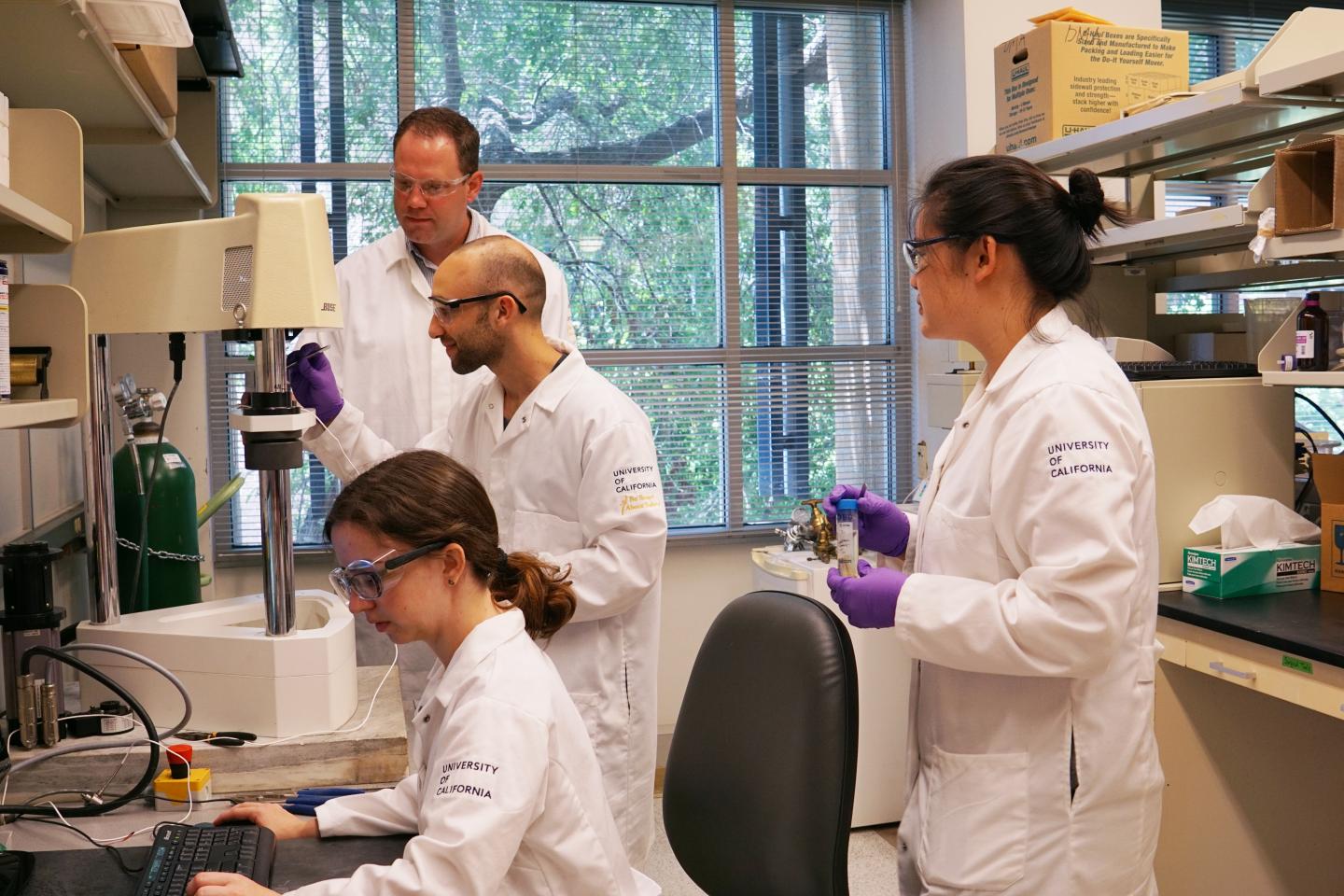
IMAGE

Credit: Copyright UC Regents courtesy of UC Davis Health

Breaking a bone causes bone density losses throughout the body, not just close to the site of the fracture, and primarily around the time of the fracture, two new studies from UC Davis Health show.

The studies are among the first to associate fractures with systemic bone loss. They also begin the path to finding treatments that preserve long-term skeletal health and reduce susceptibility to additional fractures and, potentially, osteoporosis, which is diagnosed when bone-density losses are severe.

Both investigations were led by Blaine Christiansen, whose research focuses on identifying changes in musculoskeletal tissue due to injury, aging or disease.

"We know one fracture seems to lead to others, but we haven't known why," said Christiansen, associate professor of orthopaedic surgery at UC Davis. "Our work is the first step on the path to identifying the cellular mechanisms of systemic bone loss."

The first study, published in Osteoporosis International, was based on about 4,000 participants in the Study of Osteoporotic Fractures, an observational study of older women that included hip bone mineral density (BMD) measures and fracture history gathered regularly over 20 years.

Outcomes showed that hip BMD decreased over time for all women in the study, but was greatest for those who had fractured a bone ? even if the fracture was not near the hip. BMD reductions averaged between .89 and .77 percent per year for those with fractures, and .66 percent per year for those with no fractures. Those losses were greatest within the first two years of a break.

Published in the Journal of Bone and Mineral Research, the second study was conducted using mice with femur fractures and BMD tests in various bones. Once again, bone loss occurred throughout the body, most notably in the spine, and was greatest within the first two weeks of fracture. It also was accompanied by higher levels of inflammatory markers in the blood.

Outcomes of the second study showed interesting age-related recovery differences as well. Younger mice eventually recovered their pre-fracture BMD levels, while older mice did not.

Christiansen next hopes to further characterize the post-fracture inflammatory factors that may contribute to bone loss following fracture.

"It's possible that these factors are key to initiating BMD loss once a bone is broken," Christiansen said. "Ultimately, we hope to develop therapeutic strategies that interrupt those processes and prevent bone loss."

###

More information about UC Davis Health, including its Department of Orthopaedic Surgery, is at health.ucdavis.edu.

Media Contact

Karen Finney
[email protected]
916-734-9064
@UCDavisHealth

http://www.ucdmc.ucdavis.edu

Original Source

http://www.ucdmc.ucdavis.edu/publish/news/newsroom/13170 http://dx.doi.org/10.1007/s00198-018-4606-6

Share12Tweet7Share2ShareShareShare1

Related Posts

Guiding Patients Through Obesity Diagnosis: A Primer

February 8, 2026

Evaluating a Self-Care App for Chest Trauma Patients

February 8, 2026

Anesthesia Method’s Impact on Elderly Hip Fracture Recovery

February 8, 2026

Menopause Care: Insights from Workforce Review and Consultation

February 7, 2026
Please login to join discussion

POPULAR NEWS

  • Robotic Ureteral Reconstruction: A Novel Approach

    Robotic Ureteral Reconstruction: A Novel Approach

    82 shares
    Share 33 Tweet 21
  • Digital Privacy: Health Data Control in Incarceration

    63 shares
    Share 25 Tweet 16
  • Breakthrough in RNA Research Accelerates Medical Innovations Timeline

    53 shares
    Share 21 Tweet 13
  • Mapping Tertiary Lymphoid Structures for Kidney Cancer Biomarkers

    50 shares
    Share 20 Tweet 13

About

We bring you the latest biotechnology news from best research centers and universities around the world. Check our website.

Follow us

Recent News

Guiding Patients Through Obesity Diagnosis: A Primer

Evaluating a Self-Care App for Chest Trauma Patients

Anesthesia Method’s Impact on Elderly Hip Fracture Recovery

Subscribe to Blog via Email

Enter your email address to subscribe to this blog and receive notifications of new posts by email.

Join 73 other subscribers
  • Contact Us

Bioengineer.org © Copyright 2023 All Rights Reserved.

Welcome Back!

Login to your account below

Forgotten Password?

Retrieve your password

Please enter your username or email address to reset your password.

Log In
No Result
View All Result
  • Homepages
    • Home Page 1
    • Home Page 2
  • News
  • National
  • Business
  • Health
  • Lifestyle
  • Science

Bioengineer.org © Copyright 2023 All Rights Reserved.
