• HOME
  • NEWS
  • EXPLORE
    • CAREER
      • Companies
      • Jobs
    • EVENTS
    • iGEM
      • News
      • Team
    • PHOTOS
    • VIDEO
    • WIKI
  • BLOG
  • COMMUNITY
    • FACEBOOK
    • INSTAGRAM
    • TWITTER
Sunday, April 12, 2026
BIOENGINEER.ORG
No Result
View All Result
  • Login
  • HOME
  • NEWS
  • EXPLORE
    • CAREER
      • Companies
      • Jobs
        • Lecturer
        • PhD Studentship
        • Postdoc
        • Research Assistant
    • EVENTS
    • iGEM
      • News
      • Team
    • PHOTOS
    • VIDEO
    • WIKI
  • BLOG
  • COMMUNITY
    • FACEBOOK
    • INSTAGRAM
    • TWITTER
  • HOME
  • NEWS
  • EXPLORE
    • CAREER
      • Companies
      • Jobs
        • Lecturer
        • PhD Studentship
        • Postdoc
        • Research Assistant
    • EVENTS
    • iGEM
      • News
      • Team
    • PHOTOS
    • VIDEO
    • WIKI
  • BLOG
  • COMMUNITY
    • FACEBOOK
    • INSTAGRAM
    • TWITTER
No Result
View All Result
Bioengineer.org
No Result
View All Result
Home NEWS Science News Biology

Scientists discovered 20 new gnat species in Brazil

Bioengineer by Bioengineer
September 21, 2018
in Biology
Reading Time: 2 mins read
0
Share on FacebookShare on TwitterShare on LinkedinShare on RedditShare on Telegram
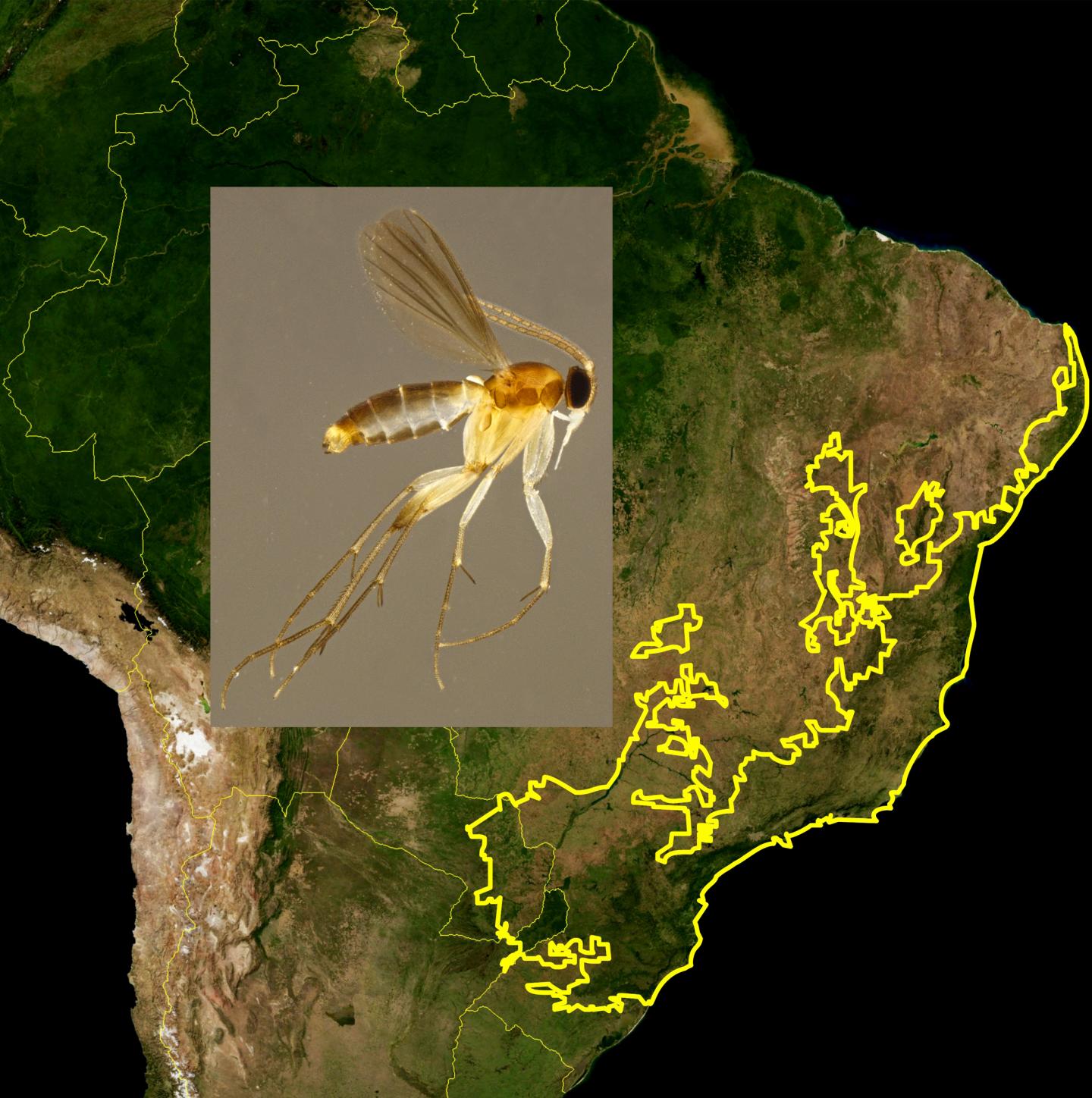
IMAGE

Credit: Olavi Kurina/wwf.org

Due to the heterogenity of natural habitats and its dimension, Brazil is thought to hold 15 – 20% of the biodiversity on planet Earth. A study conducted in the Brazilian Atlantic Forest under the leadership of senior researcher Olavi Kurina from the Chair of Biodiversity and Nature Tourism at Estonian University of Life Sciences could only confirm this theory.

The Atlantic Forest ecoregion in Brazil is an area with diverse nature, following the coastline of the country and embracing tropical, subtropical and mangrove forests, also shrubland and grassland, described Olavi Kurina. "There are many endemic species known in this region."

In addition to the known biodiversity, in September the researches described in these rainforests 20 gnat species in the genus Manota that were new to science. The described species belong to the family of fungus gnats (Mycetophilidae) and are small flies, from 1.5 to 3mm long, with specific differences lying mainly in terminal morphology of the male specimens, specified Olavi Kurina.

The new species received scientific names by their morphological features and in honour of colleagues who had contributed to the research. As a result of zoogeographic analysis, a discrepancy was described between the comparatively wide distribution of the Manota species and the areas of endemism known for Diptera in South America and in Brazilian Atlantic Forest particularly.

###

The study, the first in-depth treatment of the genus Manota in Brazil, was carried out in cooperation with Estonian University of Life Sciences, University of Turku and University of São Paulo. The type material of the new species is deposited in the insect collections of Estonian University of Life Sciences and University of São Paulo (international acronyms IZBE and MZUSP, respectively).

The scientific journal Zootaxa, a mega journal for zoological taxonomists in the world, published an article on this topic: http://www.mapress.com/j/zt/article/view/zootaxa.4472.1.1.

Media Contact

Olavi Kurina
[email protected]
372-731-1887

Avaleht

Related Journal Article

http://dx.doi.org/10.11646/zootaxa.4472.1.1
Share12Tweet8Share2ShareShareShare2

Related Posts

Epigenetic Alterations at Birth Linked to Infant Microbiome and Neurodevelopment

Epigenetic Alterations at Birth Linked to Infant Microbiome and Neurodevelopment

April 10, 2026
Lung Cancer That Alters Its Identity Could Be Concealed in Plain Sight

Lung Cancer That Alters Its Identity Could Be Concealed in Plain Sight

April 10, 2026

Neuronal Motor Protein Composition Determines Cargo Specificity

April 10, 2026

How Your Housemates Might Be Altering Your Gut Microbiome

April 10, 2026
Please login to join discussion

POPULAR NEWS

  • Scientists Investigate Possible Connection Between COVID-19 and Increased Lung Cancer Risk

    50 shares
    Share 20 Tweet 13
  • Boosting Breast Cancer Risk Prediction with Genetics

    47 shares
    Share 19 Tweet 12
  • Popular Anti-Aging Compound Linked to Damage in Corpus Callosum, Study Finds

    44 shares
    Share 18 Tweet 11
  • Imagine a Social Media Feed That Challenges Your Views Instead of Reinforcing Them

    1012 shares
    Share 400 Tweet 250

About

We bring you the latest biotechnology news from best research centers and universities around the world. Check our website.

Follow us

Recent News

Podoplanin and CCR7 Drive Triple-Negative Breast Cancer Spread

Medication Literacy Tool Developed for Older Chinese Patients

Hybrid Framework Optimizes Sustainable Heating in Cold Climates

Subscribe to Blog via Email

Enter your email address to subscribe to this blog and receive notifications of new posts by email.

Join 78 other subscribers
  • Contact Us

Bioengineer.org © Copyright 2023 All Rights Reserved.

Welcome Back!

Login to your account below

Forgotten Password?

Retrieve your password

Please enter your username or email address to reset your password.

Log In
No Result
View All Result
  • Homepages
    • Home Page 1
    • Home Page 2
  • News
  • National
  • Business
  • Health
  • Lifestyle
  • Science

Bioengineer.org © Copyright 2023 All Rights Reserved.