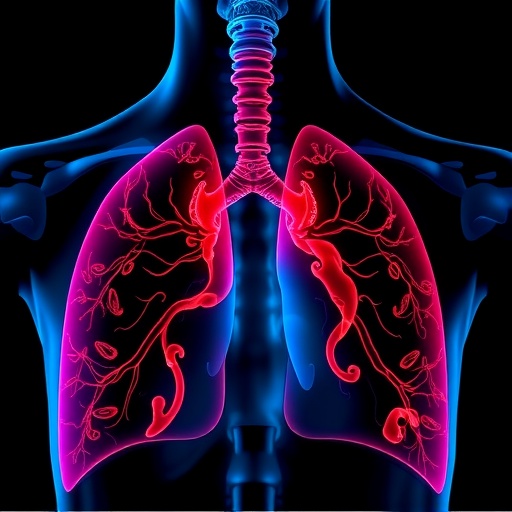
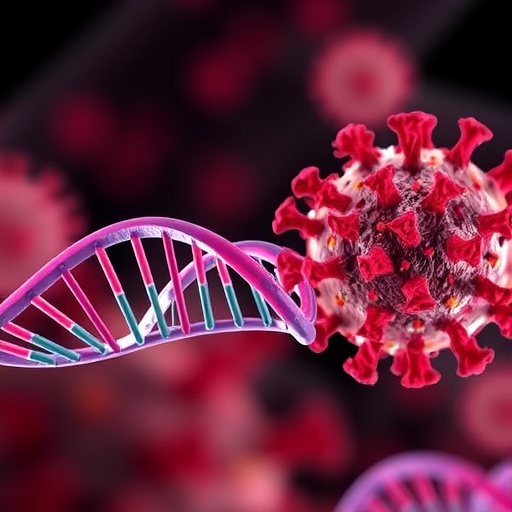
Sometimes, the body's otherwise intelligent immune system mistakenly attacks the body's healthy tissue by responding to infections that do not exist. This causes chronic inflammation and leads to diseases including e.g. Lupus (SLE), when the immune system overreacts, and this is what happens when the body activates the STING protein.
Now, researchers from Aarhus University have discovered that a new type of fatty acid can slow down the overactive protein. This has opened a new path that may possibly end with a treatment of diseases for which there are currently no effective treatments. The results have just been published in the scientific journal Proceedings of the National Academy of Sciences (PNAS).
Hope for treatment of life-threatening diseases
The discovery is relevant in connection with all autoimmune diseases related to STING, but in particular for patients suffering from the disease SAVI (STING-associated vasculopathy with onset in infancy). The disease was first discovered in 2014, and it is therefore still uncertain how many people suffer from it.
Patients with SAVI are born with a genetic defect that causes STING to become chronically overactive – which makes them very ill. Unlike many other autoimmune diseases, the disease already affects the patients in infancy, leading to stunted growth, psoriasis-like rashes on the skin and impaired lung function. The treatment currently available to treat the disease is poor, and the disease itself is life-threatening.
"Our results bring hope that we can develop effective medicine for the affected children. We also hope that the discovery can be of significance for the treatment of lupus, which is an inflammatory disease of the connective tissue, where STING also plays a role. It affects up to fifty out of every hundred thousand people, primarily women," says Associate Professor Christian Holm from the Department of Biomedicine at Aarhus University. He is responsible for the research results in collaboration with PhD student Anne Louise Hansen from the same department, together with international partners.
Path to medicine may be shorter
The result comes after three years of work, during which time the researchers have added the new fatty acid to living cells from SAVI patients in laboratory tests. Here they could see that STING stops forming the substances that start the inflammation. Despite the fact that there is still a long way to go before we know for certain whether this is also the case when testing on humans, a STING-inhibiting substance is really good news among researchers and in the pharmaceutical industry, which has spent a lot of time looking for just this. The fatty acid is already formed naturally in the body and there is therefore it will potentially be less difficult to develop a form of medication, compared to if it were an artificially manufactured substance. At the same time, the fatty acid is already in the process of being tested as medication, and though it may be necessary to alter it a little in order to get it to work specifically on STING, the long and complicated process of developing a form of medication may nevertheless be shorter.
###
- The research results – more information
- Type of study: Basic research.
- Partners: Researchers from Goethe University Frankfurt, Germany; University of Pittsburgh, United States; Tohoku University, Japan; and the National Institutes of Health (NIH), USA.
- External funding: Hørslev Foundation; Carlsberg Foundation; Augustinus Foundation; Agnes and Poul Friis Foundation, and others.
- Read the complete scientific article: "Nitro-fatty acids are formed in response to virus infection and are potent inhibitors of STING palmitoylation and signaling" in PNAS.
Contact
Associate Professor Christian Holm
Aarhus University, Department of Biomedicine
Mobile: +45-2096 8754
Email: [email protected]
Media Contact
Associate Professor Christian Holm
[email protected]
0045-20-96-87-54
@aarhusuni
http://www.au.dk
http://dx.doi.org/10.1073/pnas.1806239115