

• HOME
  • NEWS
  • EXPLORE
    • CAREER
      • Companies
      • Jobs
    • EVENTS
    • iGEM
      • News
      • Team
    • PHOTOS
    • VIDEO
    • WIKI
  • BLOG
  • COMMUNITY
    • FACEBOOK
    • INSTAGRAM
    • TWITTER
Sunday, October 4, 2026
BIOENGINEER.ORG
No Result
View All Result
  • Login
  • HOME
  • NEWS
  • EXPLORE
    • CAREER
      • Companies
      • Jobs
        • Lecturer
        • PhD Studentship
        • Postdoc
        • Research Assistant
    • EVENTS
    • iGEM
      • News
      • Team
    • PHOTOS
    • VIDEO
    • WIKI
  • BLOG
  • COMMUNITY
    • FACEBOOK
    • INSTAGRAM
    • TWITTER
  • HOME
  • NEWS
  • EXPLORE
    • CAREER
      • Companies
      • Jobs
        • Lecturer
        • PhD Studentship
        • Postdoc
        • Research Assistant
    • EVENTS
    • iGEM
      • News
      • Team
    • PHOTOS
    • VIDEO
    • WIKI
  • BLOG
  • COMMUNITY
    • FACEBOOK
    • INSTAGRAM
    • TWITTER
No Result
View All Result
Bioengineer.org
No Result
View All Result
Home NEWS Science News Health

Anti-cancer drugs may hold key to overcoming antimalarial drug resistance

Bioengineer by Bioengineer
September 20, 2018
in Health
Reading Time: 2 mins read
0
Share on FacebookShare on TwitterShare on LinkedinShare on RedditShare on Telegram
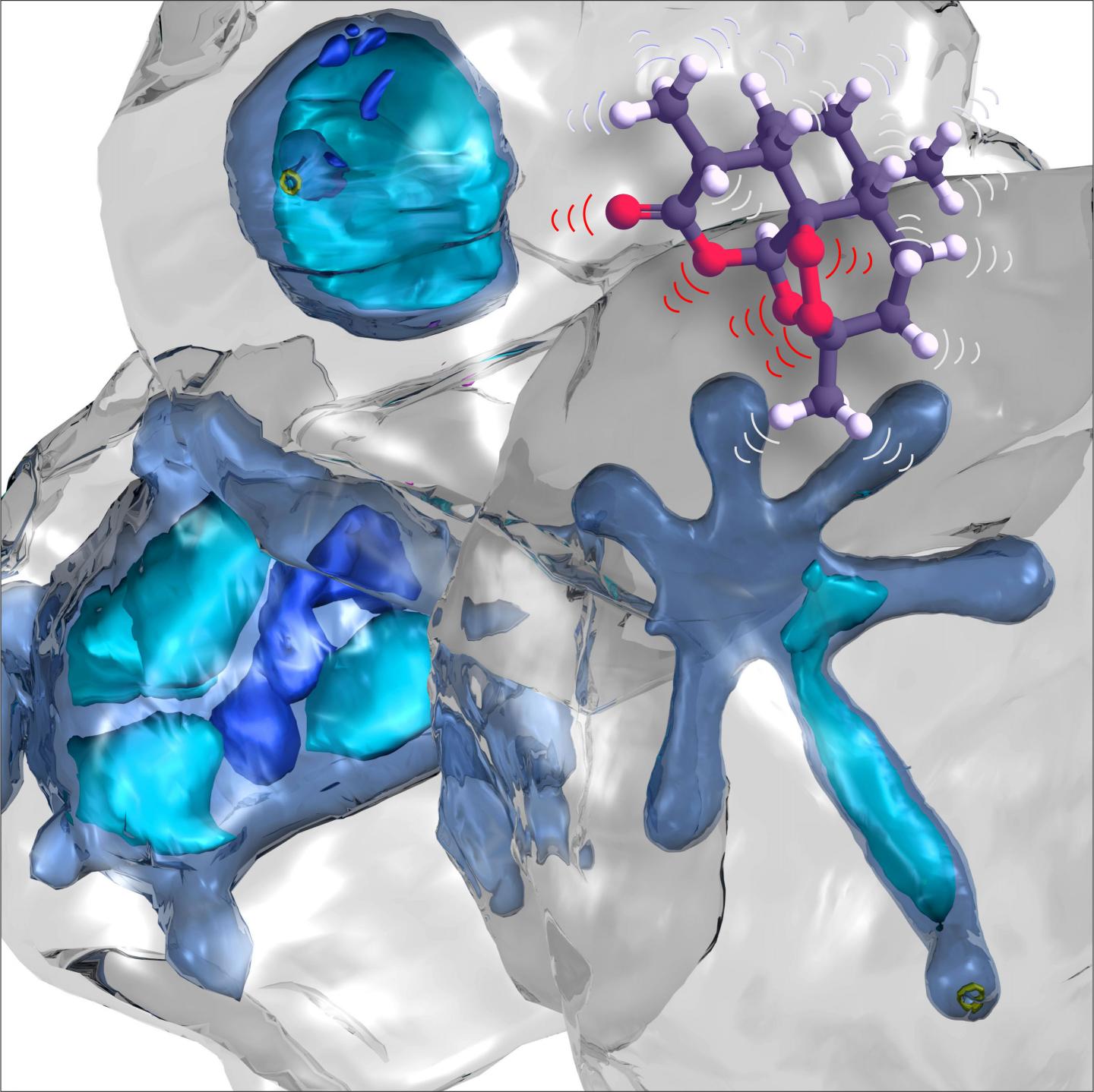
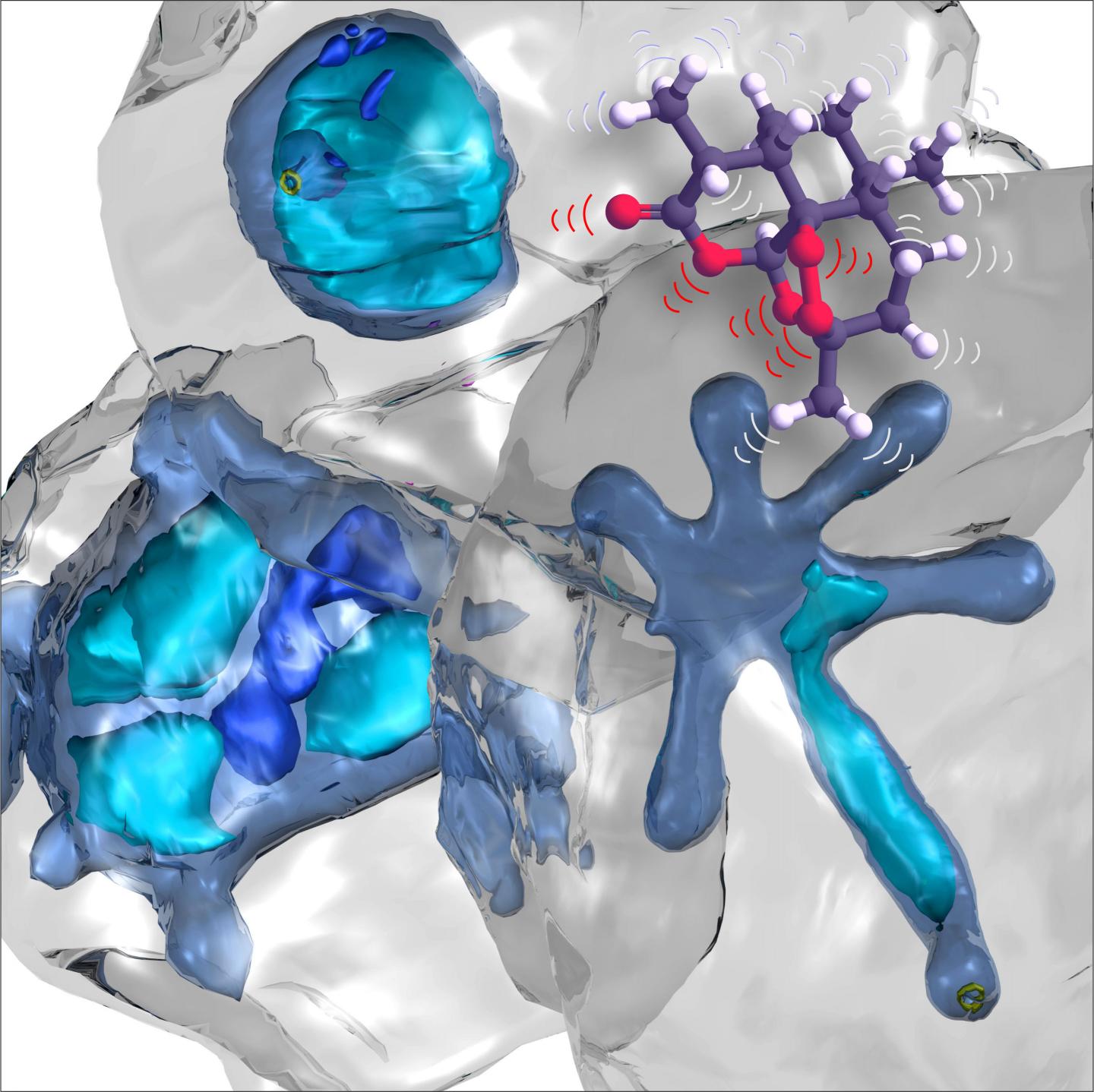
IMAGE

Credit: Dr Eric Hanssen

Scientists have found a way to boost the efficacy of the world's most powerful antimalarial drug with the help of chemotherapy medicines, according to new research published in the journal Nature Communications.

Scientists from the University of Melbourne and the Japanese pharmaceutical company Takeda have discovered that antimalarial drug artemisinin works through a "double whammy" attack on the deadly parasite.

The drug damages proteins in malaria parasites and clogs the parasite's waste disposal system, known as the proteasome.

University of Melbourne malaria researcher Leann Tilley said: "The double whammy effect means that combining artemisinin with an anti-cancer drug that also targets the proteasome, complements the activity of artemisinin, and can restore activity against artemisinin-resistant parasites."

Malaria claims the lives of about 450,000 people worldwide every year; artemisinin resistance has developed in South-East Asia, with fears it will soon reach Africa. The discovery of how artemisinin works is highlighted in the Nature Communications paper.

"The parasite's proteasome is like a shredder that chews up damaged or used-up proteins," Professor Tilley said. "Treating malaria parasites with artemisinin generates a lot of damaged proteins. Artemisinin and proteasome inhibitors thus can work together to jam the recycling system."

Blockage of the proteasome causes an accumulation of proteins that are marked with a "kiss of death" modification. When these damaged proteins build up, they stress the parasite and soon lead to cell death.

Professor Tilley and her team are working with Takeda and Swiss-based non-profit research foundation Medicines for Malaria Venture to identify parasite-specific proteasome inhibitors that could be advanced to clinical trials.

"At Takeda, we are proud to contribute our expertise to help address critical global health problems. In this case, we were able to leverage our oncology research on the proteasome system and uncover a potential new way to treat malaria," said Larry Dick, Director, Biochemistry, Oncology at Takeda.

"We are currently undertaking medicinal chemistry work to create novel analogs of human proteasome inhibitors that specifically inhibit the parasite proteasome " Professor Tilley said.

"We want a compound that can be administered orally and will last a long time in the bloodstream. If a suitable compound can be found, human trials could happen very soon."

###

* The University of Melbourne and Medicines for Malaria Venture have received approximately $868,600 (¥75,837,965) from the Global Health Innovative Technology Fund to conduct this research. Takeda is a collaboration partner contributing scientific knowledge and technical support.

* Feature article, available for republication under Creative Commons: https://pursuit.unimelb.edu.au/articles/using-chemotherapy-to-fight-malaria

Media Contact

Media office
[email protected]
61-383-444-123
@unimelb

http://www.unimelb.edu.au

Original Source

http://newsroom.melbourne.edu/news/anti-cancer-drugs-may-hold-key-overcoming-antimalarial-drug-resistance http://dx.doi.org/10.1038/s41467-018-06221-1


Share14Tweet7Share2ShareShareShare1

Related Posts

Falls at Home Drive Most Trauma in Older Iranians, Registry Study Finds

Falls at Home Drive Most Trauma in Older Iranians, Registry Study Finds

October 4, 2026
Blood NAD+ Levels Track With Frailty in Older Adults, Japanese Study Finds

Blood NAD+ Levels Track With Frailty in Older Adults, Japanese Study Finds

October 4, 2026

New Study Examines How Dedicated Dermatology Textbooks Represent Skin of Colour

October 4, 2026

Forskolin Extract Boosts Gut Hormone GLP-1 and Strengthens Intestinal Barrier in Cell Study

October 4, 2026
Please login to join discussion

POPULAR NEWS

  • Alloys That Shrink Their Own Grains: New PIX Mechanism Refines Metals With Heat Alone

    Alloys That Shrink Their Own Grains: New PIX Mechanism Refines Metals With Heat Alone

    29 shares
    Share 12 Tweet 7
  • Endurance Exercise Reshapes the Liver in Males and Females Through Distinct Molecular Routes

    29 shares
    Share 12 Tweet 7
  • Single Transcription Factor PU.1 Rapidly Converts Fibroblasts into Macrophage-Lineage Cells

    29 shares
    Share 12 Tweet 7
  • New Scale Measures How Ready Nurse Educators Really Are for the AI Era

    29 shares
    Share 12 Tweet 7

About

We bring you the latest biotechnology news from best research centers and universities around the world. Check our website.

Follow us

Recent News

Alloys That Shrink Their Own Grains: New PIX Mechanism Refines Metals With Heat Alone

Endurance Exercise Reshapes the Liver in Males and Females Through Distinct Molecular Routes

Single Transcription Factor PU.1 Rapidly Converts Fibroblasts into Macrophage-Lineage Cells

Subscribe to Blog via Email

Success! An email was just sent to confirm your subscription. Please find the email now and click 'Confirm' to start subscribing.

Join 85 other subscribers
  • Contact Us

Bioengineer.org © Copyright 2023 All Rights Reserved.

Welcome Back!

Login to your account below

Forgotten Password?

Retrieve your password

Please enter your username or email address to reset your password.

Log In
No Result
View All Result
  • Homepages
    • Home Page 1
    • Home Page 2
  • News
  • National
  • Business
  • Health
  • Lifestyle
  • Science

Bioengineer.org © Copyright 2023 All Rights Reserved.
