• HOME
  • NEWS
  • EXPLORE
    • CAREER
      • Companies
      • Jobs
    • EVENTS
    • iGEM
      • News
      • Team
    • PHOTOS
    • VIDEO
    • WIKI
  • BLOG
  • COMMUNITY
    • FACEBOOK
    • INSTAGRAM
    • TWITTER
Saturday, February 7, 2026
BIOENGINEER.ORG
No Result
View All Result
  • Login
  • HOME
  • NEWS
  • EXPLORE
    • CAREER
      • Companies
      • Jobs
        • Lecturer
        • PhD Studentship
        • Postdoc
        • Research Assistant
    • EVENTS
    • iGEM
      • News
      • Team
    • PHOTOS
    • VIDEO
    • WIKI
  • BLOG
  • COMMUNITY
    • FACEBOOK
    • INSTAGRAM
    • TWITTER
  • HOME
  • NEWS
  • EXPLORE
    • CAREER
      • Companies
      • Jobs
        • Lecturer
        • PhD Studentship
        • Postdoc
        • Research Assistant
    • EVENTS
    • iGEM
      • News
      • Team
    • PHOTOS
    • VIDEO
    • WIKI
  • BLOG
  • COMMUNITY
    • FACEBOOK
    • INSTAGRAM
    • TWITTER
No Result
View All Result
Bioengineer.org
No Result
View All Result
Home NEWS Science News Biology

Mineral weathering from thawing permafrost can release substantial CO2

Bioengineer by Bioengineer
September 19, 2018
in Biology
Reading Time: 2 mins read
0
Share on FacebookShare on TwitterShare on LinkedinShare on RedditShare on Telegram
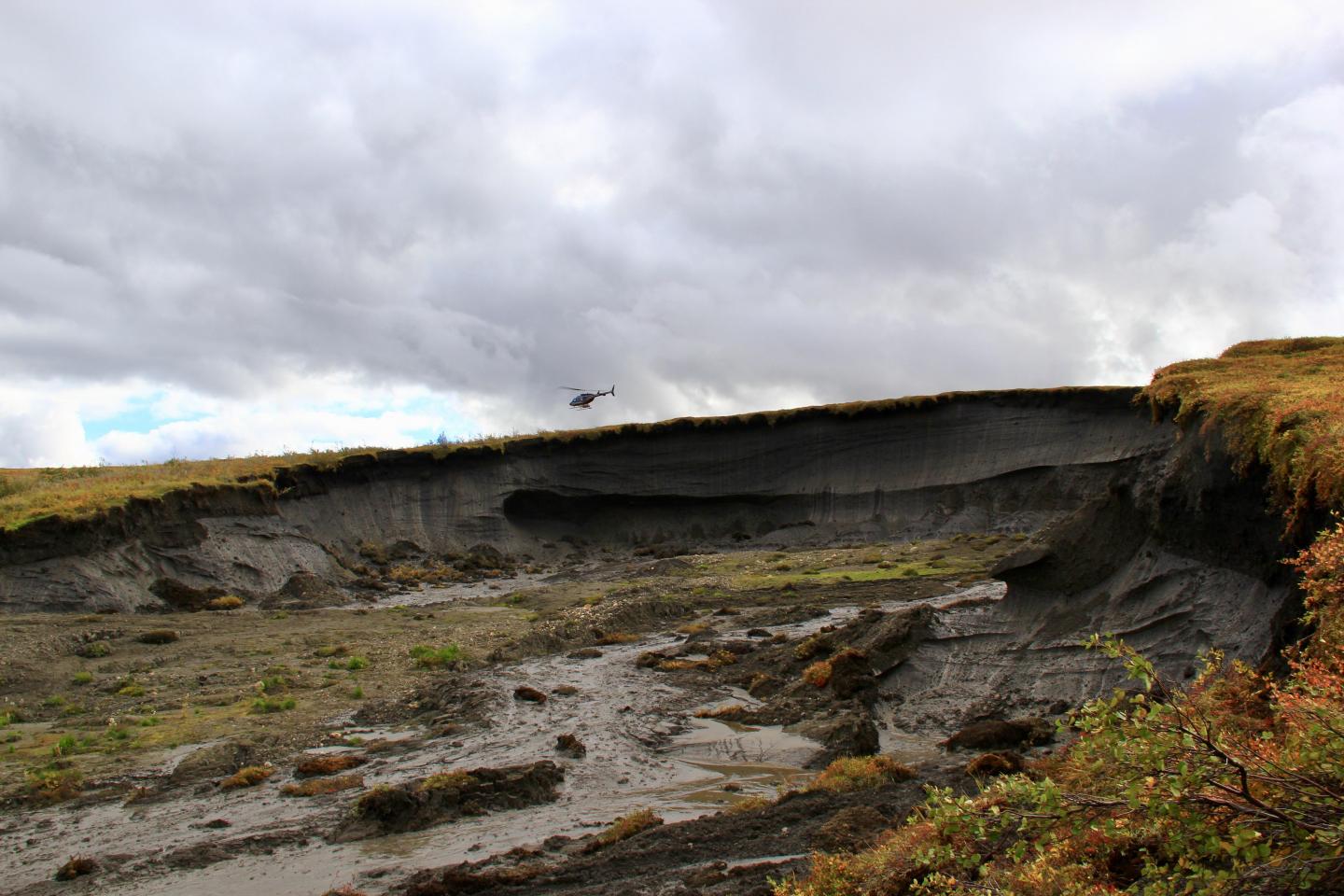
IMAGE

Credit: Scott Zolkos

EDMONTON (September 19, 2018)–The amount of carbon dioxide released from thawing permafrost might be greater than previously thought, according to a new study by University of Alberta ecologists. The research is the first to document the potential for substantial contributions of CO2 from thawing permafrost to the atmosphere through an inorganic process called mineral weathering.

Mineral weathering occurs when minerals previously locked-up in permafrost are exposed, and broken down into their chemical components by the sulfuric or carbonic acid that can exist naturally in water. Over long, geologic time scales, carbonic acid weathering is an important control on atmospheric CO2 levels and climate. Under the right conditions, however, weathering by sulfuric acid can release substantial CO2. Now, researchers from the Department of Biological Sciences have shown that these conditions are prevalent in the western Canadian Arctic, and are being enhanced by permafrost thaw.

"We found that rapidly thawing permafrost on the Peel Plateau in the Northwest Territories is greatly enhancing mineral weathering," explained Scott Zolkos, PhD candidate and lead author on the study. "Because weathering is largely driven by sulfuric acid in this region, intensifying permafrost thaw could be an additional source of CO2 to the atmosphere."

To understand regional impacts of permafrost thaw and weathering, Zolkos and his supervisor Suzanne Tank, assistant professor of biology, worked with scientists from the Northwest Territories Geoscience Office to examine long-term records of river chemistry from the Peel River. Their results reveal that sulfuric-acid driven weathering has intensified with regional permafrost thaw in recent decades, and likely increased CO2 release into surrounding water and air.

"Any additional warming in the Arctic, which is warming at twice the rate of the rest of the planet, promotes more permafrost thaw and thus poses substantial challenges to Arctic and global ecosystems," explained Zolkos. Yet, the effects from this mineral weathering on climate warming remain largely unexplored–a problem that Zolkos and Tank hope to address.

"We'd like to thank the local Northern residents involved in our work," added Zolkos, of his experience conducting the research project. The research partnership stems from the ongoing collaborators and Northwest Territories community interests in the downstream effects of permafrost thaw.

###

The paper, "Mineral Weathering and the Permafrost Carbon?Climate Feedback," is published in Geophysical Research Letters (doi: 10.1029/2018GL078748).

The University of Alberta Faculty of Science is a research and teaching powerhouse dedicated to shaping the future by pushing the boundaries of knowledge in the classroom, laboratory, and field. Through exceptional teaching, learning, and research experiences, we competitively position our students, staff, and faculty for current and future success.

Media Contact

Katie Willis
[email protected]
780-267-0880
@ualberta

http://www.ualberta.ca

Related Journal Article

http://dx.doi.org/10.1029/2018GL078748
Share14Tweet8Share2ShareShareShare2

Related Posts

Florida Cane Toad: Complex Spread and Selective Evolution

Florida Cane Toad: Complex Spread and Selective Evolution

February 7, 2026
New Study Uncovers Mechanism Behind Burn Pit Particulate Matter–Induced Lung Inflammation

New Study Uncovers Mechanism Behind Burn Pit Particulate Matter–Induced Lung Inflammation

February 6, 2026

DeepBlastoid: Advancing Automated and Efficient Evaluation of Human Blastoids with Deep Learning

February 6, 2026

Navigating the Gut: The Role of Formic Acid in the Microbiome

February 6, 2026
Please login to join discussion

POPULAR NEWS

  • Robotic Ureteral Reconstruction: A Novel Approach

    Robotic Ureteral Reconstruction: A Novel Approach

    82 shares
    Share 33 Tweet 21
  • Digital Privacy: Health Data Control in Incarceration

    63 shares
    Share 25 Tweet 16
  • Study Reveals Lipid Accumulation in ME/CFS Cells

    57 shares
    Share 23 Tweet 14
  • Breakthrough in RNA Research Accelerates Medical Innovations Timeline

    53 shares
    Share 21 Tweet 13

About

We bring you the latest biotechnology news from best research centers and universities around the world. Check our website.

Follow us

Recent News

3D Gut-Brain-Vascular Model Reveals Disease Links

Low-Inflammation in Elderly UTIs: Risks and Resistance

Urinary Clusterin: Tracking Kidney Disease and Treatment Response

Subscribe to Blog via Email

Enter your email address to subscribe to this blog and receive notifications of new posts by email.

Join 73 other subscribers
  • Contact Us

Bioengineer.org © Copyright 2023 All Rights Reserved.

Welcome Back!

Login to your account below

Forgotten Password?

Retrieve your password

Please enter your username or email address to reset your password.

Log In
No Result
View All Result
  • Homepages
    • Home Page 1
    • Home Page 2
  • News
  • National
  • Business
  • Health
  • Lifestyle
  • Science

Bioengineer.org © Copyright 2023 All Rights Reserved.