• HOME
  • NEWS
  • EXPLORE
    • CAREER
      • Companies
      • Jobs
    • EVENTS
    • iGEM
      • News
      • Team
    • PHOTOS
    • VIDEO
    • WIKI
  • BLOG
  • COMMUNITY
    • FACEBOOK
    • INSTAGRAM
    • TWITTER
Saturday, February 7, 2026
BIOENGINEER.ORG
No Result
View All Result
  • Login
  • HOME
  • NEWS
  • EXPLORE
    • CAREER
      • Companies
      • Jobs
        • Lecturer
        • PhD Studentship
        • Postdoc
        • Research Assistant
    • EVENTS
    • iGEM
      • News
      • Team
    • PHOTOS
    • VIDEO
    • WIKI
  • BLOG
  • COMMUNITY
    • FACEBOOK
    • INSTAGRAM
    • TWITTER
  • HOME
  • NEWS
  • EXPLORE
    • CAREER
      • Companies
      • Jobs
        • Lecturer
        • PhD Studentship
        • Postdoc
        • Research Assistant
    • EVENTS
    • iGEM
      • News
      • Team
    • PHOTOS
    • VIDEO
    • WIKI
  • BLOG
  • COMMUNITY
    • FACEBOOK
    • INSTAGRAM
    • TWITTER
No Result
View All Result
Bioengineer.org
No Result
View All Result
Home NEWS Science News Health

RUDN biochemists found out how ROS affect cisplatin resistance in ovarian cancer cells

Bioengineer by Bioengineer
September 13, 2018
in Health
Reading Time: 2 mins read
0
Share on FacebookShare on TwitterShare on LinkedinShare on RedditShare on Telegram
IMAGE

Credit: Courtesy of Allen Dressen

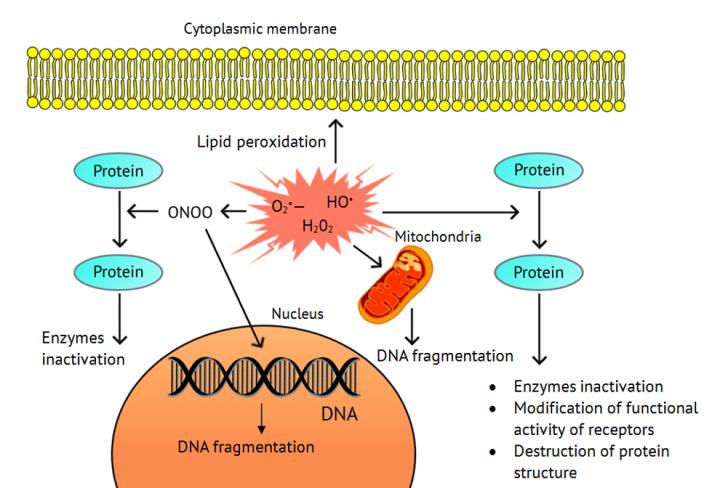
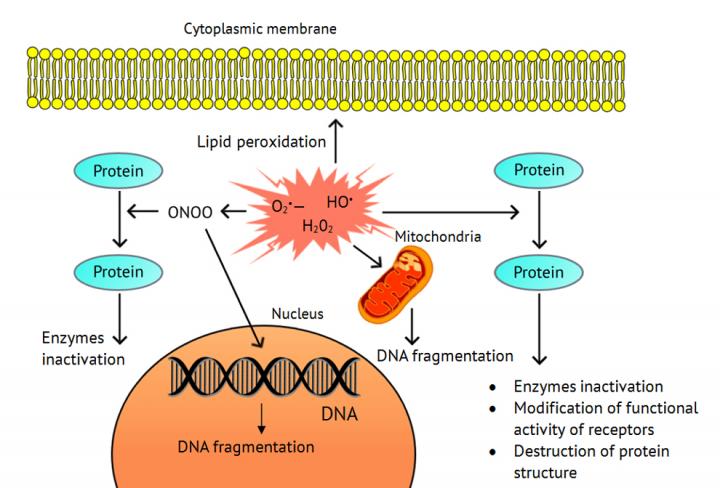
Long-term use of anti-cancer drugs treatment may lead to the development of multiple drug resistance reducing the efficiency of chemotherapy. Scientists are aware of several mechanisms for drug resistance development in tumor cells. They are to a great extent associated with the activation of proteins that get medicinal drugs out of cells, as well as with changes in the genes controlling cell survival and programmed cell death (apoptosis). One of the least studied mechanisms of drug resistance development is connected with the influence of reactive oxygen species (ROS) that are formed during cell life and can destroy organic molecules.

RUDN biochemists studied the mechanism of drug resistance development in ovarian cancer cells under treatment with cisplatin. The researchers found out that the process was connected with increased expression (production of proteins coded by DNA molecules) of genes of key antioxidant enzymes (i.e. destroying ROS): Mn-superoxide dismutase, catalase, glutathione peroxidase-1, hemoxygenase-1, as well as reduced expression of the enzyme NADPH-oxidase, which is responsible for ROS generation in the cell.

In the normal state there is a balance between the formation and destruction of ROS. Any changes in this balance may cause damage in the internal structure of the cells leading to number of diseases including cancer. On the other hand, high concentrations of ROS may also lead to the death of cancer cells. This effect is used in cancer therapy, and cisplatin may operate on a similar principle.

In their work the scientists used the real time RT-PCR method and western blotting to evaluate gene expression. The discovered redox-dependent mechanism of drug resistance development shows how well tumor cells can adapt to negative environmental conditions. The mechanism helps healthy cells survive, but in case of malignant tumors hinders their treatment.

"We found that under treatment of the ovarian cancer cells with cisplatin a new mechanism is triggered, changing the balance between generation and elimination of ROS; it is called as the adaptive antioxidant response. The studied mechanism of drug resistance development would help create new combined methods for ovarian cancer treatment," said Elena Kalinina, the author of the study, doctor of biological science, and professor of RUDN Institute of Medicine.

###

Media Contact

Valeriya V. Antonova
[email protected]

http://eng.rudn.ru/

Related Journal Article

http://dx.doi.org/10.1002/2211-5463.12453

Share12Tweet7Share2ShareShareShare1

Related Posts

Evaluating Pediatric Emergency Care Quality in Ethiopia

February 7, 2026

TPMT Expression Predictions Linked to Azathioprine Side Effects

February 7, 2026

Improving Dementia Care with Enhanced Activity Kits

February 7, 2026

Decoding Prostate Cancer Origins via snFLARE-seq, mxFRIZNGRND

February 7, 2026
Please login to join discussion

POPULAR NEWS

  • Robotic Ureteral Reconstruction: A Novel Approach

    Robotic Ureteral Reconstruction: A Novel Approach

    82 shares
    Share 33 Tweet 21
  • Digital Privacy: Health Data Control in Incarceration

    63 shares
    Share 25 Tweet 16
  • Study Reveals Lipid Accumulation in ME/CFS Cells

    57 shares
    Share 23 Tweet 14
  • Breakthrough in RNA Research Accelerates Medical Innovations Timeline

    53 shares
    Share 21 Tweet 13

About

We bring you the latest biotechnology news from best research centers and universities around the world. Check our website.

Follow us

Recent News

Evaluating Pediatric Emergency Care Quality in Ethiopia

TPMT Expression Predictions Linked to Azathioprine Side Effects

Improving Dementia Care with Enhanced Activity Kits

Subscribe to Blog via Email

Enter your email address to subscribe to this blog and receive notifications of new posts by email.

Join 73 other subscribers
  • Contact Us

Bioengineer.org © Copyright 2023 All Rights Reserved.

Welcome Back!

Login to your account below

Forgotten Password?

Retrieve your password

Please enter your username or email address to reset your password.

Log In
No Result
View All Result
  • Homepages
    • Home Page 1
    • Home Page 2
  • News
  • National
  • Business
  • Health
  • Lifestyle
  • Science

Bioengineer.org © Copyright 2023 All Rights Reserved.